Finding Room for a Cat Scratching Pad in a Small Apartment

Product links are for reference. Verify current details on the retailer page before buying.
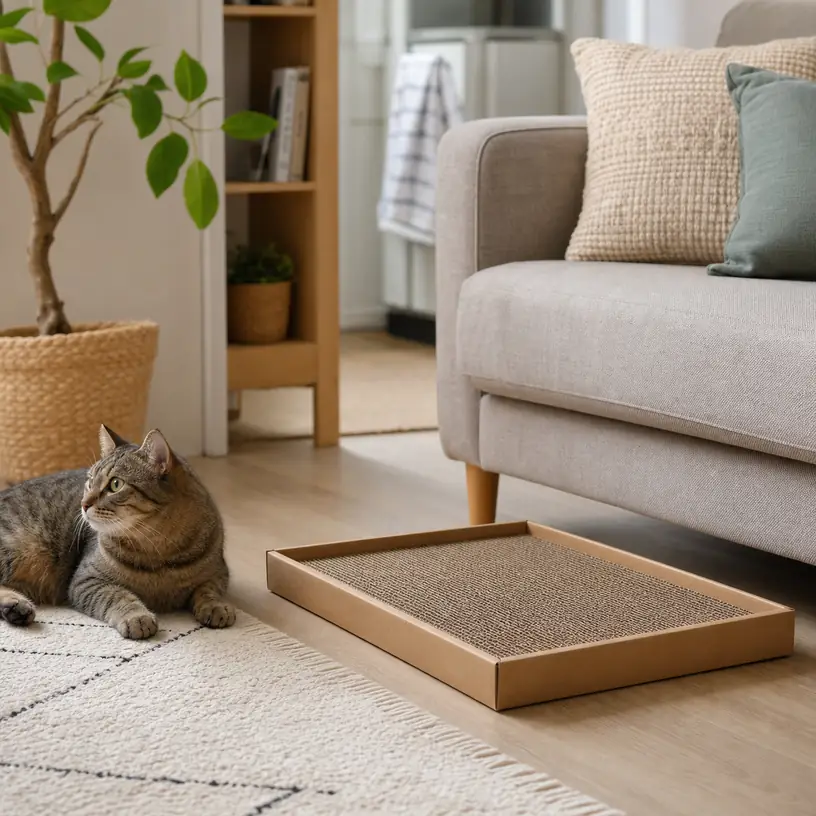
Illustrative image of a generic cardboard cat scratching pad beside a sofa in a compact living room

Illustrative image, not an official product photo.

Short answer

In a small apartment, the most useful scratching pad is not always the one with the smallest footprint. It needs enough usable length for the cat to brace, pull, and stretch, while its base or tray stays put. Begin with the direction the cat already prefers—horizontal, inclined, or upright—then compare the actual scratching area, not just the outer dimensions. A low cardboard pad can slide under a table and is easy to replace, but it may shed fragments. A denser mat or compact incline may create less loose debris, though texture and care can differ. Plan the location before buying: a stable pad placed beside a familiar scratching spot will usually be more practical than a tiny pad hidden in a corner the cat does not visit.

Search reference

Cat scratching pad options for indoor spaces

Compare orientation, usable scratch length, base grip, replaceable inserts, material wording, cleanup, and overall dimensions for the room you have.

View matching options

Start with the cat’s scratching direction

A product can fit the floor plan and still go unused if it asks for the wrong movement. Watch where and how the cat currently scratches. A cat that works at the flat edge of a rug may accept a horizontal pad. One that reaches up a sofa arm is showing an interest in a taller or angled surface. Some cats switch between directions, which may call for more than one modest scratching surface rather than a single elaborate piece.

Body position is more informative than a generic size label. Notice whether the cat stands over the surface, plants the back feet behind it, or reaches upward before pulling down. The pad should allow that movement without rocking, folding, or scooting away. For a horizontal model, usable length includes only the exposed scratchable insert—not a decorative border or tray. For an incline, check both the slope length and the room needed for the base. A vertical panel needs enough height and secure support for the cat to extend without tipping it.

Do not assume a more complicated shape offers more value. Curves, lounges, tunnels, and combination furniture can be appealing, but their exterior volume may be much larger than the area the cat can actually scratch. In a one-room apartment, a simple rectangle in the right place can be easier to live with and easier to replace.

Measure the place, then leave room to use it

Choose a likely location before comparing products. Measure the clear floor area and note nearby doors, drawers, floor vents, heating equipment, cables, and walking paths. Add working space around the listed product dimensions: the cat needs an approach, and people need to pass without catching a foot on the tray. A pad that technically fits behind a door is not useful if the door sweeps across it.

Location is also behavioral context. Scratching often happens near a resting area, a transition between rooms, or an existing target such as a sofa corner. Placing the pad close to that spot can be more sensible than storing it wherever there is an empty patch of floor. If it must sit beside furniture, confirm that the base cannot scrape the flooring and that loose cardboard will not fall into a hard-to-clean gap.

An under-furniture location deserves special care. Check actual clearance and make sure the item remains visible and reachable rather than becoming a dust trap. Avoid compressing an inclined model beneath a shelf or table in a way that changes its angle or blocks the cat’s posture. Keep any supplied fasteners, elastic straps, adhesives, or loose accessories out of reach unless the instructions explicitly place them in the assembled product.

Orientation changes the real footprint

A horizontal insert is generally the easiest shape to tuck along a wall or beneath an open table, but it still needs friction underneath. A shallow tray can catch fragments and define the edge. Check whether the insert fits tightly enough that it will not seesaw inside the tray and whether both sides can be used.

An inclined scratcher trades some floor length for height. Compare the footprint at its widest point, not only the scratch panel width. Folding joints and support pieces should lock or seat as directed. If the incline collapses or shifts under pulling force, its compact storage dimensions are irrelevant during use.

A wall-mounted pad preserves floor space, but installation becomes the main buying decision. Verify the mounting method, wall compatibility, required hardware, pad weight, and whether the lease permits holes or adhesive products. Adhesive mounting can affect paint and may perform differently on textured or dusty surfaces. A freestanding upright panel avoids wall attachment but needs a base broad and heavy enough for its intended use. Do not improvise a mount from a product that is designed to lie flat.

Who this is for

  • Indoor cats that already show a preference for horizontal, inclined, or compact upright scratching surfaces.
  • Apartment households that can dedicate one stable, accessible spot near a resting area or an existing scratching route.
  • Buyers prepared to measure usable scratch length as well as the product’s full footprint.
  • People who prefer a replaceable insert or lightweight pad over a large cat tree.
  • Homes willing to vacuum or collect fibers and cardboard fragments as the surface wears.
  • Multi-cat households that can provide enough well-placed resources to reduce competition over a single small pad.

Who should skip it

  • Skip an undersized pad that prevents the cat from taking its normal scratching posture, even if it fits the available gap.
  • Avoid a lightweight model that cannot be stabilized on the intended flooring or that repeatedly tips, folds, or slides.
  • A cat that chews and swallows cardboard, fibers, foam, adhesive, or detached pieces needs closer supervision and a different material or setup.
  • Do not use an unfamiliar scratching pad to explain a sudden change in claw use, movement, posture, or behavior; seek appropriate veterinary guidance when a change is concerning.
  • Skip wall-mounted options when the mounting method is incompatible with the wall, the lease, or safe installation.
  • A single compact pad may be insufficient when several cats compete for it or have clearly different scratching orientations.

What to verify before buying

  • Usable dimensions: Find the exposed scratchable length and width, not only the size of the tray, frame, or shipping package.
  • Orientation: Confirm whether the model stays horizontal, forms a fixed incline, converts between positions, mounts to a wall, or stands independently.
  • Stability method: Look for base width, weight, feet, non-slip backing, tray fit, mounting hardware, or another clearly described way to resist movement.
  • Material wording: Verify the current description for cardboard, sisal, fabric, wood-based panels, adhesives, backing, and any frame components rather than identifying them from a photo.
  • Insert design: Check whether the scratch surface is replaceable, reversible, sold separately, or permanently attached to the frame.
  • Wear debris: Consider where loose fragments or fibers will land and whether the holder contains them.
  • Edges and openings: Inspect the delivered item for sharp areas, exposed fasteners, loose layers, splinters, damaged corners, or gaps that could catch a claw.
  • Included extras: Determine whether catnip, toys, balls, feathers, straps, or mounting pieces are removable and appropriate for supervised use.
  • Cleaning instructions: Confirm whether the tray can be wiped, vacuumed, or separated from the insert and how every section should be kept dry.
  • Replacement plan: Check insert availability and dimensions; a proprietary shape may limit replacements even when the frame remains usable.
  • Complete footprint: Include protruding feet, curved ends, ramps, and the cat’s approach space when measuring the room.
  • Assembly and mounting: Read the current instructions and verify that the intended floor or wall can support the exact design.

Cardboard, sisal, and fabric do not wear the same way

Corrugated cardboard pads expose narrow cut edges that many cats can pull across. They are often light, reversible, and available as simple inserts. Their practical tradeoff is visible wear: torn paper fragments may spread beyond the tray, and moisture can deform the surface. Compare thickness, exposed area, tray depth, and whether replacement inserts use a common rectangle or a product-specific curve. A surface that arrives crushed, damp, separated, or with hardened protruding adhesive should not be put into use.

Sisal surfaces may be woven fabric or wound rope, and those constructions can feel and wear differently. A listing should make the structure clear. Examine how the material is fixed to its base and what happens when fibers loosen. A compact sisal mat may shed differently from cardboard, but it still needs inspection and eventual replacement. If the edges curl or the backing slides, the small footprint can become a tripping problem.

Carpet-like or textile pads vary widely in pile, weave, backing, and care. They may resemble household upholstery or rugs, which can be either convenient or confusing when trying to offer a distinct scratching target. Confirm the actual fiber and backing descriptions, attachment method, edge finish, and cleaning limits. No material is automatically mess-free or universally preferred. Choosing based on the cat’s observed texture and orientation preferences is more grounded than relying on a decorative finish.

Stability matters more in a narrow room

A sliding pad can migrate into a doorway or traffic lane. Test it on the intended surface while supervising the cat’s first uses. Smooth flooring may need a purpose-designed non-slip base, while thick carpet can make a shallow tray rock. Any separate underlay should fit completely beneath the product, lie flat, and be compatible with both the flooring and the manufacturer’s instructions.

Weight alone does not guarantee stability. The force of an upward pull can tip a narrow vertical panel even if it feels substantial when lifted. Similarly, a horizontal pad can move when its tray has hard, smooth feet. Compare the direction of the cat’s movement with the way the product is supported. A long low base helps in a different way from a wall anchor.

Recheck the setup as the insert wears. A once-snug cardboard block may become thinner at its center and lift at the ends. Fasteners can loosen, non-slip surfaces can collect dust, and a folding support can shift. Replace or repair only as the instructions allow; improvised tape, exposed staples, or loose weights can create new hazards.

Plan for fragments before they spread

A tray with a raised lip can keep some cardboard pieces nearby, but it cannot contain material kicked out during energetic use. Place the scratcher where the surrounding floor is easy to vacuum or sweep. A washable floor protector may help if it lies flat and does not let the product skate, yet its compatibility should be tested rather than assumed.

Vacuum loose debris from around the pad and inspect the scratching surface at the same time. For cardboard, look for separated layers, large loose chunks, dampness, and exposed adhesive. For fabric or sisal, check for long pulled strands, detached edges, and visible backing. Follow the product’s cleaning directions; soaking a paper-based insert or applying household sprays can damage it or leave residues.

Replacement timing depends on condition, not a promised calendar interval. Turn a reversible insert only when the product is designed for it and the second side sits securely. Retire the surface when it no longer provides stable resistance, releases pieces the cat may ingest, develops sharp or loose areas, or cannot be kept acceptably clean.

Make the pad part of the room rather than clutter

Small-space purchases work better when each item has a permanent home. A pad near the sofa may also define a place to redirect attention from an upholstery corner, but access should remain open throughout the day. Moving it into a closet whenever guests arrive can make the resource inconsistent. If visual appearance matters, choose a simple holder whose replacement insert remains easy to source; an attractive frame has limited value when the worn center cannot be replaced.

A combination lounge-and-scratcher can serve more than one observed activity, but only if its curve and size actually support both. It may occupy more volume than a flat insert and collect fur in recessed areas. A scratcher with a toy track also adds parts that require inspection. In a compact home, fewer functions executed well may be preferable to a bulky object with unused features.

For multiple cats, avoid treating one small pad as a space-saving substitute for all scratching resources. Cats may prefer different rooms, heights, textures, or times of use. Several simple surfaces distributed through the apartment can be easier to place than one oversized structure, provided each is stable and does not block circulation.

Limitations

  • A listed size cannot predict whether an individual cat will use a particular texture or orientation.
  • Small exterior dimensions may also mean an inadequate stretch length or a base that shifts under load.
  • Cardboard can create loose fragments, while fabric and sisal can develop pulled fibers or detached edges.
  • Reversible and replaceable inserts are useful only when replacements fit securely and remain available.
  • Non-slip claims depend on flooring, dust, moisture, wear, and the direction of the cat’s movement.
  • A tray can collect some debris but will not eliminate routine sweeping, vacuuming, and inspection.
  • Catnip or a dangling toy does not guarantee acceptance and may introduce removable parts that need supervision.
  • Wall mounting can save floor space but adds installation, wall-condition, lease, and removal considerations.
  • A scratching pad does not replace veterinary assessment for a concerning change in movement, claw condition, posture, or behavior.

Alternatives to compare

A compact scratching post offers a vertical pull, but its height and base must support a full stretch without tipping. A wall-mounted scratching panel frees the floor when the wall and installation method are suitable. A sisal floor mat may suit cats that scratch horizontally and can be practical if its backing stays flat and secure. A small cat tree combines scratching with an elevated perch, though the complete footprint, assembly, anchoring, and access routes need more planning. Furniture guards can protect a specific surface, but they should be compatible with that furniture and should not replace an accessible scratching option. When the preferred direction is unclear, two basic surfaces in different orientations may reveal more than one expensive multipurpose unit.

FAQ

How long should a cat scratching pad be?

It should provide enough usable scratch surface for the cat’s normal braced or stretched posture. Measure the cat’s movement at a familiar scratching spot and compare that with the exposed insert length, excluding the tray border. There is no single length that fits every cat or orientation.

Is a horizontal or inclined scratching pad better for a small apartment?

Horizontal pads are easier to place under open furniture or along a wall, while inclined pads may suit a cat that reaches upward and can reduce the straight floor length. The better choice matches the cat’s observed direction and remains stable in the measured location.

How can I keep a cardboard cat scratcher from sliding?

Use the stability method specified for the product, such as a fitted tray or integrated non-slip base, and test it on the intended clean, dry floor. Do not rely on improvised tape or weights that expose sticky surfaces, sharp parts, or loose objects. If the pad still moves during normal use, choose a wider or more secure design.

When should I replace a cat scratching pad?

Replace it when the surface no longer stays stable, the usable area is deeply worn, layers or fibers detach in concerning pieces, sharp or loose components appear, or it cannot be kept clean and dry. Check the holder and base as well as the replaceable insert.

Can one scratching pad work for two cats?

It may be used by both, but one small pad may create competition or fail to match different orientation and texture preferences. Observe access and consider several stable scratching surfaces in separate useful locations, especially when one cat blocks or avoids the shared pad.
Getting a Cat to the Vet Starts with the Right Soft-Sided Carrier

Product links are for reference. Verify current details on the retailer page before buying.

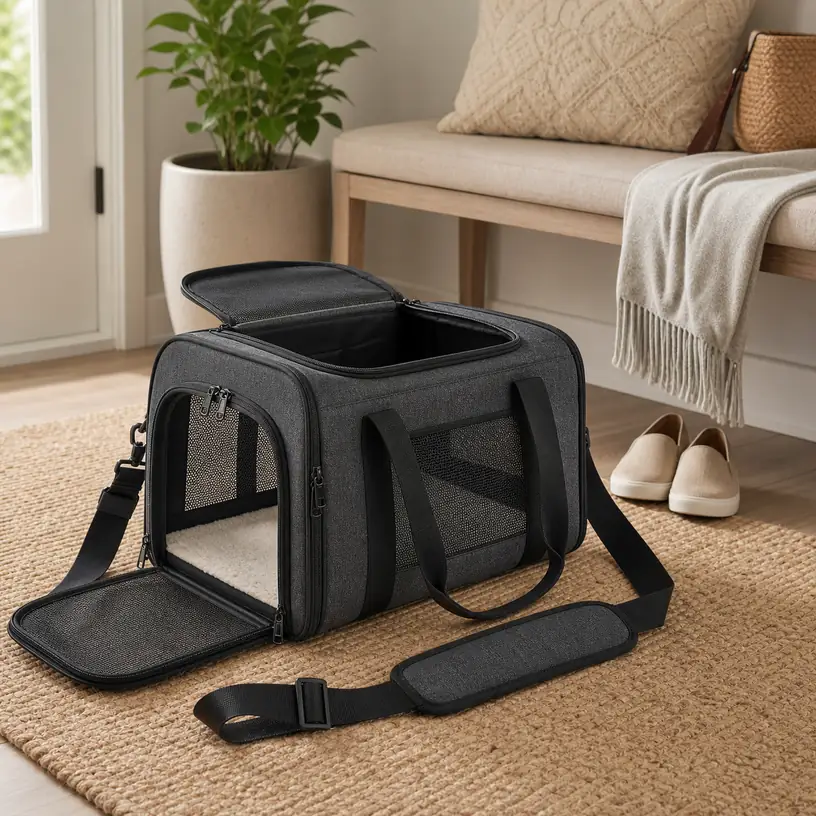
Illustrative image of a generic soft-sided cat carrier with mesh panels and an open top entry

Illustrative image, not an official product photo.

Short answer

For routine vet visits, a soft-sided cat carrier should let the cat stand in a natural position, turn around, and lie down without leaving so much empty space that the interior feels unstable during movement. Measure the cat rather than relying on a broad weight label, then compare usable interior dimensions, top and side access, the firmness of the floor, zipper security, ventilation, and the way the carrier can be supported with two hands. A removable top or wide top entry can give a veterinarian another route to the cat, while a rigid insert under a washable pad helps prevent the carrier from folding around the animal. Confirm vehicle placement and restraint guidance separately; soft fabric and a shoulder strap do not make a carrier crash-tested.

Search reference

Soft-sided cat carriers for vet visits

Compare usable interior measurements, opening layout, mesh coverage, floor support, closures, cleaning instructions, and safe handling for your cat's usual trip.

View matching options

Start with the cat, doorway, and route to the car

Carrier shopping is often reduced to maximum pet weight, but weight says little about body length, shoulder height, or the room a cat needs to change position. Measure from the nose to the base of the tail while the cat is standing naturally, and note the height to the top of the head or ears. Compare those numbers with the usable interior, allowing room for the floor pad and any inward-sloping walls. Exterior dimensions can include pockets, handles, and framing that do not benefit the animal.

Then walk the real route from the room where the carrier will be loaded to the vehicle or clinic. Check narrow doorways, stairs, building elevators, and the vehicle door opening. A carrier that fits the cat but collides with every stair rail will be awkward to keep level. If two people normally travel together, decide who carries the cat and who manages doors, paperwork, or other pets before the appointment day.

The best opening arrangement depends on how the cat enters and how clinic staff can access the animal. A wide top entry can make it easier to lower a calm cat while supporting the body. A large end or side door allows the carrier to remain on a stable surface during entry. Multiple openings provide options, but each one also adds zippers and seams that need inspection.

Floor support matters more than plush padding

A soft carrier still needs a stable base. Look for a removable insert that spans the floor without a large gap at the edges. Lift the empty carrier by its handles and watch whether the bottom bows. A pad can improve traction and absorb a small accident, but thick padding cannot compensate for a weak insert that flexes under the cat.

The floor assembly should be easy to take apart and put back correctly. Check whether the fabric cover, pad, and structural board have separate care instructions. A cardboard-like insert may have different cleaning limits from a plastic panel, and listing photos alone may not identify the material. Verify current construction details rather than assuming that every removable base can be washed as one piece.

Give the cat a predictable surface. A loose blanket can bunch near the door or cover part of a ventilation panel, so trim the setup to the available floor and avoid filling the carrier with bulky bedding. If the cat has a history of urinating or vomiting in transit, discuss preparation with the veterinary clinic and choose a floor configuration that can be removed without forcing hands close to a frightened cat.

Openings, mesh, and closures work as a system

Mesh panels should provide airflow and let you observe the cat, but more exposed mesh is not automatically calmer. Some cats settle when part of the carrier is visually covered, provided ventilation remains unobstructed and the added cover cannot overheat the interior. Look at the location of each panel and confirm that pockets, luggage sleeves, flaps, or your hand position will not block it.

Inspect how doors close. Zipper pulls that meet at one point may be easy to operate, but a determined paw can sometimes work at a gap. Check for a purpose-built way to secure paired pulls without improvising a cord that could create a snag. Clips, buckles, and locking features should close completely and remain reachable to the caregiver. Test every closure at home before the cat enters.

A small interior tether is sometimes shown as a convenience feature. Do not attach it to a cat’s collar, and do not assume it is a travel restraint. Follow the product instructions and veterinary guidance. Loose straps or hardware inside the occupied space should not create an entanglement point.

Who this is for

  • Cat caregivers preparing for routine veterinary appointments or short, planned transfers.
  • Households that need a carrier lighter and easier to store than many rigid-shell designs.
  • Cats that can remain safely contained behind fabric, mesh, and zippered closures without chewing or forcefully clawing through them.
  • People who want top and side access options so the carrier can accommodate different loading approaches.
  • Apartment residents who must carry the cat through hallways, stairs, or elevators and can keep the base supported.
  • Buyers willing to leave the carrier open at home so it becomes a familiar object before travel.

Who should skip it

  • Skip a soft carrier if the cat persistently bites, claws, or pushes through mesh, fabric, zippers, or seams.
  • A cat requiring a more protective enclosure, medical support, or a clinic-directed transport setup may need a different design.
  • Do not choose a model that forces the cat to crouch continuously or cannot support the body without sagging.
  • Avoid carriers that cannot be positioned in the vehicle according to the carrier instructions and vehicle manual.
  • Air travel involves carrier-specific and airline-specific rules that can change; a carrier chosen for vet trips should not be assumed suitable for a flight.
  • A caregiver who cannot lift and stabilize the occupied carrier should arrange help or compare an appropriate alternative rather than relying on a shoulder strap alone.

What to verify before buying

  • Usable interior fit: Compare interior length, width, and height with the cat’s standing and resting dimensions, not just a weight range.
  • Door geometry: Check the fully open dimensions of each top, end, or side entrance and whether the panel stays out of the way during loading.
  • Floor construction: Identify the structural insert, edge support, pad attachment, and how much the base flexes when occupied.
  • Closure security: Review zipper paths, paired-pull retention, clips, seams, and any gaps a paw or nose could work against.
  • Ventilation: Confirm mesh location on all sides and how ventilation changes when the carrier is carried, placed in a vehicle, or partially covered.
  • Handle attachment: Look at where short handles and shoulder-strap hardware connect to the body, and verify the stated load guidance.
  • Vehicle instructions: Read both the carrier directions and vehicle manual for placement and securing; a luggage sleeve or strap loop is not proof of crash performance.
  • Cleaning sequence: Check which parts are removable, which can be washed, and how the insert, pad, mesh, and seams must be dried.
  • Storage shape: If the carrier folds flat, confirm how it is restored to its intended structure and whether braces or inserts can be misplaced.
  • Condition on arrival: Inspect mesh, stitching, zipper stops, clips, handles, wire framing, and interior surfaces before introducing the cat.

Carrying and vehicle setup deserve a rehearsal

Load the carrier on the floor rather than holding it in midair. Once the door is closed and every zipper is secured, support the base with one hand while using the handles with the other. Keep the carrier level and close to the body. A shoulder strap can free one hand briefly, but an occupied soft carrier may tilt or swing if supported from a single point.

Practice with a weighted object before the first trip to learn how the base behaves on stairs and around corners. Do not rehearse by repeatedly loading a reluctant cat. Instead, let the empty carrier remain in a familiar room, place ordinary bedding or a familiar-smelling pad inside when appropriate, and allow voluntary exploration without turning every approach into a departure.

In the vehicle, use a stable location permitted by the manufacturer and vehicle guidance. Keep the carrier away from active airbag deployment zones, direct sun, heating vents, and loose cargo. Do not open it outdoors or inside an unsecured vehicle, even if the cat appears calm. When you reach the clinic, carry the enclosure from below rather than treating a long strap as the only support.

Make clinic access part of the buying decision

A carrier is not only a container for the drive. It becomes part of the examination process. Some soft carriers allow the top panel to open broadly; others have a removable or unzippered upper section. That can let clinic staff assess a cat while it remains on the padded base, depending on the cat, carrier, and clinic procedure. Ask your veterinary clinic what features they find practical before purchasing for a cat that becomes highly fearful during handling.

Avoid products that depend on a tiny doorway for every interaction. Reaching through a narrow opening can put the caregiver’s hands directly in front of a stressed cat and makes it harder to support the body evenly. At the same time, an abundance of panels is only useful if the carrier remains structurally stable after one is opened.

Label the carrier in a way that does not obstruct ventilation or closures. Keep current contact information available, but do not hang tags or accessories inside where they could snag. Bring any clinic-requested records separately so the exterior pockets are not overfilled and pressed into the cat’s space.

Cleaning and storage after the appointment

Remove loose fur and debris before using moisture, then follow the care directions for each component. Pay attention to zipper tape, mesh edges, pad seams, and the channel where a floor insert sits. Surface wiping may not be enough after urine, feces, vomit, or a contagious illness; ask the clinic about appropriate cleaning and replacement when needed.

Dry every layer fully before reassembly. Moisture can remain between the pad cover and insert even when the visible surface feels dry. Check that the structural panel lies flat, the pad does not slide, and all folding braces or frames return to their intended position.

Store the carrier where it can stay clean and where the cat can encounter it safely between trips. Frequent folding saves space but adds setup steps, so inspect the shape and closures every time it is unfolded. Replace the carrier if mesh tears, a zipper separates, the frame deforms, the base loses support, or cleaning can no longer restore a usable surface.

Limitations

  • Soft walls provide less rigid protection from crushing, impact, and falling objects than a compatible hard-shell enclosure.
  • Weight ratings do not establish interior comfort, door fit, handle durability, or suitability for a particular cat.
  • Mesh improves airflow but can be damaged by teeth, claws, abrasion, or a failed seam.
  • A flexible base may sag even when the cat is below the stated load limit.
  • “Airline approved” wording does not guarantee acceptance by a specific airline, route, aircraft, or current policy.
  • Shoulder straps, luggage sleeves, and seat-belt loops do not by themselves establish crash-tested performance.
  • An anxious or medically unwell cat may need transport planning from a veterinarian rather than a different carrier feature.
  • No carrier removes the need to inspect closures, support the base, control doors, and supervise the trip.

Alternatives to compare

A two-piece hard-shell carrier may provide firmer walls and a base that is easier to wipe, and some models allow the top to be removed for clinic access. It is usually bulkier to store and can be awkward on stairs. A carrier with a removable full top can reduce the need to pull a cat through a small door, provided every fastener closes securely after reassembly. A pet stroller with a secure internal enclosure may help a caregiver who cannot carry a suitable load, but it brings wheel, doorway, vehicle-storage, escape, and clinic-space considerations. For a cat with severe travel distress or mobility needs, ask the veterinary clinic about preparation, timing, handling, and the most appropriate enclosure rather than changing equipment without guidance.

FAQ

Is a soft-sided carrier large enough if my cat is under its weight limit?

Not necessarily. The cat still needs usable length, width, and height for a natural standing posture, a turn, and a resting position. Compare the measured cat with the interior dimensions after the floor pad is installed; treat weight as only one limit.

Is a top-opening carrier easier for a cat that resists the front door?

It can provide another loading route and may allow more even body support, but the opening must be wide enough and the carrier must rest on a stable surface. Do not suspend the carrier while lowering the cat, and ask the clinic about handling advice for a cat that panics or becomes aggressive.

Can I secure a soft cat carrier with the vehicle seat belt?

Only use a belt path or securing method specifically described by the carrier maker and compatible with the vehicle manual. A loop shown in a product photo does not establish crash protection. Keep the carrier out of airbag deployment areas and follow current instructions for placement.

Should I cover the mesh panels during a vet trip?

Some cats appear calmer with less visual exposure, but ventilation must remain open and temperature must stay safe. Use only a breathable, securely placed cover when appropriate, monitor the cat, and never wrap the carrier so tightly that airflow is reduced.

How do I clean a carrier after an accident?

Separate the pad, cover, and structural insert as directed, remove debris, and follow the stated cleaning method for each material. Dry all hidden layers completely before reassembly. Ask the veterinary clinic for cleaning guidance after a contagious illness or when ordinary care instructions seem insufficient.

Can I use the same soft carrier for airline travel?

Do not assume so. Airline rules, aircraft space, route restrictions, documentation, and carrier requirements can differ and change. Confirm the exact current policy directly with the airline before travel, even when a listing uses airline-related wording.

A Slow Feeder Dog Bowl for Calmer Mealtimes: Layout, Fit, and Cleanup

Product links are for reference. Verify current details on the retailer page before buying.

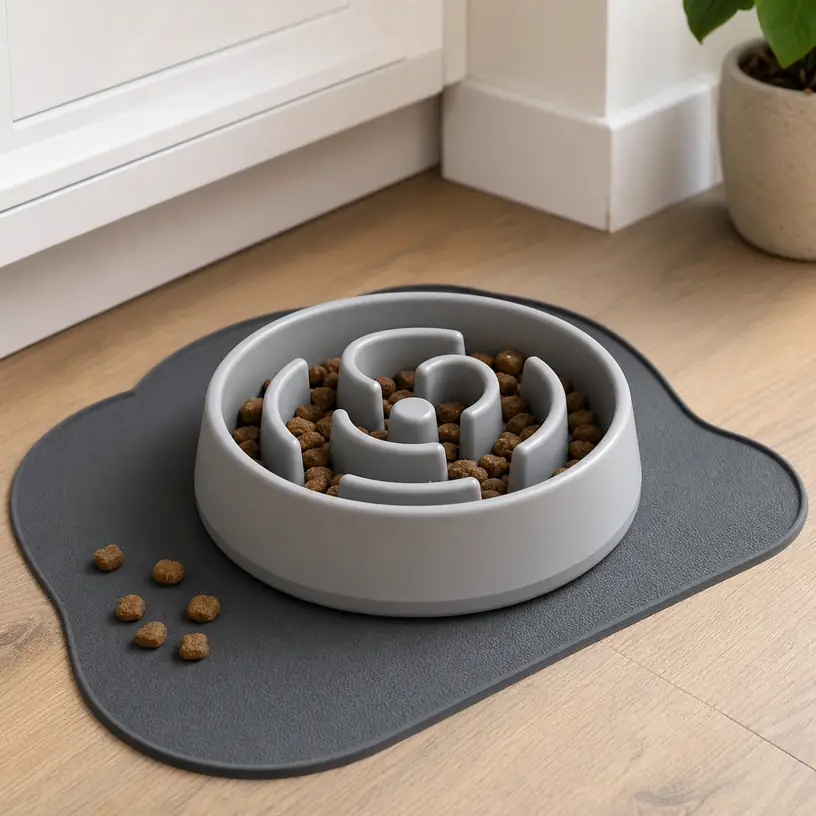
Illustrative image of a generic slow feeder dog bowl with a raised maze pattern on a feeding mat

Illustrative image, not an official product photo.

Short answer

A slow feeder bowl should make food less direct to reach without turning dinner into an impossible puzzle. Match its usable capacity to one measured meal, then look at the width and spacing of the raised channels, the dog’s muzzle shape, the food format, and how the bowl stays in place. Low, widely spaced ridges may be easier for a broad or short muzzle; a deep, tight maze may require more precise tongue and nose movement. Stability and complete cleaning access matter just as much as the pattern. Treat a slow feeder as a piece of feeding equipment, not as a remedy for symptoms: a sudden change in eating, repeated coughing, vomiting, distress, dental pain, or difficulty reaching food deserves guidance from a veterinarian.

Search reference

Slow feeder dog bowl options

Compare the maze spacing, usable meal capacity, interior depth, base grip, food compatibility, material wording, and care instructions for your dog's usual setup.

View matching options

Begin with one ordinary meal

The useful size of a slow feeder is not its outside diameter. Raised shapes occupy much of the interior, so a bowl that appears roomy may hold less food than a plain bowl with the same footprint. Measure the portion normally served and note whether it is dry kibble, wet food, rehydrated food, or a mixture. A listing that states usable food capacity is easier to compare than one that supplies only overall dimensions.

Notice how the meal sits between the ridges. Large kibble pieces may remain above a narrow channel, while small pieces can settle deep into it. Wet food may spread across the pattern or collect in tight corners. Photographs with decorative treats do not establish compatibility with the dog’s actual diet. Look for a clear overhead view and dimensions for both ridge height and channel spacing where available.

The goal should be a manageable pace and a normal posture—not prolonged frustration. Observe the first meals closely. The dog should be able to locate and reach the food without scraping the muzzle, biting hard at the ridges, flipping the bowl, or abandoning a meaningful part of the portion. If the pattern does not fit, a simpler design is a better choice than insisting the dog adapt.

Maze difficulty has to fit the muzzle

Slow feeder patterns range from a few broad raised sections to tight spirals and branching mazes. More visual complexity does not automatically mean a better feeder. What matters is the space left for the dog’s tongue and muzzle. Measure the dog’s current plain bowl and observe how far the muzzle enters it. Compare that with the slow feeder’s opening, inner depth, and narrowest passages.

Dogs with broad heads or short muzzles may need shallower, more open channels. A very narrow snout may reach spaces that another dog cannot. Facial hair, long ears, an underbite, missing teeth, or a protective collar can also change access. These are practical fit issues that cannot be judged by the pet’s weight label alone.

Ridge shape deserves a close look. Rounded transitions are easier to inspect than sharp-looking corners, though images cannot confirm how an edge feels. Check current product details for intended animal size and use, then inspect the physical bowl before serving food. Do not use it if the interior has rough molding, cracks, loose parts, sharp edges, or damage from chewing.

A stable bowl makes the pattern do the work

A maze cannot moderate access if the entire bowl skates across the floor. Check the full base diameter and the type of grip provided. A broad base, non-slip ring, weighted construction, suction feature, or fitted mat may help on a compatible surface, but each works differently. Suction depends on the floor being smooth and clean; textured tile or grout may prevent a seal. A rubberized ring can collect residue along its seam and still slide when wet.

Test the proposed feeding location. Leave enough clear space so the dog can stand naturally and approach without being wedged between a wall and furniture. A washable mat may catch displaced crumbs, but its edges should lie flat and it should not make the bowl unstable. If the dog normally eats from an elevated stand, verify that the slow feeder is designed to fit that stand securely rather than balancing it in an opening of similar size.

Some dogs respond to a difficult pattern by pawing, nosing, lifting, or chewing the bowl. A wider or heavier base may reduce movement but cannot make an unsuitable design safe. Supervise use, especially at the beginning, and remove a bowl that is being treated as a chew object.

Who this is for

  • Dogs that routinely finish an ordinary meal very quickly and can comfortably use a compatible maze layout.
  • Households willing to measure portions separately rather than using the bowl’s visual fullness as a serving guide.
  • Caregivers who can supervise the transition and check that the complete meal remains accessible.
  • Dry, wet, or mixed-food routines when the exact bowl explicitly accommodates that food format and can be cleaned afterward.
  • Multi-dog homes that can provide separate feeding spaces and prevent another dog from taking over the slower meal.
  • Buyers who want a removable, washable feeding tool rather than a permanent change to the room.

Who should skip it

  • Skip a maze bowl when the dog cannot comfortably reach between the ridges because of muzzle shape, teeth, mobility, vision, or equipment such as a recovery collar.
  • Do not use a feeder to self-treat choking, coughing, regurgitation, vomiting, weight change, pain, or a sudden alteration in appetite; seek veterinary advice.
  • A dog that chews, breaks, or swallows pieces of feeding equipment needs a different supervised approach.
  • Avoid a design whose hidden channels, seams, or detachable grip cannot be fully cleaned and dried after the dog’s usual food.
  • A very persistent food guarder may need a feeding plan developed around separation and professional guidance, not a more frustrating bowl.
  • Skip the product if a simple portion split or another veterinarian-approved feeding method suits the dog and household better.

What to verify before buying

  • Usable meal capacity: Confirm how much food fits below a sensible fill level after the ridges take up interior volume.
  • Maze spacing: Compare the narrowest channels, ridge height, and overall depth with the dog’s muzzle and tongue access.
  • Food format: Verify whether the design supports kibble, wet food, rehydrated meals, or the mixture you actually serve.
  • Overall fit: Check inside and outside diameter, height, wall profile, and whether ears or facial hair are likely to enter the food.
  • Base stability: Identify the grip method, compatible floor surface, base width, and any mat or stand requirements.
  • Material wording: Read the current product description and care instructions instead of inferring composition from color or appearance.
  • Construction: Look for one-piece versus assembled sections, removable rings, plugs, lids, or other parts that could loosen or trap residue.
  • Cleaning access: Make sure fingers or an appropriate brush can reach every channel, curve, seam, and underside feature.
  • Care limits: Confirm dishwasher or hand-wash directions, temperature guidance, drying needs, and replacement advice.
  • Condition on arrival: Inspect for cracks, rough areas, sharp molding, warping, loose components, or a base that does not sit level.

Cleanup is part of the feeding cycle

A feeder’s long channels create more surface area than a plain bowl. Crumbs, saliva, and wet food can remain along ridge bases even when the main portion looks finished. Inspect it after every meal. Follow the current washing directions and use a brush or cloth that can reach the entire pattern without damaging the surface.

A “dishwasher-safe” statement should be checked for the exact bowl and all removable parts. It does not guarantee that tightly packed food will rinse away, so visible residue may need to be removed first. If the base has a detachable non-slip ring, confirm whether it must be separated for washing and drying. Reassemble it only when every surface is dry and the part sits securely.

Deep spirals and decorative corners may take longer to clean after wet food. Before buying, imagine wiping the lowest point of every channel. If the geometry is difficult to see, it may also be difficult to inspect for residue or damage. Simpler patterns often make more sense for meals that coat the interior.

Keep the bowl assigned to one dog in a multi-pet home where practical, and wash hands and feeding equipment according to ordinary food-safety and veterinary guidance. Replace the feeder when cracks, deep scratches, chewing damage, loose parts, persistent odor, or other deterioration prevents reliable cleaning or safe use.

Capacity, portioning, and the last few bites

A slow feeder can make a portion look larger because food is spread through the maze. Continue measuring the amount according to the dog’s established feeding plan; do not use ridge height as a portion line unless the product and feeding guidance specifically define one. If extra food must be added to cover the pattern, the bowl is likely the wrong size or design.

Watch whether the dog can retrieve the last pieces. A pattern that works while food is piled above the ridges may become too difficult once only a few pieces remain deep in narrow branches. Check the bowl after the dog walks away. Repeated leftovers in the same places suggest an access mismatch, not necessarily a change in appetite.

For wet or mixed meals, spreading food thinly can change how quickly it dries and how much is left on the surface. Follow the food’s handling instructions and do not leave the bowl out longer merely because removal takes more time. A slow feeding tool still needs the same portion control and food handling as the original bowl.

Introduce it without turning dinner into a test

Use the new feeder when you have time to observe. Put a familiar measured meal into an easy section of the pattern rather than packing every narrow channel immediately. Place the bowl in the usual calm feeding location and keep other animals away. Watch posture, breathing, approach, pawing, chewing, and whether the food can be reached.

Difficulty can sometimes be reduced by choosing a more open pattern, not by adding more food or altering its texture without dietary guidance. If the dog becomes distressed, stops eating, repeatedly coughs, or shows another concerning response, remove the bowl and contact a veterinarian as appropriate. Do not leave an unfamiliar feeding device unattended until its use is predictable and safe.

A puppy’s muzzle, coordination, and chewing behavior change with growth. An adult or senior dog can also develop dental, vision, neck, or mobility changes that make a previously acceptable feeder unsuitable. Reassess fit over time rather than treating the purchase as permanent.

Limitations

  • A slower-looking maze does not guarantee a particular eating time or a health outcome for every dog.
  • Exterior bowl dimensions can overstate food capacity because the raised pattern occupies interior space.
  • Size labels based on weight or breed do not fully account for muzzle width, tongue reach, facial hair, teeth, posture, or individual behavior.
  • Tight patterns can leave inaccessible food and require more detailed cleaning, especially with wet meals.
  • Non-slip rings and suction bases depend on the floor, cleanliness, moisture, and the dog’s behavior.
  • A slow feeder cannot diagnose or correct an underlying medical, dental, swallowing, digestive, or behavioral problem.
  • Dogs that paw, flip, or chew feeding equipment may need a simpler supervised method.
  • Fit should be reassessed as a puppy grows or an adult dog’s needs change.

Alternatives to compare

A plain wide bowl with the meal divided into smaller servings keeps the interior simple while adding caregiver involvement. A flat feeding mat designed for the dog’s food can offer a shallower surface, though grooves, chewing behavior, floor grip, and cleaning still need review. A food-dispensing toy adds movement and problem-solving but requires correct sizing, supervision, cleaning, and explicit compatibility with the food. A timed or portion feeder may help with scheduling, provided the opening, mechanism, and cleaning routine suit the dog. Hand-feeding during veterinarian-approved training can control the delivery of individual pieces but requires time and suitable handling. Ask a veterinarian which approach fits if fast eating occurs with symptoms or alongside a medical or dietary concern.

FAQ

How difficult should a slow feeder maze be?

It should create a manageable route to the food while allowing the dog to finish the measured meal without distress, hard chewing, repeated flipping, or inaccessible leftovers. Start with a broad, shallow pattern when uncertain. A more intricate maze is not inherently better.

Can a slow feeder dog bowl hold wet food?

Some can, but suitability depends on the exact construction and instructions. Check whether wet food can be spread without overflowing, whether the dog can reach it from every channel, and whether all coated surfaces and seams can be washed and dried promptly.

How do I choose a slow feeder for a short-muzzled dog?

Prioritize a wide opening, shallow depth, low rounded ridges, and generous channel spacing, then compare measurements with the dog’s normal access to a plain bowl. Because individual facial structure and breathing needs vary, ask a veterinarian for guidance if there is any concern.

Why is food left in the maze after my dog walks away?

The final pieces may sit below the dog’s comfortable tongue or muzzle reach, or the food size may not suit the channel width. Repeated leftovers in the same branches indicate that the pattern may be too deep, narrow, or complex. Try a more accessible feeder rather than assuming the dog is simply being selective.

Should a slow feeder bowl be elevated?

Do not add elevation automatically. Use a stand only when it is appropriate for the individual dog and the feeder is designed to sit securely in it. Stability, posture, and veterinary guidance matter more than a general claim that one height suits all dogs.

A Dog Car Seat Cover That Fits Your Back Seat and Travel Routine

Product links are for reference. Verify current details on the retailer page before buying.

Illustrative image of a dog sitting on a generic rear-seat car cover

Illustrative image, not an official product photo.

Short answer

Choose a dog car seat cover around the vehicle first and the dog second. Measure the usable rear bench, count the headrests and seat belts you need to reach, and note whether a passenger or child restraint will share the row. A hammock-style cover can shield the seatback and footwell during dog-only trips, while a bench cover or split-folding design is usually easier to adapt when people ride beside the dog. Treat water-resistant wording as limited spill protection unless the listing states a clear construction and care method.

Search reference

Dog car seat cover options

Compare rear-seat dimensions, bench and hammock layouts, attachment points, seat-belt openings, door coverage, and cleaning instructions for your usual vehicle setup.

View matching options

Map the back seat before comparing covers

Vehicle interiors make nominal width only a starting point. Contoured bolsters, a raised center position, fixed headrests, narrow door openings, and a seatback that folds in sections can all change how a rectangular cover sits. Measure across the part of the bench the dog will actually use, then measure from the top attachment area to the front edge of the cushion. If you want a hammock layout, also check the distance to the front headrests with the front seats in their normal driving positions.

Make a quick inventory of anything that must remain accessible: buckles, a center armrest, child-seat anchors, a fold-down seat release, air vents, and door handles. Openings that look convenient in a listing are only useful if they line up with your vehicle. A slightly smaller cover with well-placed access can be more practical than a larger cover that blocks the hardware you use.

Pick a layout for the way the row is shared

A bench cover follows the rear seat and leaves the footwell open. It is straightforward for dogs that settle on the cushion and for vehicles that frequently switch between pets and passengers. Check how the front edge is held in place; loose fabric can bunch when a dog turns around or jumps in.

A hammock cover attaches to both front and rear headrests, creating a fabric span behind the front seats. This can contain dirt across more of the seating area and discourage some dogs from stepping directly into the footwell, but it is not a crash barrier or restraint. Confirm that the design does not interfere with the driver’s seat position, center console, vents, or controls.

A split or convertible cover can expose part of the bench for a person. Look closely at where the split occurs and how each section is secured. “Convertible” can describe several arrangements, so use listing diagrams and dimensions rather than the label alone.

Covers with door flaps extend protection toward the side panels. They can be useful for muddy paws, but the flap attachment must suit the window and door trim. Do not route a strap where it could obstruct a window, latch, side airbag area, or safe exit.

Who this is for

  • Dog owners who want a removable layer between fur, damp paws, and the rear upholstery.
  • Drivers whose dogs ride on the back bench during routine errands, trail outings, or visits.
  • Households that need a cover they can remove or reconfigure when passengers use the same row.
  • Vehicle owners willing to measure the cabin and check attachment compatibility before ordering.

This guide is about surface protection and cabin organization. A seat cover does not replace a travel crate, vehicle barrier, or properly selected dog restraint.

Who should skip it

  • Anyone expecting a loose cover to provide crash protection or keep a dog secured during sudden braking.
  • Drivers whose vehicle manual restricts attachments or accessories around the seat, headrest, anchor, or airbag areas in question.
  • Households that cannot keep required passenger belts or child-restraint hardware fully usable.
  • Dogs that chew fabric, straps, buckles, or exposed fasteners during travel.

What to verify before buying

  • Usable dimensions: Compare the stated cover width and depth with the contoured area of your bench, not only the vehicle’s published cabin width.
  • Headrest requirements: Some covers rely on adjustable headrest posts. Confirm how many attachment points the design needs and whether your headrests support them.
  • Seat anchors and buckles: Check the number and position of tucked anchors, nonslip backing areas, buckle openings, and any hook-and-loop closures.
  • Passenger configuration: If a person shares the row, verify the exact split arrangement and that the occupied seating position remains unobstructed.
  • Child-seat compatibility: Follow the vehicle and child-seat manuals. Never assume a cover can be placed under or around a child restraint simply because access slits are shown.
  • Door-panel coverage: Confirm how flaps attach and whether the setup stays clear of windows, latches, airbags, and trim.
  • Cleaning method: Look for explicit instructions on vacuuming, wiping, hand washing, or machine washing. Layered or coated materials may have different care limits.
  • Surface-protection claims: Distinguish water-resistant or spill-resistant wording from a specific waterproof construction, and inspect seams and openings where liquid could pass.

Fabric, backing, and real-world cleanup

The top layer needs to suit the mess you expect. Smooth surfaces can release dry fur more easily, while quilted fabric may feel less slick under paws but can hold debris in its stitching. A dark color can hide soil between cleanups, although light-colored hair may remain more visible. These are maintenance tradeoffs, not a universal quality ranking.

Underneath, a grippy backing and seat anchors may reduce sliding, but they are not suitable for every upholstery finish. Read both the cover instructions and the vehicle care guidance, especially for leather, delicate coatings, heated seats, or ventilated seats. Remove the cover periodically to check for trapped grit or moisture rather than leaving it installed indefinitely.

For muddy trips, think beyond whether the center panel wipes clean. Dirt collects along seams, beneath hammock edges, around buckle openings, and where the cover meets the doors. A design that opens flat and can be carried out without spilling debris may save more time than one with many padded layers.

Installation details worth checking at home

Install the cover while the car is parked and empty. Adjust the front seats to their normal positions, secure every intended attachment, then verify that the fabric does not pull on headrests or drape over controls. Open and close both rear doors and operate the seat belts you plan to use.

Before the first drive with the dog, press and shift the cover by hand to find loose sections. Let the dog enter while the vehicle remains parked so you can see whether the fabric bunches under paws or a strap becomes tempting to chew. Recheck attachment tension after the first few trips and whenever the seating configuration changes.

A protective cover also needs a safe boarding routine. Park away from traffic when possible, control the dog before opening the door, and do not rely on a door flap or hammock panel to contain an excited animal.

Limitations

  • Universal-fit covers may leave gaps or excess fabric in shaped, narrow, or unusually wide rear seats.
  • Openings for buckles and split seats are potential paths for fur, sand, and liquid.
  • Nonslip backing and anchors can reduce movement but cannot guarantee that a cover stays flat under every dog.
  • A hammock panel is not a structural barrier, safety harness, or substitute for appropriate travel restraint.
  • Repeated washing, heat, claws, and abrasion can affect coatings, seams, straps, and backing over time.
  • Even a well-fitted cover will not protect every door edge, carpeted side, or cargo surface.

Alternatives to compare

A fitted rear-seat liner may follow a specific vehicle more closely than a universal rectangle. A hard or soft travel crate can be considered when the vehicle, dog, and secure installation method are compatible. A cargo-area liner may suit dogs that ride in an appropriate rear cargo setup, while a simple washable blanket can handle light fur on short parked-car transfers but offers less secure coverage.

If the main problem is loose hair rather than wet or muddy travel, regular upholstery vacuuming and a reusable pet-hair tool may be simpler than keeping a full cover installed. Choose the approach according to the mess, the seating arrangement, and safe vehicle use rather than the number of accessories included.

FAQ

Does a dog car seat cover replace a dog seat belt or travel crate?

No. A cover protects upholstery and organizes the seating surface; it is not a restraint or crash-tested enclosure. Choose any restraint or crate separately, following its instructions and the vehicle manual.

Is a hammock cover practical when someone sits beside the dog?

A fully extended hammock often prioritizes a dog-only rear row. A split or convertible design may expose a passenger position, but the split must align with your bench and all passenger restraints must remain correctly usable.

How do I know whether a universal cover will fit my car?

Measure the usable bench and seatback areas, check the front-to-rear span for a hammock, and compare headrest, buckle, anchor, door, and split-seat locations with the listing diagrams. A vehicle name in a compatibility list should not replace those checks.

Can I use a seat cover with a child car seat?

Do not assume compatibility. A cover can change how a child restraint contacts the vehicle seat or can obstruct required anchors and belt paths. Follow the child-seat and vehicle manufacturers’ instructions; if they do not permit the arrangement, keep the cover out of that seating position.

What is the easiest style to clean after a muddy walk?

Look for explicit care instructions, accessible seams, and a layout that can be lifted out without dropping debris into the footwell. A wipeable top may help with fresh mud, but removable fur and dried grit often still require vacuuming or brushing.

Will a water-resistant cover protect the seat from every spill?

Not necessarily. Liquid can pass through seams, access openings, worn coatings, or uncovered edges. Treat the term as a prompt to inspect construction and care details, and clean spills promptly rather than relying on the cover as a sealed liner.

Choosing a Reusable Pet Hair Roller for Sofas, Bedding, and Car Seats

Product links are for reference. Verify current details on the retailer page before buying.

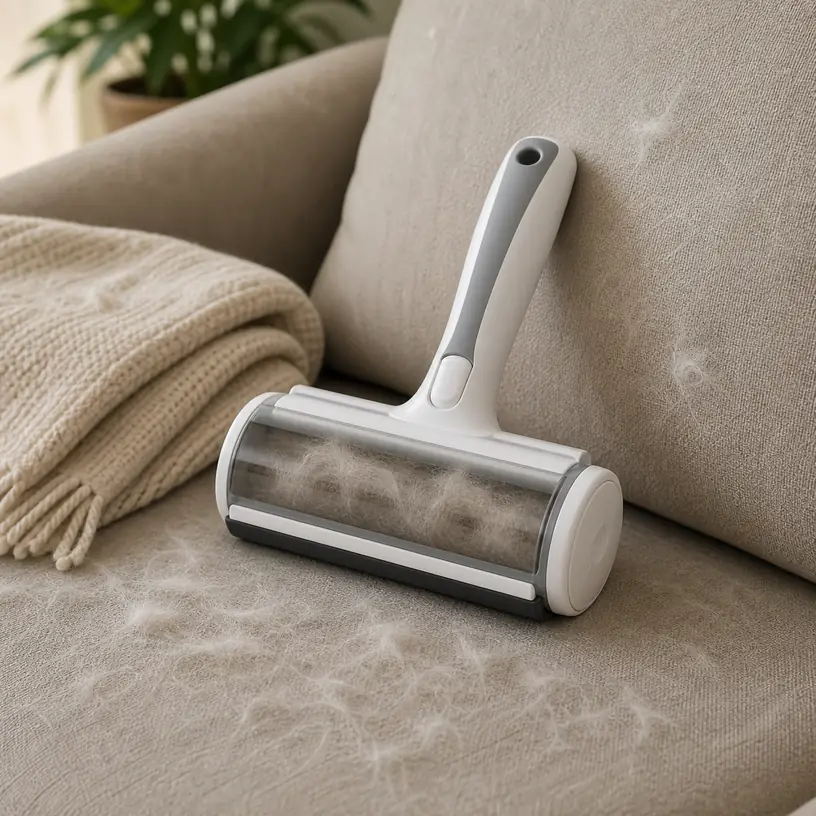
Illustrative image for a reusable pet hair remover roller buying guide

Illustrative image, not an official product photo.

Short answer

A reusable pet hair roller makes the most sense for broad, dry fabric surfaces that collect loose fur repeatedly. Before choosing one, identify where the hair gathers: a flat sofa cushion, rumpled bedding, carpeted stairs, and a contoured car seat can require different reach and handling. Compare the stated surface compatibility, pickup direction, roller or brush width, collection-chamber access, and cleaning instructions. Keep a vacuum or detail tool for seams and floors, because a handheld roller is usually most useful as a quick-maintenance tool rather than a whole-room cleaning system.

Search reference

Reusable pet hair remover roller options

Compare current designs by intended surfaces, working width, stroke direction, handle angle, collection-bin access, and care instructions.

View matching options

Start with the surface, not the amount of hair

The same fur behaves differently on a tightly woven sofa, a soft fleece throw, a quilted comforter, and vehicle upholstery. A roller that moves smoothly over a firm cushion may be awkward on fabric that bunches beneath it. Deep seams, piping, buttons, and curved bolsters can also interrupt the short back-and-forth strokes used by many reusable tools.

List the two or three surfaces you expect to clean most often. Check their care labels, then compare those materials with the tool maker’s current usage guidance. If a listing uses broad language such as “furniture” or “fabric,” look for more specific instructions before assuming it suits velvet, loosely woven textiles, delicate bedding, leather, vinyl, or any other particular surface.

Who this is for

  • Pet households that frequently find loose fur on sofas, upholstered chairs, blankets, or fabric car seats.
  • People who want a reusable option for quick touch-ups between vacuuming sessions.
  • Homes with broad, reasonably firm fabric panels where a handheld tool can make repeated contact.
  • Drivers who need a compact tool for accessible seat centers and backrests.
  • Anyone willing to empty the chamber and remove wrapped hair after each cleaning session.

Who should skip it

  • Skip this style if most of the fur is embedded in deep carpet, along baseboards, or inside narrow upholstery seams; a suitable vacuum attachment may cover those jobs more effectively.
  • Choose a tool intended for the material if the target is delicate, loosely woven, heavily textured, or marked with special care restrictions.
  • Do not expect a pet hair roller to remove stains, odors, damp debris, or fabric pills.
  • An adhesive roller or garment brush may be easier for occasional hair on clothing, depending on the garment’s care guidance.
  • Avoid using a household surface tool directly on a pet unless the product is explicitly designed and instructed for animal grooming.

What to verify before buying

  • Approved surfaces: Confirm which upholstery, bedding, carpet, or vehicle fabrics the current instructions include and exclude.
  • Pickup action: Check whether the tool requires strokes in one direction, alternating short strokes, or another specific technique.
  • Working width: A broad head can cover seat panels quickly, while a narrower tool may be easier to guide near arms, cushions, and car-seat contours.
  • Handle geometry: Compare grip size, clearance above the surface, and whether the handle angle suits both horizontal and vertical panels.
  • Edge reach: Look at how close the pickup surface can work beside piping, seat edges, or furniture arms without the housing getting in the way.
  • Collection chamber: Verify how it opens, whether the contents are visible, and whether loose fur can be removed without reaching into the working mechanism.
  • Tool cleaning: Read how to clear tangled hair and dust from the roller, brush, fabric, or internal parts. Do not assume the entire tool is washable.
  • Storage: Check whether the pickup surface is covered or protected when the tool is stored in a drawer, closet, or vehicle.

How reusable pickup designs differ

Some handheld removers use directional textile surfaces that gather fur as the tool moves back and forth. Others rely on a roller, brush, or textured contact surface that transfers debris into an internal chamber. These designs may look similar in search results while requiring different stroke patterns. The relevant question is not which mechanism sounds strongest; it is whether that mechanism maintains useful contact with the fabric you need to clean.

A self-collecting chamber can make a touch-up feel tidy because gathered hair moves away from the exterior surface. Its capacity is still finite, and internal edges may retain fine hair. Simpler reusable brushes have fewer enclosed areas but may require you to remove debris from the working face by hand or with a separate base. Review the emptying sequence as closely as the pickup claims, especially if several pets make frequent cleaning necessary.

Match the tool to the room

Sofa and chair cushions

Removable cushions can be placed on a firm surface and held steady, which may help a roller maintain contact. Fixed cushions, deep channels, tufting, and rounded arms reduce the usable stroke length. Plan to clean open panels with the roller and use a crevice-capable tool for seams rather than forcing the housing into narrow gaps.

Bedding and throws

Loose blankets tend to travel with a roller. Spreading the item flat and holding one section gently may improve control, provided that method follows the textile’s care guidance. Quilting, fringe, decorative stitching, and loosely knitted areas deserve extra caution. Laundering remains the primary cleaning method when the care label permits it; a roller only addresses loose surface debris.

Vehicle seats

Car interiors combine flat seat centers with bolsters, stitching, buckles, rails, and tight corners. A compact tool may be easier to maneuver, but handle clearance and door-opening space matter as much as head width. Keep the tool away from seat controls and inspect the vehicle upholstery guidance before working on unfamiliar material.

A practical cleanup routine

Begin with a dry surface and remove objects that could catch the tool. Test a small, inconspicuous area using the instructed stroke direction and light pressure. If the fabric snags, stretches, changes appearance, or bunches excessively, stop rather than pushing harder.

Work from open panels toward edges so collected hair is not brushed back across a finished area. Empty the chamber before packed fur interferes with movement or closure. Afterward, inspect the pickup surface and internal path for wrapped strands, then clean only the parts identified in the instructions. A small storage spot near the sofa or entry to the garage can make the tool easier to use regularly, but protect it from grit and moisture.

Limitations

  • Performance varies with hair length, fiber type, static, fabric weave, surface tension, and cleaning technique.
  • Handheld rollers generally leave seams, corners, floor edges, and deeply embedded debris for another tool.
  • Loose blankets and thin covers can bunch or slide during repeated strokes.
  • Internal chambers and brush edges may hold fine fur even after the main contents are emptied.
  • A reusable tool still needs cleaning and can wear over time; verify whether any component is replaceable.
  • Search listings and included accessories change, so confirm the current package and care directions before ordering.

Alternatives to compare

A vacuum with an upholstery or pet-hair attachment can handle larger areas, seams, and nearby floors in one session. A rubber or silicone-style hand brush may offer closer control on contours when its material is appropriate for the surface. Adhesive lint rollers are portable and convenient for small clothing touch-ups but require replacement sheets. Washable covers can protect a favorite pet resting spot and move loose fur into the laundry routine when their care labels permit machine washing. For fabric pills rather than loose hair, use a textile-care method intended for pilling instead of treating the two problems as interchangeable.

FAQ

Do reusable pet hair rollers work on every sofa fabric?

No. Upholstery weaves, piles, coatings, and care requirements vary, and some tools exclude delicate or specialty surfaces. Check the sofa care information and the remover’s current surface guidance, then test a hidden area first.

Should I push harder when fur does not lift?

Use only the pressure and stroke pattern described in the instructions. Extra force can bunch fabric, reduce smooth movement, or mark a sensitive surface. A vacuum attachment or different tool may be a better match for embedded hair.

Can I use the same roller on bedding and car seats?

Possibly, if both surfaces appear in the product guidance and the tool can be cleaned between locations. Bedding may shift under the roller, while car-seat contours and seams can limit the stroke, so one design may not be equally convenient for both.

How often should the collection chamber be emptied?

Empty it before packed hair interferes with pickup, movement, or secure closure, and follow the model’s cleaning directions after use. Homes with multiple shedding pets may need to empty it several times during one session.

Is a reusable pet hair roller a replacement for vacuuming?

Usually not. It can be useful for fast maintenance on accessible fabric panels, while a vacuum is better suited to floors, crevices, broad cleaning, and debris that sits deeper in the textile.

Choosing a Dog Leash for Everyday Walks

Product links are for reference. Verify current details on the retailer page before buying.

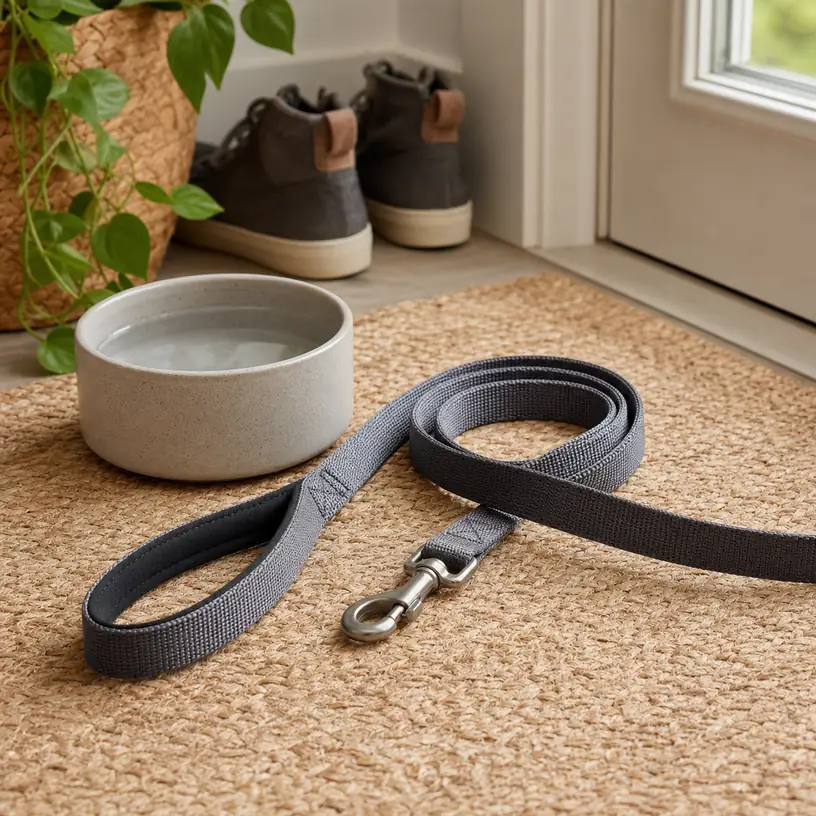
Illustrative image of a generic dog leash for an everyday walking guide

Illustrative image, not an official product photo.

Short answer

For routine neighborhood walks, start with a fixed-length leash that gives your dog enough room to move without making the handle difficult to manage. The useful comparison points are length, strap width, handle comfort, clip operation, visibility after dark, and how easily the leash can be cleaned. Match those details to the dog’s size and walking habits rather than choosing by color alone.

Search reference

Dog leashes for everyday walks

Compare fixed-length walking leashes by dimensions, hardware, grip, visibility, and care instructions.

View matching options

Start with the walk you actually take

A quiet loop around the block creates different handling needs from a crowded sidewalk, a rainy commute, or a walk shared with a stroller. In tighter spaces, excess length can become awkward. On an open route, a little more reach may feel comfortable while still keeping the dog connected to the handler.

Consider who holds the leash, too. A bulky padded loop may suit one person but feel cumbersome in a smaller hand. If several household members share walking duties, a straightforward handle and an easy-to-operate clip can matter more than extra attachments.

Who this is for

  • Dog owners replacing a worn everyday leash.
  • Households assembling basic walking gear for a newly adopted dog.
  • Walkers who prefer predictable fixed-length handling over a retractable mechanism.
  • People comparing a separate leash to use alongside a properly fitted collar or harness.

Who should skip it

  • Anyone expecting a leash to correct pulling or other walking behavior by itself.
  • Buyers who need specialized hands-free, multi-dog, running, or long-line equipment.
  • Owners whose dog has damaged ordinary straps or hardware; discuss suitable restraint and training with an experienced professional.
  • Shoppers who have not yet selected a compatible, properly fitted collar or harness.

What to verify before buying

  • Listed dimensions: Confirm the total length and strap width instead of relying on lifestyle photos.
  • Dog suitability: Check the maker’s sizing or weight guidance and do not assume every width or clip suits every dog.
  • Clip construction: Look at how the gate opens, rotates, and attaches to the strap, then inspect it regularly once in use.
  • Handle shape: Compare lining, seam placement, loop size, and whether padding becomes slow to dry.
  • Visibility details: If walks happen near dawn or after dark, verify whether reflective material is actually listed and where it appears.
  • Care instructions: Mud, salt, and rain can affect fabric and hardware, so check the recommended washing and drying method.
  • Attachment compatibility: Make sure the clip fits the intended collar or harness ring without crowding or binding.

Length changes how a leash feels

A fixed leash keeps the available distance consistent, which can make routine handling easier to anticipate. Shorter options reduce loose material in busy areas, while longer ones allow more sniffing room where conditions permit. The right choice depends on the route, local rules, and the handler’s ability to gather slack without wrapping it around a hand.

Product names do not always describe measurements consistently. Read the listed dimensions and check whether the stated length includes the handle and clip. If precise reach matters, this detail is worth confirming before ordering.

Strap, seams, and handle

Common listings use woven synthetic webbing, rope-like construction, or other fabric assemblies. Rather than inferring durability from appearance, compare the stated materials, edge finish, stitching around load-bearing points, and any care limitations. A wider or thicker leash can feel substantial, but it may also add weight and bulk for a small dog or a walker with limited grip comfort.

At the handle, look for smooth edges and sensible seam placement. Padding may reduce pressure during ordinary handling, yet it can absorb water or make the loop less compact. Some leashes add a second traffic handle near the clip; that can be useful in specific settings, but its position should suit the dog’s height and the handler’s reach.

Hardware deserves a close look

The clip is a small component with an important job. Listings may show trigger-style, bolt-snap, carabiner-like, or locking designs, but names alone do not confirm performance. Check the opening method, dimensions, material description, swivel arrangement, and any maker-provided use limits.

Before each walk, glance at the gate, connection point, stitching, and strap for deformation or wear. Replace walking gear when damage appears rather than waiting for a complete failure. No clip design removes the need for routine inspection.

Limitations

  • A leash does not replace a secure, correctly fitted collar or harness.
  • Reflective accents improve visibility only when light reaches them; they are not a substitute for attentive walking practices.
  • Chewing, dragging, weather, and repeated washing can shorten the useful life of walking gear.
  • Product photos may not show true scale, handle fit, or how the hardware operates.
  • A standard daily leash may not be appropriate for restraint in vehicles, tie-outs, training long lines, or running.

Alternatives to compare

  • A shorter traffic leash for controlled transitions in crowded spaces.
  • A long line for appropriate training or recall work in a suitable open area.
  • A hands-free waist leash designed specifically for walking or running.
  • A coupler or purpose-built multi-dog setup for walking more than one dog.
  • A retractable leash, after considering the route, local rules, mechanism, and handling tradeoffs.

FAQ

What leash length works for a normal neighborhood walk?

There is no single length for every route. Compare fixed lengths against sidewalk width, traffic, the dog’s walking habits, and how comfortably you can manage slack; confirm the actual listed dimensions before buying.

Is a padded handle always more comfortable?

Not always. Padding can soften the grip, but thickness, loop size, seam position, and drying time also affect comfort. A simpler handle may fit some walkers better.

Should I choose a reflective dog leash for evening walks?

Reflective details are worth comparing when you often walk in low light. Verify where the reflective material appears, and use it as one part of a broader visibility and safety routine.

Can the same leash be used with a collar and a harness?

It may fit both if the clip is compatible with each attachment ring, but check ring clearance and the equipment makers’ instructions. The collar or harness must also fit the dog correctly.

How often should a dog leash be replaced?

There is no universal schedule. Inspect the strap, seams, handle, clip gate, and connection points regularly, then replace the leash when you find fraying, damage, deformation, unreliable closure, or other meaningful wear.

Pet Food Storage Containers for Cleaner Pantry and Feeding Areas

Product links are for reference. Verify current details on the retailer page before buying.

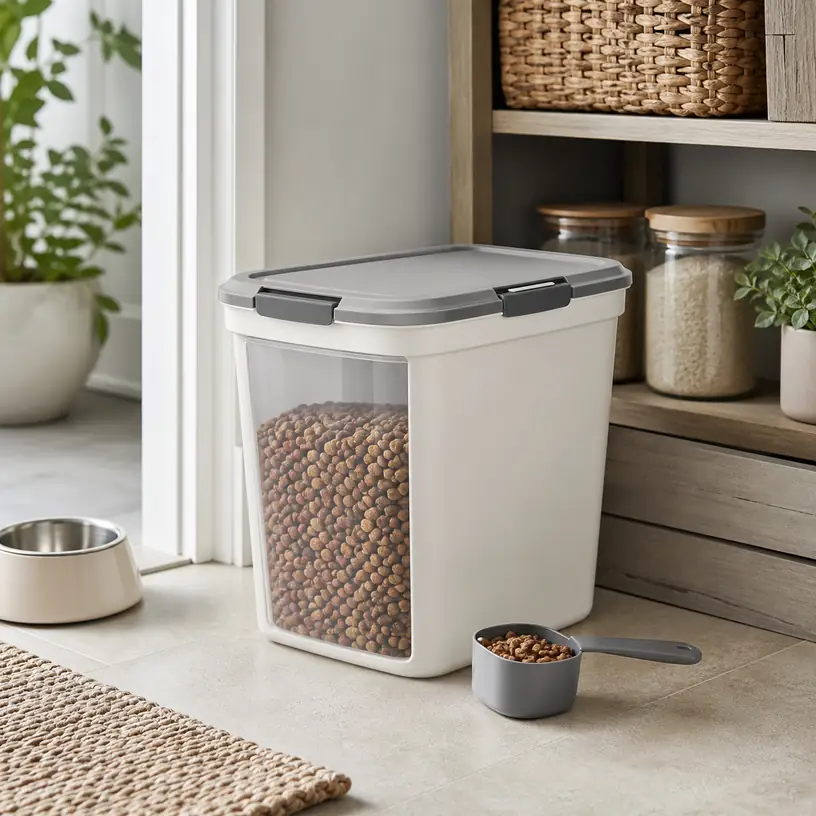
Illustrative image for a pet food storage container buying guide

Illustrative image, not an official product photo.

Short answer

A pet food storage container is worth comparing when an open bag of kibble keeps sliding around a pantry, attracting spills near the feeding station, or making daily scooping messier than it needs to be. The right container depends on the size of the food bag you buy, where the container will sit, how tightly the lid closes, whether you need wheels or a scoop, and how easy the interior will be to clean between refills.

Search reference

Pet food storage container options

Compare container capacity, lid style, scoop storage, mobility, and footprint before choosing a bin for a pantry, laundry room, garage-adjacent entry, or everyday feeding corner.

View matching options

Start with the bag, not the bin

Pet food storage usually goes wrong when the container is chosen by outside appearance alone. A bin may look large in a product photo but still fail to hold the bag size you buy most often. It may also fit the food only if you pour it loose, which is not always how a household wants to manage labels, feeding instructions, lot codes, or freshness dates. Before comparing designs, write down the typical bag weight or volume you purchase and decide whether the original bag will stay inside the container or be emptied into it.

Location matters just as much as capacity. A tall narrow container can work beside a trash can or washer, while a wide rolling bin may be easier under a utility shelf. If the food lives near bowls, the lid should open without bumping a wall, counter overhang, or closet door. If it lives in a pantry, check shelf height and whether the scoop can be reached without moving other items.

The goal is not to make pet food look decorative. It is to reduce torn bags, loose crumbs, odor transfer, floor spills, and the daily friction of feeding. A practical container should make the routine easier for the person who feeds the pet most often.

Who this is for

  • Dog or cat owners who buy dry food in bags that are awkward to reseal neatly.
  • Households that keep kibble in a kitchen, pantry, mudroom, laundry room, or feeding station.
  • Anyone trying to reduce floor spills from scooping out of a folded paper or plastic bag.
  • Multi-pet homes that need separate containers for different foods, life stages, or formulas.
  • Renters or small-space households that need a container with a predictable footprint.

Who should skip it

  • Skip a large rigid bin if you buy very small bags and already use them quickly without storage problems.
  • Avoid decorative-only containers if you need clear capacity, tight closure, or easy cleaning more than countertop styling.
  • Choose a different storage method for wet food cans, pouches, treats, supplements, or refrigerated items.
  • Be cautious with garage or outdoor storage unless the listing clearly supports the temperature, humidity, and pest concerns of that location.

What to verify before buying

  • Confirm whether the stated capacity refers to pounds, quarts, liters, or a specific approximate bag size.
  • Check interior dimensions if you plan to keep the original food bag inside the container.
  • Review lid design, latch style, gasket wording, and whether replacement parts are mentioned.
  • Look at the footprint, height with lid open, and where the scoop is stored.
  • Verify whether wheels, casters, handles, or stackable features are included and appropriate for the filled weight.
  • Read cleaning guidance before assuming the container is dishwasher safe or easy to wash by hand.
  • Check material notes and current product details on the retailer page before buying.

Capacity decisions affect daily use

Capacity is the most practical first filter. If a container is too small, you may end up with half a bag still folded beside it, which recreates the clutter you were trying to solve. If it is too large, it can become hard to move, clean, or fit through a pantry opening. Some listings describe capacity by dry quarts, others by approximate pounds of pet food, and the relationship between those numbers changes with kibble shape and density.

For many homes, the cleanest routine is to choose a container that matches the bag size normally purchased rather than the largest bag sold. If different people buy food, choose a size that allows a little headroom so the lid can close without crushing the top layer. If you want to store the original bag inside the container, the bin needs extra width and height beyond the loose-food volume.

Multi-pet households should think in labels as well as liters. Two similar containers can prevent mix-ups if one pet eats a special formula, but they should be easy to tell apart without relying on memory. A label window, writable surface, or clearly separated storage spot may matter more than an oversized single bin.

Lid, seal, and scoop details

A pet food container lid has to be convenient enough to open every day but secure enough not to pop loose when the bin is moved. Flip lids are quick for frequent scooping. Screw-top or latch-top designs may feel more deliberate, especially when the container is stored low or near curious pets. If airtight performance is important to you, look for clear gasket and closure wording rather than assuming every plastic bin seals the same way.

Scoops are useful only when they have a place to live. A scoop clipped under the lid or stored in a separate holder is less likely to disappear into a drawer or sit on top of the food. Check whether the scoop size matches your feeding routine; a large scoop can be clumsy for cats or small dogs, while a tiny scoop may be annoying for larger portions.

Cleaning access is easy to overlook. Narrow openings can make it difficult to wipe corners, remove crumbs, or dry the container fully before refilling. A smooth interior with fewer seams is simpler to clean than a decorative shape with grooves. If you rotate foods, change formulas, or have a pet with sensitivities, cleaning instructions deserve extra attention.

Storage placement and movement

A full pet food container can be heavy. Wheels or casters are helpful under a pantry shelf or beside a feeding area, but only if they roll well on the floor surface where the container will be used. Handles matter if the bin will be lifted in and out of a closet. A stackable design can save space, but the lower container still needs to open without unloading the entire stack.

For kitchens and apartments, measure the exact spot before choosing. The lid may need extra clearance behind a counter edge. A container near a doorway should not become a toe-stubbing obstacle. A bin in a laundry room should not block appliance doors, vents, or cleaning supplies. If the feeding area is visible, a neutral design may be pleasant, but usability should still come first.

Think about crumbs and floor care too. Some containers have bottom edges that trap kibble dust when pulled across tile or wood. Others are easier to lift for sweeping. If your pet tends to nudge containers, a low wide footprint may be steadier than a tall narrow one.

Limitations

  • A storage container cannot improve food quality or replace the storage instructions from the food manufacturer.
  • A loose or poorly fitted lid may not solve odor, humidity, or pest concerns.
  • Large bins can become difficult to wash in a small sink or apartment bathroom.
  • Wheels add convenience but can feel unstable on uneven floors or when the container is nearly empty.
  • Capacity claims are approximate because kibble size, shape, and density vary by food.

Alternatives to compare

  • A smaller treat container for biscuits, training rewards, or dental chews kept near the door.
  • A stackable pantry bin if you store several small pet supplies rather than one large food bag.
  • A metal lidded can for households that prefer a heavier container and do not need transparency.
  • A wall-mounted or shelf-based storage setup if floor space around the feeding station is limited.
  • Keeping food in the original bag with a dedicated clip if turnover is fast and pests or spills are not an issue.

FAQ

Should pet food stay in the original bag inside the container?

Keeping the original bag inside can preserve label details, feeding directions, batch information, and freshness dates. It also keeps the container cleaner. If you prefer this approach, verify the interior dimensions instead of relying only on loose-food capacity.

How large should a pet food storage container be?

Choose around the bag size you actually buy, with enough extra space for the lid to close easily. A very large container may look convenient but can be harder to move, wash, and fit into a pantry or feeding area.

Are wheels useful on a pet food container?

Wheels are useful when the filled container needs to slide out from under a shelf or move between a pantry and feeding area. They are less important if the bin stays in one open corner and can make the container feel less stable on uneven floors.

What should I check if odor control matters?

Look for specific lid, latch, and gasket wording, then consider where the container will be stored. A tight lid helps, but odor control also depends on cleaning, food freshness, humidity, and whether crumbs collect around the rim.

Can one container hold food for multiple pets?

One container can work if all pets eat the same food and the capacity fits your routine. If pets eat different formulas or portion plans, separate labeled containers reduce the chance of feeding mistakes.

Pet Grooming Brushes: Who They Fit and What to Check Before Buying

Product links are for reference. Verify current details on the retailer page before buying.

Illustrative image for a pet grooming brush buying guide

Illustrative image, not an official product photo.

Short answer

Pet grooming brushes can help routine coat care, loose-hair removal, and basic grooming at home. Compare coat compatibility, brush head style, bristle comfort, handle grip, cleaning method, and whether the tool suits your pet before buying.

Search reference

Pet grooming brush options

Compare current options and verify details on the retailer page before buying.

View matching options

What this product type is

A pet grooming brush is a tool for brushing cats, dogs, or other coat types at home. Designs vary by bristle style, pin shape, self-cleaning mechanism, handle grip, and whether the brush is intended for short hair, long hair, shedding, or detangling.

This guide treats the seed listing as a category signal only. Compare current matching options and verify details on the retailer page before buying.

Who this is for

  • Pet owners who want a basic tool for regular coat care.
  • Cats or dogs that tolerate gentle brushing.
  • Homes that need help managing loose hair between professional grooming visits.
  • Buyers comparing brushes by coat type and cleaning convenience.

Who should skip it

  • Skip home brushing if your pet has skin irritation, wounds, severe matting, or distress during grooming.
  • Ask a veterinarian or professional groomer for medical, behavioral, or difficult coat issues.
  • Avoid sharp or aggressive tools if your pet has sensitive skin.

What to verify before buying

  • Check whether the brush is described for cats, dogs, short hair, long hair, or specific coat needs.
  • Verify bristle or pin shape and whether tips look suitable for your pet’s skin sensitivity.
  • Compare handle grip, brush head size, and self-cleaning mechanism if included.
  • Check cleaning instructions and whether water, mist, or detachable parts are involved.
  • Confirm that the tool is not presented as a substitute for veterinary care.
  • Review seller information and return policy before buying.

Main buying notes

Coat type matters most. A tool that works for a short-haired cat may not suit a long-haired dog or a pet with dense undercoat.

Comfort matters for both pet and owner. A secure handle helps control pressure, while gentle bristle tips can reduce discomfort.

Cleaning design affects how often you use the brush. Self-cleaning buttons, detachable heads, and simple surfaces can make maintenance easier.

For mats, skin problems, or anxious pets, a professional opinion is safer than guessing with a new tool.

Limitations

  • A grooming brush cannot diagnose or treat skin, coat, or shedding problems.
  • Some pets dislike brushing even with a gentle tool.
  • Severe mats may need professional grooming rather than home brushing.
  • Coat compatibility wording can vary, so verify details before buying.

Alternatives to compare

  • Slicker brushes for certain longer coats.
  • Deshedding tools for heavy seasonal shedding.
  • Grooming gloves for pets that dislike rigid brushes.
  • Professional grooming services for mats, trimming, or difficult coats.

FAQ

How do I choose a pet grooming brush by coat type?

Start with your pet’s coat length, thickness, shedding level, and skin sensitivity, then verify the listing’s intended use.

Is a self-cleaning brush worth comparing?

It can be helpful if loose hair builds up quickly, but verify how the mechanism works and whether it is easy to clean.

Can I use one brush for cats and dogs?

Sometimes, but coat type and skin sensitivity matter more than the animal label. Verify suitability before buying.

Should I brush out severe mats at home?

No. For severe matting, skin irritation, wounds, or pet distress, ask a veterinarian or professional groomer.

What should I verify before buying?

Verify coat compatibility, bristle style, handle comfort, cleaning method, pet safety notes, and return policy.