A Dog Car Seat Cover That Fits Your Back Seat and Travel Routine
Product links are for reference. Verify current details on the retailer page before buying.
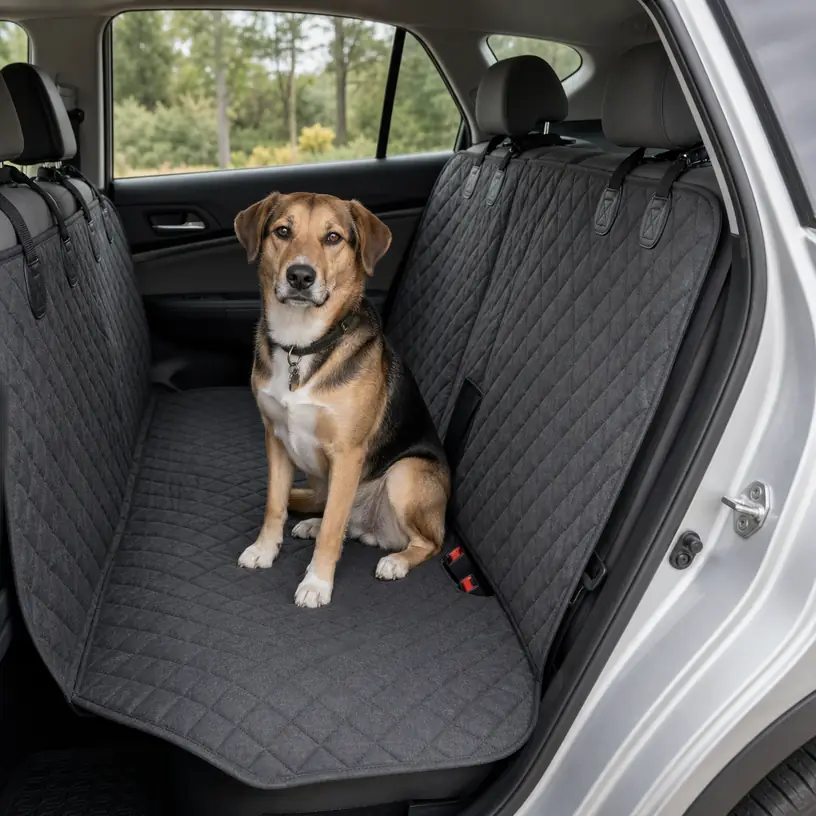
Illustrative image, not an official product photo.
Short answer
Choose a dog car seat cover around the vehicle first and the dog second. Measure the usable rear bench, count the headrests and seat belts you need to reach, and note whether a passenger or child restraint will share the row. A hammock-style cover can shield the seatback and footwell during dog-only trips, while a bench cover or split-folding design is usually easier to adapt when people ride beside the dog. Treat water-resistant wording as limited spill protection unless the listing states a clear construction and care method.
Search reference
Dog car seat cover options
Compare rear-seat dimensions, bench and hammock layouts, attachment points, seat-belt openings, door coverage, and cleaning instructions for your usual vehicle setup.
View matching optionsMap the back seat before comparing covers
Vehicle interiors make nominal width only a starting point. Contoured bolsters, a raised center position, fixed headrests, narrow door openings, and a seatback that folds in sections can all change how a rectangular cover sits. Measure across the part of the bench the dog will actually use, then measure from the top attachment area to the front edge of the cushion. If you want a hammock layout, also check the distance to the front headrests with the front seats in their normal driving positions.
Make a quick inventory of anything that must remain accessible: buckles, a center armrest, child-seat anchors, a fold-down seat release, air vents, and door handles. Openings that look convenient in a listing are only useful if they line up with your vehicle. A slightly smaller cover with well-placed access can be more practical than a larger cover that blocks the hardware you use.
Pick a layout for the way the row is shared
A bench cover follows the rear seat and leaves the footwell open. It is straightforward for dogs that settle on the cushion and for vehicles that frequently switch between pets and passengers. Check how the front edge is held in place; loose fabric can bunch when a dog turns around or jumps in.
A hammock cover attaches to both front and rear headrests, creating a fabric span behind the front seats. This can contain dirt across more of the seating area and discourage some dogs from stepping directly into the footwell, but it is not a crash barrier or restraint. Confirm that the design does not interfere with the driver’s seat position, center console, vents, or controls.
A split or convertible cover can expose part of the bench for a person. Look closely at where the split occurs and how each section is secured. “Convertible” can describe several arrangements, so use listing diagrams and dimensions rather than the label alone.
Covers with door flaps extend protection toward the side panels. They can be useful for muddy paws, but the flap attachment must suit the window and door trim. Do not route a strap where it could obstruct a window, latch, side airbag area, or safe exit.
Who this is for
- Dog owners who want a removable layer between fur, damp paws, and the rear upholstery.
- Drivers whose dogs ride on the back bench during routine errands, trail outings, or visits.
- Households that need a cover they can remove or reconfigure when passengers use the same row.
- Vehicle owners willing to measure the cabin and check attachment compatibility before ordering.
This guide is about surface protection and cabin organization. A seat cover does not replace a travel crate, vehicle barrier, or properly selected dog restraint.
Who should skip it
- Anyone expecting a loose cover to provide crash protection or keep a dog secured during sudden braking.
- Drivers whose vehicle manual restricts attachments or accessories around the seat, headrest, anchor, or airbag areas in question.
- Households that cannot keep required passenger belts or child-restraint hardware fully usable.
- Dogs that chew fabric, straps, buckles, or exposed fasteners during travel.
What to verify before buying
- Usable dimensions: Compare the stated cover width and depth with the contoured area of your bench, not only the vehicle’s published cabin width.
- Headrest requirements: Some covers rely on adjustable headrest posts. Confirm how many attachment points the design needs and whether your headrests support them.
- Seat anchors and buckles: Check the number and position of tucked anchors, nonslip backing areas, buckle openings, and any hook-and-loop closures.
- Passenger configuration: If a person shares the row, verify the exact split arrangement and that the occupied seating position remains unobstructed.
- Child-seat compatibility: Follow the vehicle and child-seat manuals. Never assume a cover can be placed under or around a child restraint simply because access slits are shown.
- Door-panel coverage: Confirm how flaps attach and whether the setup stays clear of windows, latches, airbags, and trim.
- Cleaning method: Look for explicit instructions on vacuuming, wiping, hand washing, or machine washing. Layered or coated materials may have different care limits.
- Surface-protection claims: Distinguish water-resistant or spill-resistant wording from a specific waterproof construction, and inspect seams and openings where liquid could pass.
Fabric, backing, and real-world cleanup
The top layer needs to suit the mess you expect. Smooth surfaces can release dry fur more easily, while quilted fabric may feel less slick under paws but can hold debris in its stitching. A dark color can hide soil between cleanups, although light-colored hair may remain more visible. These are maintenance tradeoffs, not a universal quality ranking.
Underneath, a grippy backing and seat anchors may reduce sliding, but they are not suitable for every upholstery finish. Read both the cover instructions and the vehicle care guidance, especially for leather, delicate coatings, heated seats, or ventilated seats. Remove the cover periodically to check for trapped grit or moisture rather than leaving it installed indefinitely.
For muddy trips, think beyond whether the center panel wipes clean. Dirt collects along seams, beneath hammock edges, around buckle openings, and where the cover meets the doors. A design that opens flat and can be carried out without spilling debris may save more time than one with many padded layers.
Installation details worth checking at home
Install the cover while the car is parked and empty. Adjust the front seats to their normal positions, secure every intended attachment, then verify that the fabric does not pull on headrests or drape over controls. Open and close both rear doors and operate the seat belts you plan to use.
Before the first drive with the dog, press and shift the cover by hand to find loose sections. Let the dog enter while the vehicle remains parked so you can see whether the fabric bunches under paws or a strap becomes tempting to chew. Recheck attachment tension after the first few trips and whenever the seating configuration changes.
A protective cover also needs a safe boarding routine. Park away from traffic when possible, control the dog before opening the door, and do not rely on a door flap or hammock panel to contain an excited animal.
Limitations
- Universal-fit covers may leave gaps or excess fabric in shaped, narrow, or unusually wide rear seats.
- Openings for buckles and split seats are potential paths for fur, sand, and liquid.
- Nonslip backing and anchors can reduce movement but cannot guarantee that a cover stays flat under every dog.
- A hammock panel is not a structural barrier, safety harness, or substitute for appropriate travel restraint.
- Repeated washing, heat, claws, and abrasion can affect coatings, seams, straps, and backing over time.
- Even a well-fitted cover will not protect every door edge, carpeted side, or cargo surface.
Alternatives to compare
A fitted rear-seat liner may follow a specific vehicle more closely than a universal rectangle. A hard or soft travel crate can be considered when the vehicle, dog, and secure installation method are compatible. A cargo-area liner may suit dogs that ride in an appropriate rear cargo setup, while a simple washable blanket can handle light fur on short parked-car transfers but offers less secure coverage.
If the main problem is loose hair rather than wet or muddy travel, regular upholstery vacuuming and a reusable pet-hair tool may be simpler than keeping a full cover installed. Choose the approach according to the mess, the seating arrangement, and safe vehicle use rather than the number of accessories included.
FAQ
Does a dog car seat cover replace a dog seat belt or travel crate?
No. A cover protects upholstery and organizes the seating surface; it is not a restraint or crash-tested enclosure. Choose any restraint or crate separately, following its instructions and the vehicle manual.
Is a hammock cover practical when someone sits beside the dog?
A fully extended hammock often prioritizes a dog-only rear row. A split or convertible design may expose a passenger position, but the split must align with your bench and all passenger restraints must remain correctly usable.
How do I know whether a universal cover will fit my car?
Measure the usable bench and seatback areas, check the front-to-rear span for a hammock, and compare headrest, buckle, anchor, door, and split-seat locations with the listing diagrams. A vehicle name in a compatibility list should not replace those checks.
Can I use a seat cover with a child car seat?
Do not assume compatibility. A cover can change how a child restraint contacts the vehicle seat or can obstruct required anchors and belt paths. Follow the child-seat and vehicle manufacturers’ instructions; if they do not permit the arrangement, keep the cover out of that seating position.
What is the easiest style to clean after a muddy walk?
Look for explicit care instructions, accessible seams, and a layout that can be lifted out without dropping debris into the footwell. A wipeable top may help with fresh mud, but removable fur and dried grit often still require vacuuming or brushing.
Will a water-resistant cover protect the seat from every spill?
Not necessarily. Liquid can pass through seams, access openings, worn coatings, or uncovered edges. Treat the term as a prompt to inspect construction and care details, and clean spills promptly rather than relying on the cover as a sealed liner.