Pastry Brushes for Baking: Bristles, Control, and Cleanup
Product links are for reference. Verify current details on the retailer page before buying.
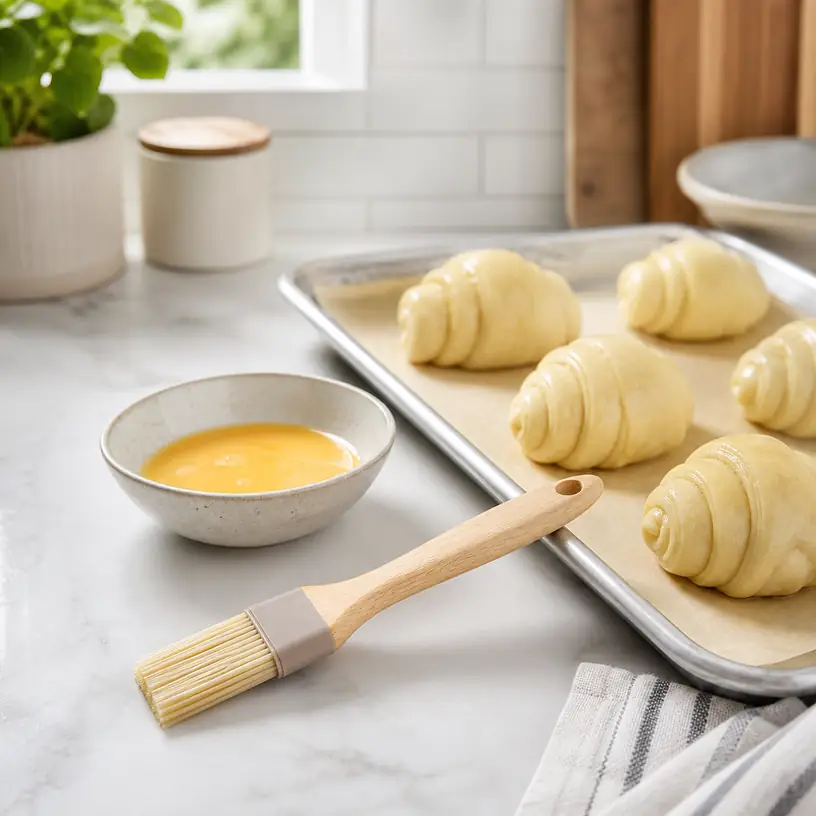
Illustrative image, not an official product photo.
Short answer
Choose a pastry brush around the jobs you repeat, not around the largest set. A soft, relatively narrow head can help place egg wash along delicate dough without flooding seams; a broader head may cover bread or sheet-pan work faster; and a firmer silicone-style brush can be convenient for melted butter or other liquids when the stated temperature and care instructions suit the task. Compare the working width, bristle or tine density, liquid retention, handle balance, head attachment, cleaning access, drying routine, and protected storage. If the same kitchen also uses a brush for strongly flavored marinades, keeping a clearly separate baking brush can simplify flavor control and food-handling routines.
Search reference
Pastry brushes for baking
Compare head width, bristle construction, shedding precautions, heat guidance, handle length, cleaning access, and storage before choosing a brush.
View matching optionsBegin with the layer you are trying to apply
A pastry brush does not have one universal assignment. It might spread a thin egg wash over shaped rolls, carry melted butter onto dough, remove loose flour, dampen an edge before sealing, grease a pan, or coat the exposed surface of a loaf. Each job places different demands on the head. A brush that holds a generous amount of liquid can make quick work of a broad surface but may release too much near a crimped edge. A small brush offers more placement control, though repeated refilling can make a large batch slow.
Think about the texture under the brush as well. Chilled laminated dough, soft proofed dough, a crumbly pie edge, and the solid surface of a baking dish should not all be handled with the same pressure. A flexible head that follows a curve may be useful on rolls, while defined bristle tips can reach uneven details. The practical goal is an even film with as little dragging, pooling, and deformation as possible—not simply moving the greatest volume per stroke.
Make a short list of the actual liquids you use. Egg wash can have a different body from melted butter, milk, glaze, oil, or water. Thick mixtures may remain between densely arranged elements, while very thin liquids can run down a handle if the brush is overloaded. Product descriptions rarely capture every recipe, so head geometry and cleaning access are more dependable comparison points than sweeping claims about “all basting.”
Who this is for
- Home bakers applying egg wash to breads, rolls, hand pies, or other shaped dough.
- Cooks who want more control than pouring or spooning when spreading melted butter or a light coating over a broad surface.
- Households replacing an old brush that has loose bristles, a cracked handle, trapped residue, or an insecure head.
- Batch bakers who can match a wider head to sheet-pan work while keeping a smaller brush for detailed edges.
- Kitchens willing to clean and dry the spaces at the base of the head immediately after use.
Who should skip it
- Someone who bakes only occasionally may be able to use the back of a spoon, a clean piece of folded parchment, or another recipe-appropriate tool already in the kitchen.
- A refillable oil mister serves a different purpose when the goal is a very light spray rather than direct brushing, provided the ingredients and equipment instructions are compatible.
- A dedicated barbecue or grill brush is a better category to compare for outdoor cooking; a delicate pastry tool should not be assumed to tolerate those surfaces or temperatures.
- Avoid a multi-piece set if the extra sizes will be difficult to identify, store, or keep separate by use.
- Do not continue using any brush with loose fibers, torn tines, exposed hardware, cracks, persistent residue, or a head that moves unexpectedly.
What to verify before buying
- Working width: Compare the actual contact area with small pastries, loaf tops, pan corners, and the batch sizes you prepare.
- Head style: Identify whether the working elements are individual bristles, grouped synthetic fibers, molded tines, or another construction; do not infer this from a distant image.
- Softness and recovery: Look for guidance on intended baking uses and whether the head returns to shape rather than remaining splayed after cleaning.
- Head attachment: Check whether the head is fixed, removable by design, or molded around the handle, and inspect the transition for narrow residue traps.
- Shedding guidance: Read inspection and replacement advice, especially for a fiber-bristle design, and examine the brush before every use.
- Handle control: Compare length, thickness, grip shape, balance, hanging openings, and clearance above bowls and hot cookware.
- Temperature limits: Verify the maker’s current maximum-use guidance for the complete brush, including the head, handle, adhesive, finish, and any joint.
- Cleaning method: Confirm whether hand washing or a dishwasher is specified and whether a removable part needs a particular orientation or reassembly check.
- Drying and storage: Look for a way to dry the base of the head fully and store the brush without crushing or contaminating its working surface.
- Set composition: If buying several brushes, check whether the widths are meaningfully different and decide how each will be labeled or assigned.
Natural-style bristles and molded heads behave differently
Traditional-looking pastry brushes often use many fine fibers held at the end of a flat handle. The individual tips can form a soft, feathered contact area and carry liquid into small contours. That makes this format worth comparing for fragile pastry and detailed egg-wash work. The same dense bundle creates a cleaning obligation: liquid and dough can move toward the ferrule or base, where close-packed fibers take longer to rinse and dry.
The source of the bristles, the way they are secured, and the suitability of the complete brush for food contact should be stated by the seller or maker. A natural appearance does not establish the material, and a material name does not guarantee that no fiber will loosen. Inspect the head before loading it and look over the food after brushing. A brush that repeatedly sheds should be taken out of service rather than treated as a normal inconvenience.
Molded silicone-style heads usually replace fine fibers with rows of thicker flexible tines or flaps. They can provide visible gaps for rinsing and may be less likely to leave a hairlike strand behind. However, thicker elements may carry and release a thin wash differently, leaving lines or moving a larger droplet at once. Closely spaced molded tines, seams around a removable head, and hollow handles can still retain material if the design is difficult to reach.
Neither format is automatically more precise, more hygienic, or more durable. Construction quality, head geometry, the recipe, cleaning habits, drying time, and replacement condition all matter. If possible, compare a close head-on image and the full care instructions instead of choosing from the words “professional,” “premium,” or “easy clean.”
Width should match both the pastry and the bowl
A narrow brush can trace borders and work around scoring without painting the cut faces. It can also fit inside a small prep bowl, allowing only the tips to touch the wash. That reduces the urge to submerge the ferrule or handle joint. The tradeoff is more strokes across a loaf and more opportunities to revisit an area that is already coated.
A broad brush may make fewer passes over sandwich loaves, focaccia, or a pan being prepared, but only if its full width can make contact. On a rounded roll, a stiff wide head might touch at the center while leaving the sides uneven. In a narrow bowl, the outer bristles can scrape the rim or push liquid over the side. Compare the head width with both the food and the container used for the coating.
Sets can help when the included sizes represent distinct jobs. One compact brush might stay with pastry work, while a wider one handles baking dishes or large loaves. Extra pieces are less useful when they are nearly identical or become mixed with brushes used for pungent sauces. Color differences can help, but a label, drawer divider, or separate container is more reliable than remembering a subtle shade.
The handle changes pressure and mess
A pastry brush is controlled from several inches behind its working edge. A thick, highly contoured handle may feel secure during broad strokes yet make fingertip rotation awkward. A slender flat handle offers another kind of control but can turn in a wet hand. Consider how you hold a pen and how you approach a sheet pan from the side; the best geometry keeps the wrist comfortable while letting the tips land lightly.
Length affects reach and balance. A short handle positions the hand close to detailed work but also closer to sticky dough and the rim of the bowl. A longer handle creates clearance around deep pans and warm cookware, though a head-heavy or handle-heavy brush can tip out of a small bowl. If the product has a raised rest or angled neck, confirm that it actually keeps the coated head off your usual counter or plate.
Wood, plastic, metal, and composite-looking handles come with different care questions, but appearance alone is not enough to identify the material or washing method. Check for seams, exposed fasteners, decorative grooves, painted areas, and hanging holes where moisture may remain. If a wooden handle is specified, follow its washing and drying directions rather than assuming it can soak or go through a dishwasher cycle.
Heat guidance applies to more than the bristles
Many baking applications happen before a pan enters the oven, which reduces the need for extreme temperature claims. Other jobs involve melted butter, a warm loaf, or a heated baking dish. The temperature limit should cover the complete tool and the way it is used, not merely the apparent head material. A molded head may tolerate conditions that its handle, connection, or decorative coating does not.
Do not leave a pastry brush resting on the edge of a hot pan, near a burner, or inside an oven. Brief contact and prolonged exposure are different conditions. Steam, splattering fat, and a hot handle can also create risks before a nominal material limit is reached. Use a heat-safe rest away from the cooking zone and follow the recipe and equipment guidance.
A brush used only for cool dough still benefits from a clear assignment. Keeping baking tools away from raw-meat preparation reduces the chance of confusing which brush handled which ingredient. If a brush does contact a raw animal ingredient such as egg, treat the remaining mixture, brush, bowl, counter drips, and hands according to appropriate food-safety guidance; appearance is not a reliable indicator that contamination has been removed.
Cleaning starts before the coating dries
Rinse or wash the brush promptly according to its instructions. Egg wash, butter, syrup, and glaze become harder to remove when left between bristles or around a head joint. Direct water through the working elements rather than only across the outside, and use a suitable cleaning tool if the maker recommends one. Keep fingers away from sharp pan residue or any exposed wire at the ferrule.
For a removable head, disassembly is helpful only when it is intended and the parts can be cleaned, dried, and reattached correctly. Inspect both the socket and the stem. A head that seems secure while dry may move when loaded with a sticky coating, so confirm the connection before bringing it over food. Never pry apart a fixed joint merely because a seam is visible.
Dishwasher-safe wording does not answer every care question. Check rack placement, temperature or cycle restrictions, whether all components are included in the claim, and whether the design can drain. Dense fibers and enclosed cavities can remain damp after the rest of the load looks dry. Allow the brush to air-dry fully in the orientation directed before placing it in a drawer or covered container.
Odor, staining, and discoloration should be interpreted through the maker’s guidance rather than used as the only cleanliness test. A brush can look clean while holding residue at its base, and a stain does not by itself establish unsafe condition. Persistent odor, tackiness, cracking, looseness, or material changes are reasons to stop and inspect the care or replacement instructions.
Store the head without bending it
The working edge should not be crushed beneath spatulas or pressed against a dirty drawer wall. Fine bristles can dry into an uneven fan, while flexible tines can take on an awkward position if held under weight. A dedicated utensil compartment, breathable upright holder, or supported hanging position can protect the shape, provided the brush is fully dry and the head does not contact other items.
Hanging is useful only when the opening is designed for it and the brush cannot swing against a backsplash, range, or frequently handled utensil. A closed case can guard against drawer contact, but trapping residual moisture creates another problem. Check whether any supplied cover is intended for long-term storage or merely for shipping.
Inspect the brush as you take it out, not after the wash is already on the pastry. Gently check for looseness at the head and ferrule, look for separated bristles or torn molded elements, and make sure the handle is not cracked. A thirty-second inspection protects both the recipe and the rest of the batch from a tool that has reached the end of its useful life.
Limitations
- Product photos do not reveal how softly a head moves across proofed dough or how evenly it releases a particular egg-wash mixture.
- Fine bristles can be difficult to inspect and dry near a dense base, while molded tines may leave visible tracks in a thin coating.
- Temperature wording may apply to only part of a brush unless the complete-tool instructions say otherwise.
- A removable head adds cleaning access but also adds a connection that must be checked and reassembled correctly.
- Dishwasher permission does not guarantee that residue will leave every seam or that every cavity will dry during the cycle.
- One width may feel clumsy on small pastry yet slow on a full sheet of rolls or a large loaf.
- A baking brush should not automatically be treated as interchangeable with a grill, barbecue, cleaning, or craft brush.
Alternatives to compare
The back of a spoon can spread a small amount of melted butter or a thick glaze over a sturdy flat surface, though it offers less control around detailed dough. A small food-safe spatula handles thicker mixtures and can scrape a bowl efficiently, but its broad edge is not ideal for tracing pastry seams. A refillable mister creates a different, lighter distribution and requires ingredient compatibility plus its own cleaning routine. For greasing a pan, a folded paper towel or piece of parchment may be appropriate in some recipes when used carefully and kept away from hot surfaces and flame. None of these alternatives duplicates the light, multi-tip contact of a pastry brush, so match the substitute to the coating and recipe rather than to the tool name.
FAQ
Is silicone or a bristle pastry brush better for egg wash?
Neither is universally better. Fine bristles may conform closely to detailed dough, while a molded silicone-style head can be easier to visually inspect between its elements. Compare how much liquid the head releases, whether it drags the dough, the risk of shedding, and the cleaning routine that you will actually follow.
What width pastry brush should I choose?
Choose a width that fits both the food and your wash bowl. A narrow head offers control around edges and small pastries; a wider head reduces passes over loaves and large batches. Check the stated working width rather than estimating it from a close-up image.
Can a pastry brush go in the dishwasher?
Only when the current instructions for the complete brush permit it. Confirm rack placement, cycle restrictions, whether the head must be removed, and how every part should be dried. Dishwasher-safe wording does not guarantee that a dense base or enclosed joint will drain completely.
How do I keep pastry-brush bristles out of food?
Inspect the dry brush before every use, gently check the head and ferrule for looseness, and look over the coated food before baking. Follow the cleaning and replacement guidance. Stop using a brush that sheds repeatedly rather than trying to pick out fibers and continue.
Should I use the same brush for baking and barbecue sauce?
Separate brushes can make flavor control, temperature selection, and food-handling routines easier. If a brush is shared, its instructions must suit every use, and it needs complete cleaning and drying between tasks. Do not assume a delicate pastry brush is designed for a grill or direct high heat.