Choosing a Rolling Utility Cart for Flexible Room-to-Room Storage
Product links are for reference. Verify current details on the retailer page before buying.
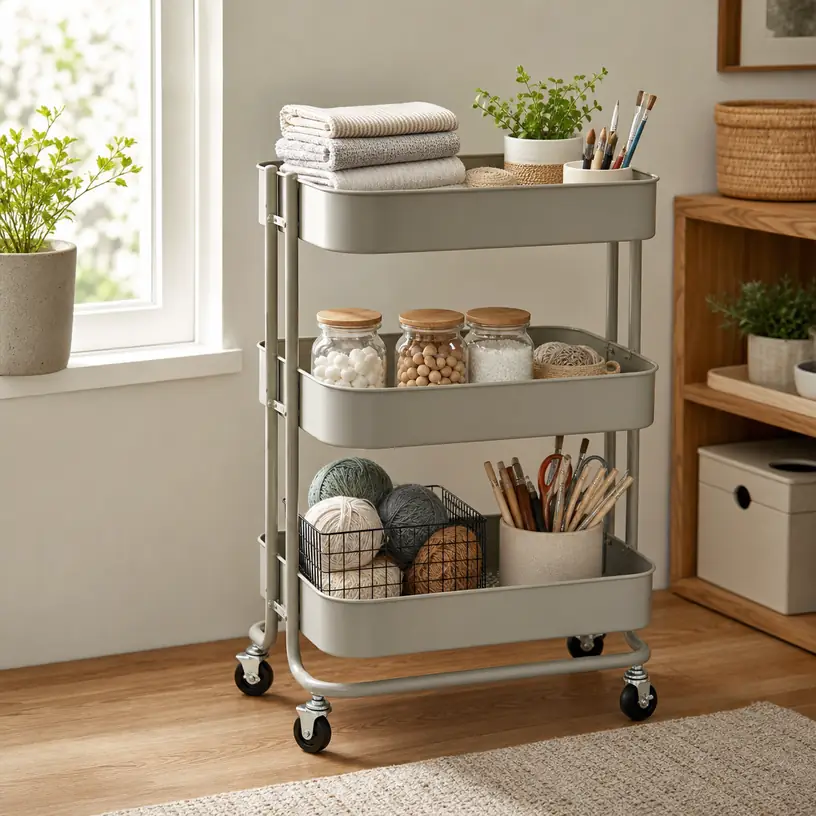
Illustrative image, not an official product photo.
Short answer
A rolling utility cart is most useful when supplies need a home but not a permanent address. It can follow a craft project to the table, move toiletries out of a shared bathroom, or bring pantry items beside a prep area and roll away afterward. Choose by measuring the cart’s complete footprint—including handles and protruding wheels—then compare usable shelf clearance, caster behavior, load guidance, and whether the frame can pass through the tightest route in your home. A tall cart with tiny wheels is not automatically more useful than a shorter, steadier model with accessible shelves.
Search reference
Rolling utility cart options
Compare the full assembled dimensions, shelf spacing, caster layout, brakes, handles, and stated load guidance for the supplies you plan to move.
View matching optionsPlan the route before choosing the cart
A mobile cart should be sized for movement, not just for the empty corner where it will be parked. Measure narrow doorways, gaps beside furniture, counter overhangs, and the turning space near the intended storage spot. Baseboards can make a wall gap narrower near the floor, while an outward-facing handle may add more depth than the shelf dimensions suggest.
Floor transitions matter too. Small hard casters may roll easily across a smooth kitchen floor yet catch at a thick rug edge or raised threshold. If the cart will stay in one room, compact wheels may be sufficient. If it will travel between a pantry, dining area, and home office, wheel size and route clearance deserve as much attention as shelf count.
Who this is for
- Renters who want extra storage without drilling shelves into a wall.
- Crafters who need to move current project supplies to and from a worktable.
- Shared households where bathroom, laundry, or cleaning supplies must be rolled out of the way.
- Small kitchens that need a movable station for lightweight pantry goods or prep tools.
- Home offices that need flexible storage for paper, notebooks, cables, and frequently used supplies.
Who should skip it
- Choose a fixed shelving unit when storage will never move and maximum stability is the priority.
- Avoid a light utility cart for heavy appliances, large water containers, or other loads outside its stated guidance.
- Consider a purpose-built tool cart if sharp, oily, or very heavy equipment needs secure transport.
- A carry basket may be simpler when only a few lightweight items move between rooms.
- Do not rely on an open cart where children or pets can easily reach unsafe household products.
What to verify before buying
- Check assembled width, depth, and height rather than relying on shelf dimensions alone.
- Compare usable clearance between tiers with the tallest bottle, bin, or tool you intend to store.
- Review the stated total load and per-shelf guidance, including whether weight should be distributed evenly.
- Confirm the number and type of casters, which wheels lock, and whether replacement casters are discussed.
- Look for a handle position that works from the side you can reach in the intended parking spot.
- Verify frame, tray, and fastener material wording along with cleaning and moisture-care instructions.
- Check whether shelves have solid or ventilated bottoms, raised lips, drainage holes, or removable components.
- Confirm what assembly is required and which pictured hooks, cups, liners, or bins are actually included.
Shelf layout changes how the cart works
Deep tray lips help contain small bottles and loose supplies while the cart is moving, but they can make a low shelf harder to see and reach. Open wire shelves offer visibility and may let crumbs or water pass through, though narrow items can tip unless a liner or bin is added. Solid shelves are easier to use with small objects, but any spills need to be noticed and cleaned rather than draining away.
Do not count tiers without checking vertical clearance. Three evenly spaced shelves may suit folded cloths and short jars, while a tall spray bottle or roll of paper can require an adjustable shelf or an open top tier. If the cart will change jobs over time, adjustable components can be useful—but only if the adjustment range matches realistic storage setups.
Wheels, brakes, and load placement
A cart feels different once it is filled. Place denser items low and spread weight rather than loading one upper corner. This lowers the center of gravity and can reduce tipping during turns, but it does not override the manufacturer’s load guidance. Side hooks and hanging cups also shift weight beyond the wheelbase, so treat them as storage for light accessories rather than a way to expand capacity indefinitely.
Wheel locks are helpful when the cart becomes a temporary station, but confirm what the lock controls. Some designs stop wheel rotation, some limit swiveling, and product wording may not make the distinction obvious. A brake also cannot compensate for a sloped floor, overloaded frame, or an uneven route.
Match the cart to one primary job
A cart can be repurposed, but choosing one main use prevents a collection of poorly fitting supplies. For a craft cart, check paper dimensions, upright tool storage, and whether small pieces need lidded bins. For bathroom use, think about airflow, splash exposure, and keeping personal items separated. A pantry cart needs clear bottle height and an easy-to-clean shelf surface. An office cart may benefit more from quiet rolling and file-friendly dimensions than deep tray walls.
If the contents should stay hidden, an open utility cart may create more visual clutter than it solves. Matching bins can organize small items, yet bins reduce usable shelf dimensions and add another measurement step. Account for both the outer bin size and the hand space required to lift it out.
Limitations
- A narrow, tall cart can feel less stable when heavy items are placed on upper tiers.
- Small casters may struggle on rugs, thresholds, grout lines, or uneven flooring.
- Open shelves expose contents to dust and do not secure items during abrupt movement.
- Locks reduce unwanted rolling but do not make a mobile cart equivalent to anchored furniture.
- Added bins, hooks, and liners can improve organization while reducing clearance or changing weight balance.
- Moisture resistance, load guidance, replacement parts, and included accessories vary by listing and should be checked before purchase.
Alternatives to compare
- A fixed bookcase or modular shelf for higher-capacity storage that stays in one place.
- A lidded storage tote for seasonal items that need dust protection rather than frequent access.
- A carry caddy for a small group of cleaning, grooming, or craft supplies.
- A drawer unit when contents should be concealed and separated into shallow categories.
- A purpose-built kitchen island, tool cart, or laundry sorter when the main job requires a work surface or specialized features.
FAQ
Are three tiers enough for a rolling utility cart?
Three tiers suit many everyday setups, but shelf clearance matters more than the tier count. List the items for each level, measure the tallest one, and make sure your hand can reach it without unloading the shelf above.
Will a rolling utility cart work on carpet?
It may work on low-pile carpet, but small casters generally face more resistance on soft or uneven surfaces. Check the wheel design and intended floor guidance, then consider whether the loaded cart must cross rug edges or thresholds.
Should all the wheels have brakes?
Not necessarily, but you should know how many wheels lock, where they are positioned, and whether you can reach them after parking the cart. The right arrangement depends on how often the cart moves and whether it becomes a stationary work or supply station.
What should go on the bottom shelf?
Place compact, denser supplies low when practical, while staying within the stated shelf and total load guidance. Keep frequently used lightweight items higher, and avoid storing hazardous products where children or pets can reach them.
Can a utility cart be used in a bathroom?
It can hold towels and toiletries, provided its materials and care instructions are suitable for the room’s moisture and splash exposure. Allow wet items to dry, clean spills promptly, and do not assume every metal or composite cart is intended for humid conditions.