Vacuum Storage Bags for Bedding, Coats, and Seasonal Clothes
Product links are for reference. Verify current details on the retailer page before buying.
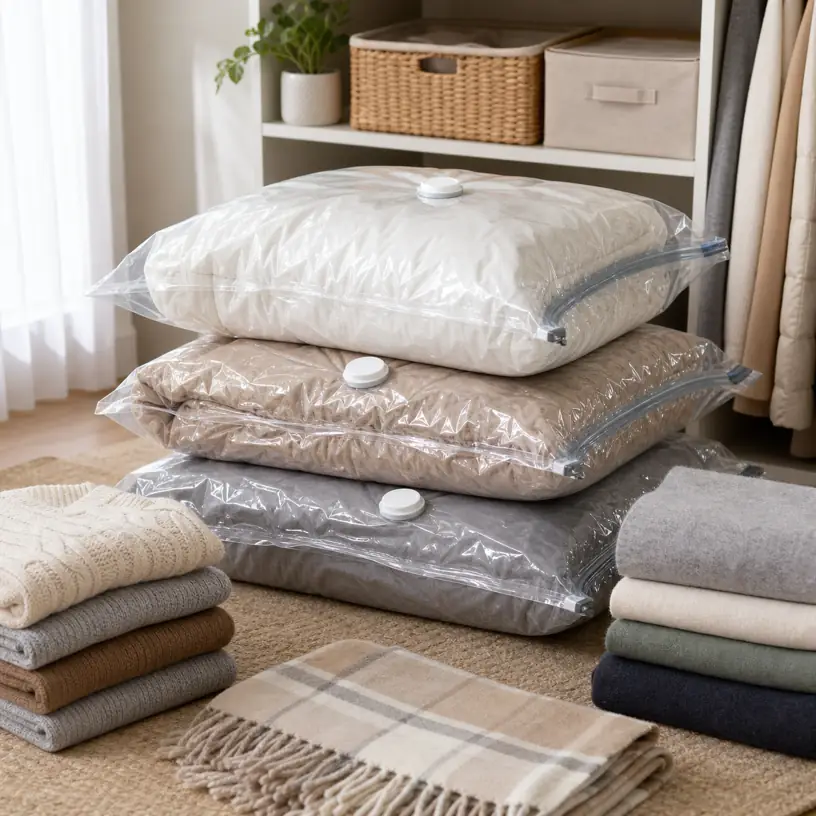
Illustrative image, not an official product photo.
Short answer
Vacuum storage bags make the most sense for soft, bulky items you do not need every week: spare comforters, guest bedding, winter coats, sweaters, and off-season clothes. Choose them by matching bag size to the items and the storage spot, then check the seal design, valve style, included pump or vacuum compatibility, material thickness wording, and whether the compressed bag will sit flat in a closet, under a bed, or inside a storage bin.
Search reference
Vacuum storage bag options
Compare mixed-size sets, jumbo bedding bags, travel-size compression bags, valve designs, closure tools, and storage shape before deciding which style fits your closet or under-bed space.
View matching optionsStart with the storage problem, not the biggest bag
A large vacuum bag looks efficient until it becomes too wide for the shelf, too heavy to move, or too stiff to slide under a bed. Before choosing a set, separate items into real storage groups: one guest bedding kit, one winter coat group, one sweater stack, or one extra blanket per bag. Smaller groups are easier to label, lift, and reopen without unpacking everything at once.
The storage location matters as much as the item volume. Under-bed bags need a flatter final shape. Closet shelf bags can be taller but still need to stack without sliding. Bags stored in bins should match the bin footprint after compression, not just before compression. If you plan to store items in a basement, garage, or attic, read the retailer page carefully for material, closure, and temperature-related wording instead of assuming every bag is suited to those conditions.
Also think about how often you will reopen the bags. For once-a-year seasonal clothing, maximum compression may be worth the extra effort. For guest bedding that is used every few months, a moderate-size bag with a simple valve and reliable closure tool may be more practical than a very large bag that must be wrestled flat each time.
Who this is for
- Households storing bulky comforters, blankets, pillows, or guest bedding between uses.
- Apartment renters trying to free up closet or under-bed space without adding more furniture.
- Families rotating winter coats, sweaters, scarves, and seasonal clothing.
- Dorm rooms, small bedrooms, and shared closets where soft goods take up too much shelf space.
- Movers or organizers who want grouped textile storage that can be labeled and stacked.
Who should skip it
- Skip vacuum storage bags for items you need to access daily or weekly.
- Avoid them for delicate garments that should hang, breathe, or keep a natural shape.
- Use rigid bins instead if the main problem is crushing, stacking strength, or pest-resistant structure.
- Do not rely on compression bags as a substitute for cleaning and fully drying textiles before storage.
- Choose travel packing cubes if you mainly need suitcase organization rather than long-term home storage.
What to verify before buying
- Check the dimensions of each bag size and compare them with your closet shelf, bin, drawer, or under-bed clearance.
- Confirm whether the set includes mixed sizes, only jumbo bags, or travel-size bags.
- Look at the valve style and whether it works with a household vacuum, a hand pump, or both.
- Review closure details, including the slider clip, double-zip wording, and instructions for sealing the opening.
- Check material thickness wording, reuse guidance, and whether sharp zippers, buttons, or hangers should be avoided.
- Verify whether any pump, labels, clips, or storage accessories shown in photos are included.
- Read care and storage guidance on the retailer page before using bags in hot, damp, or rough storage areas.
Buying notes for bedding and clothing
For bedding, bag shape is often more important than maximum advertised capacity. A comforter or duvet can compress into a wide slab that is still awkward to move. If you store several beds’ worth of linens, separate each bed size or room into its own bag so you do not have to open a giant mixed bundle for one pillowcase set.
For clothing, avoid packing one bag with every winter item you own. Sweaters, base layers, scarves, and coats may be needed at different times. Grouping by season or person makes the bags easier to reopen. If garments have buttons, snaps, or stiff trim, fold them so hard edges do not press directly against the plastic during compression.
The valve should be easy to access after the bag is filled. A valve buried under a bulky blanket can make air removal frustrating, especially on large bags. If you do not want to pull out a full-size vacuum cleaner, check whether the listing includes a hand pump and whether that pump is intended for large bags or mainly for travel sizes.
Labels are worth planning even if the set does not include them. Once bedding and clothes are compressed, it can be surprisingly hard to identify what is inside through wrinkled plastic. A simple label with room, season, and contents can prevent unnecessary reopening.
Limitations
- Compression reduces volume, but it does not reduce weight; large bags can become heavy and awkward.
- Some bags may slowly let air back in if the seal, valve, or plastic is damaged or not fully closed.
- Long-term compression may not suit delicate fabrics, structured coats, leather, down items, or garments that need to keep loft.
- Very large bags can be hard to store if the compressed shape does not match your shelf, bin, or under-bed space.
- Vacuum bags are not a cure for damp textiles; items should be clean and completely dry before storage.
Alternatives to compare
- Clear lidded bins for stackable storage and easier protection from crushing.
- Fabric under-bed bags if breathability and quick access matter more than compression.
- Hanging garment bags for coats, dresses, suits, or items that should keep their shape.
- Packing cubes for suitcase organization during travel.
- Closet shelf dividers or blanket bags if you need order without removing air.
FAQ
What size vacuum storage bags should I buy for bedding?
Start by measuring the shelf, bin, or under-bed area where the compressed bag will sit. Jumbo bags can hold bulky comforters, but several medium or large bags may be easier to lift, label, and reopen for guest bedding.
Can vacuum storage bags be reused?
Many are sold as reusable, but reuse depends on the plastic, seal, valve, and how carefully the bag is handled. Avoid overfilling, keep sharp garment details away from the plastic, and verify the retailer’s reuse guidance before assuming long-term durability.
Do I need a vacuum cleaner for these bags?
Some bags are designed for a household vacuum, some include a hand pump, and some may support both. Check the valve description and included accessories, especially if you want to use the bags in a dorm, apartment, or travel setting without a full-size vacuum.
Are vacuum storage bags good for winter coats?
They can help with bulky soft coats, but structured, delicate, leather, or loft-sensitive garments may not be a good fit. Check garment care labels and avoid compressing anything that should hang, breathe, or keep its shape.
Why do some vacuum bags reinflate?
Reinflation can happen when the zipper seal is not fully closed, the valve cap is loose, the bag is overfilled, or the plastic has a small puncture. Filling the bag less tightly and running the closure tool along the seal slowly can help, but damaged bags may need replacing.