Choosing an Under-Sink Organizer for Awkward Cabinet Storage
Product links are for reference. Verify current details on the retailer page before buying.
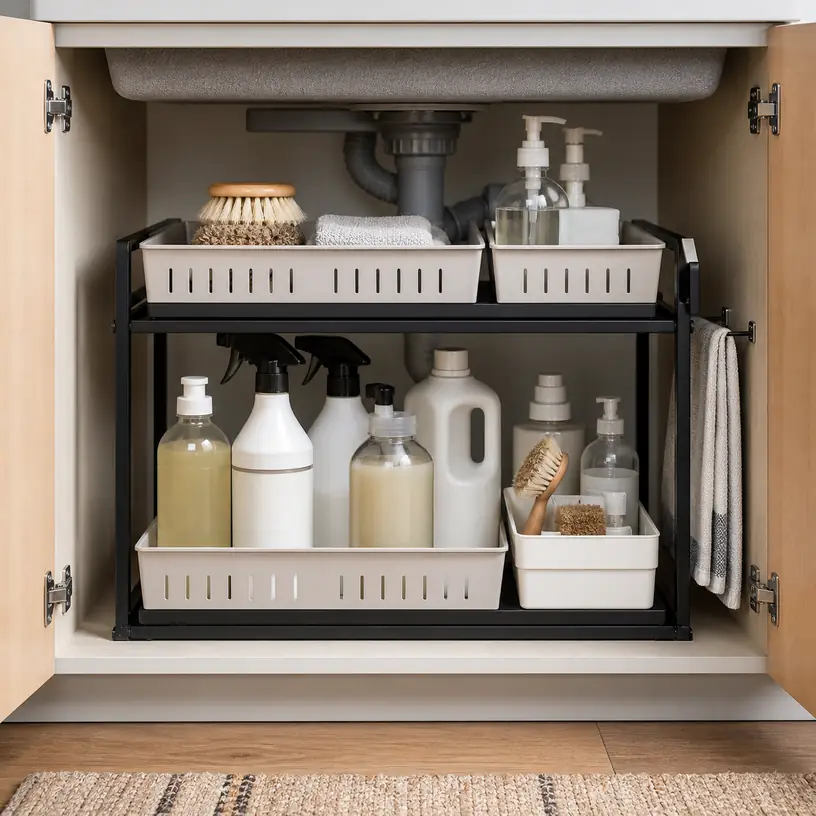
Illustrative image, not an official product photo.
Short answer
An under-sink organizer is worth comparing when the cabinet has become a dark pile of cleaners, spare sponges, hair tools, trash bags, or bathroom supplies. The right choice depends less on how tidy it looks in a photo and more on whether it clears the drain pipe, garbage disposal, water lines, cabinet lip, and door hinges while still leaving space to reach shutoff valves and wipe up leaks.
Search reference
Compare under-sink organizer options
Use the search page to compare current shelf layouts, pull-out designs, height clearances, and mounting details before choosing one for your cabinet.
View matching optionsStart with the cabinet, not the organizer
Under-sink storage is awkward because the most valuable space is interrupted by plumbing. A rectangular shelf may be perfect for a pantry cabinet but frustrating under a sink if the top tier collides with the drain trap or the sliding basket cannot pass the cabinet face frame.
Before shopping, empty the cabinet and note the usable footprint on each side of the plumbing. Check the width between the side wall and the pipe, the depth from the cabinet front to the back wall, and the height below the drain. Also look at the door opening, because some organizers fit inside the cabinet but cannot slide in through the front.
Kitchen sinks, bathroom vanities, laundry sinks, and utility cabinets can all need different layouts. A kitchen cabinet may need room for a disposal unit and cleaning bottles. A bathroom vanity may need smaller bins for toiletries, hair tools, and backup supplies. Treat the product photo as a layout idea, then match the actual dimensions to your cabinet.
Who this is for
- Renters and homeowners trying to make daily cleaning supplies easier to reach.
- Small bathrooms where the vanity cabinet needs to hold toiletries, paper goods, and extra grooming items.
- Kitchens where bottles, dishwasher pods, trash bags, and scrub tools keep falling into one pile.
- Shared households that need a clear place for frequently used supplies without remodeling the cabinet.
- Buyers who want a removable storage upgrade rather than a built-in pull-out system.
Who should skip it
- Anyone who cannot confirm the cabinet measurements or plumbing clearance before ordering.
- Cabinets with active leaks, water damage, loose pipes, or electrical work that should be addressed first.
- Households that need a custom built-in drawer system, child-safety locking plan, or exact match to existing cabinetry.
- Very shallow vanities where a small open bin may work better than a sliding frame.
What to verify before buying
- Measure usable width, depth, and height inside the cabinet, including the door opening.
- Check the location of the drain trap, water lines, disposal unit, shutoff valves, and any filter hardware.
- Confirm whether the organizer is freestanding, adhesive mounted, screw mounted, or designed to hook over a door.
- Look at drawer travel and handle placement so the basket can open without hitting hinges or cabinet trim.
- Review the material wording and care instructions, especially if damp bottles or cleaning sprays will sit on it.
- Check whether baskets, dividers, hooks, liners, or assembly tools are included in the current option.
- Make sure the layout still lets you inspect the cabinet floor and reach valves quickly.
Buying notes that matter under a sink
Two broad layouts show up often: open shelves that create vertical levels, and pull-out organizers that bring stored items toward the front. Open shelves can be simple and flexible, but items at the back may still be hard to reach. Pull-out baskets are easier to access, but they need enough clearance to move smoothly.
A narrow organizer can be useful beside a pipe, while a wider frame may work only when the plumbing is centered high enough or shifted to one side. If the product has adjustable shelves, verify the adjustment range rather than assuming it will clear every drain setup.
Material choice is also practical. Plastic baskets can be easy to wipe and may be less likely to scratch bottles. Metal frames can feel sturdy but may need protective coatings and good drying habits in damp cabinets. Wood-look or decorative pieces can be attractive in open vanity spaces, but hidden sink cabinets usually reward easy cleaning over appearance.
Think about what will live in the organizer. Tall spray bottles need vertical room. Shorter baskets work better for sponges, dishwasher tabs, grooming items, and spare soap. If children or pets are in the home, storage location and cabinet safety matter more than squeezing in the maximum number of items.
Limitations
- Search results may include different cabinet sizes, mounting styles, and bundled accessories over time.
- A product photo cannot confirm whether the organizer clears your exact drain, disposal, or valve placement.
- Sliding baskets may feel less useful if the cabinet has a raised front lip or narrow door opening.
- Adhesive or screw-mounted parts may not be suitable for every rental, cabinet finish, or damp surface.
- Even a good organizer does not fix leaks, poor ventilation, or unsafe storage of household chemicals.
Alternatives to compare
- Stackable open bins for shallow vanities or cabinets with low plumbing.
- Lazy Susan turntables for round bottles in wider cabinets.
- Door-mounted caddies when the cabinet floor must stay open for pipes or a trash bin.
- Tension rods for hanging spray bottles if the drain layout leaves enough room.
- Custom pull-out cabinet hardware when a built-in solution is worth the installation effort.
FAQ
How do I measure for an under-sink organizer?
Empty the cabinet, then measure the usable width, depth, and height around the plumbing rather than the full cabinet box. Include the door opening, front lip, hinges, and any hardware that could block a sliding basket.
Are sliding drawers always better under a sink?
Not always. Sliding drawers make items easier to reach, but they need clearance to open and can be blocked by pipes, trim, or a raised cabinet face. A simple open shelf or bin may work better in tight vanities.
What should I store on the lower level?
Put heavier or leak-prone items lower when the layout allows it, and keep frequently used bottles near the front. Avoid burying shutoff valves or anything you would need to reach quickly during a leak.
Can one organizer work for both kitchen and bathroom cabinets?
Sometimes, but the best layout may differ. Kitchens often need room for taller cleaning bottles and disposal hardware, while bathroom vanities may need smaller compartments for toiletries and grooming supplies.
Is adhesive mounting a good idea in a sink cabinet?
It can be convenient, but check the surface, moisture level, weight expectations, and removal concerns before relying on it. Freestanding organizers are easier to move, while screw-mounted systems may feel more secure when installation is appropriate.