Bedside Caddies for Small Bedrooms, Dorms, and Bunk Beds
Product links are for reference. Verify current details on the retailer page before buying.
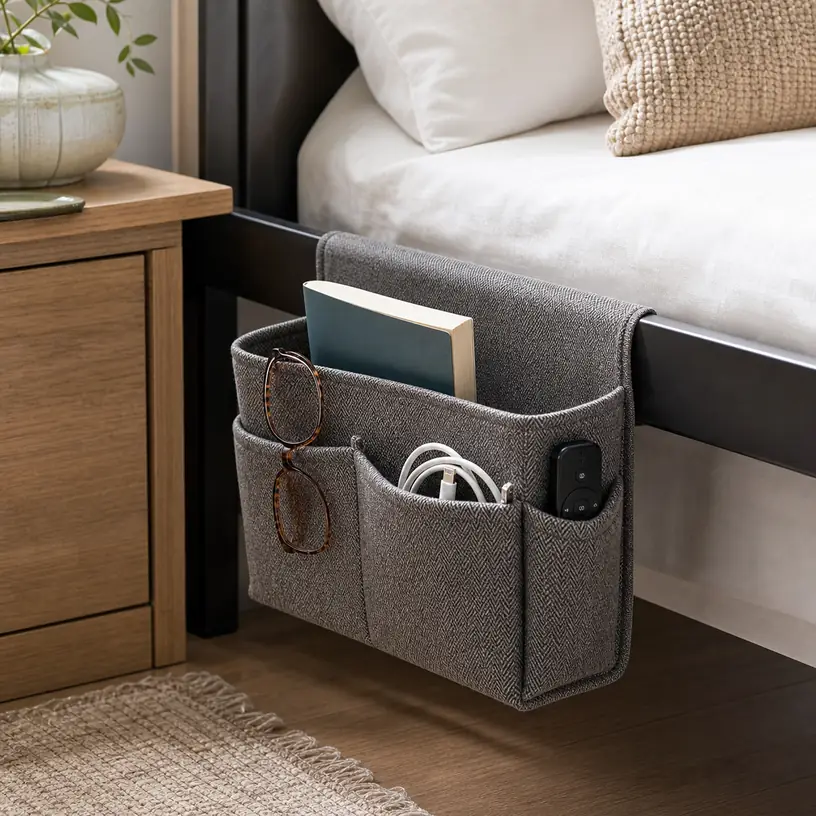
Illustrative image, not an official product photo.
Short answer
A bedside caddy is worth considering when the area beside the bed is too narrow for a nightstand, shared with another sleeper, or already crowded with a lamp, water bottle, and charger. The most useful models keep small items within reach without sagging into the mattress gap, scratching the bed frame, or turning into a soft junk drawer. Compare attachment style, pocket depth, panel stiffness, fabric care, and whether the caddy fits the exact bed frame, rail, mattress, or sofa arm where it will be used.
Search reference
Bedside caddy options
Compare hanging method, pocket layout, panel stiffness, dimensions, fabric care, and compatibility with your bed frame or mattress setup.
View matching optionsWhat this product type is
A bedside caddy is a hanging or tuck-in organizer that stores small items close to a bed, bunk, sofa, or sleeper chair. Instead of using floor space, it usually hangs from a rail, slips under a mattress, attaches to a headboard, or drapes over an armrest. Common storage targets include a phone, remote, paperback book, glasses, lip balm, tissues, charging cable, earplugs, or a small notebook.
The category looks simple, but the right choice depends heavily on the bed. A dorm loft, metal bunk, upholstered platform bed, adjustable bed base, and guest-room frame can all require different attachment decisions. A caddy that works neatly on a square rail may not stay put under a thick mattress or on a rounded headboard.
Who this is for
- Students using dorm beds, loft beds, or bunks where a normal nightstand is awkward.
- Small-bedroom setups where the bed is pushed against a wall or squeezed beside a closet door.
- Guest rooms that need a place for visitors to keep glasses, a phone, and reading material.
- Kids’ rooms where lightweight bedtime items need a repeatable landing spot.
- Sofa sleepers, daybeds, or reading corners where a side table would block movement.
Who should skip it
- Skip a bedside caddy if you need to store heavy books, large tablets, full water bottles, or electronics that need rigid support.
- Choose a nightstand or wall shelf if you want a stable surface for a lamp, drink, alarm clock, or decor.
- Avoid tuck-in designs if your mattress shifts easily or the bed base does not leave enough friction to hold the panel.
- Do not use a soft caddy as cable management for hot power bricks, overloaded chargers, or tangled extension cords.
What to verify before buying
- Measure the bed rail, mattress thickness, headboard, sofa arm, or bunk side where the caddy will attach.
- Check whether the model hangs with hooks, straps, a tuck-in flap, hook-and-loop bands, or a rigid support panel.
- Compare pocket depth and width with the specific items you want to store, especially glasses, remotes, e-readers, and small books.
- Review material wording, panel stiffness, stitching, and whether the pocket openings are likely to sag when filled.
- Verify cleaning instructions, color, and fabric texture if the caddy will sit against bedding or an upholstered frame.
- Confirm whether any bedside accessories shown in photos are included or are only display props.
- Check that the attachment style will not scratch, pinch, or interfere with the bed frame, guardrail, adjustable base, or mattress movement.
Main buying notes
Start with the attachment method, not the number of pockets. Hook-style caddies can be convenient on metal rails, wire bunks, and some headboards, but they may rattle or sit unevenly on rounded surfaces. Strap designs can be more flexible, though loose straps may slide if the rail is smooth. Tuck-in panels are discreet on standard beds, but they depend on mattress weight and friction to stay in place.
Pocket layout matters when you reach for items in the dark. One deep pocket may swallow a remote, cable, and glasses together. Several narrow pockets can keep items separated, but they may not fit a paperback or e-reader. If the caddy is for a child or guest room, simple open pockets may be easier to understand than many specialized slots.
Think about weight before the caddy is full. Soft fabric organizers often look tidy when staged, but heavy items can pull the panel outward or make the top edge fold. A stiffer back panel, reinforced seams, or a balanced pocket layout can help, but no soft bedside organizer should be treated like a shelf.
Cable use deserves a separate check. A small charging cable is one thing; a warm charger, power strip, or tightly coiled cord is another. Keep charging setups simple, follow device guidance, and make sure cords are not pinched between the mattress, frame, and organizer.
Limitations
- A bedside caddy adds reach-in storage, not a level surface for drinks, lamps, or fragile items.
- Sagging can happen if pockets are overloaded or the attachment method does not match the bed frame.
- Tuck-in models may shift when the mattress is lifted, rotated, or used on a low-friction platform.
- Deep pockets can hide small items unless the interior color and pocket openings make them easy to see.
- Fabric, stitching, hooks, and cleaning guidance vary by listing, so verify current details before relying on a caddy for daily use.
Alternatives to compare
- A narrow nightstand for rooms that still have a few inches of floor space.
- A wall-mounted shelf if drilling or adhesive mounting is allowed and safe for the wall.
- A headboard with built-in cubbies for a more permanent bedroom setup.
- A rolling cart for shared bedrooms or guest rooms where storage needs change.
- A simple tray on the floor or dresser if the goal is temporary bedtime storage rather than attached organization.
FAQ
Will a bedside caddy work on a bunk bed?
It can, but the attachment style must match the bunk rail. Measure the rail shape and thickness, check whether hooks or straps are included, and make sure the caddy does not interfere with climbing, guardrails, or bedding.
Is a tuck-in bedside caddy better than a hanging one?
A tuck-in caddy can look cleaner on a standard bed, while a hanging caddy may be easier on bunks, loft beds, and rails. The better choice depends on mattress friction, frame shape, and how much movement the bed gets.
What can I safely store in a bedside caddy?
Use it for lightweight bedtime items such as a phone, glasses, remote, paperback, tissues, earplugs, or charging cable. Avoid overloading soft pockets with heavy books, large bottles, or items that need a hard, stable surface.
How do I keep a bedside caddy from sagging?
Choose a model with an attachment method that fits your bed, keep heavier items in lower or balanced pockets, and avoid filling every compartment. Stiffer panels and reinforced seams may help, but weight limits and construction should be verified on the retailer page.
Is a bedside caddy useful in a guest room?
Yes, especially when the room has little space for furniture. A simple caddy can give guests a visible place for glasses, a phone, a book, and a small remote without adding another table to the room.