Manual Citrus Juicers: Match the Press to Your Fruit and Routine
Product links are for reference. Verify current details on the retailer page before buying.
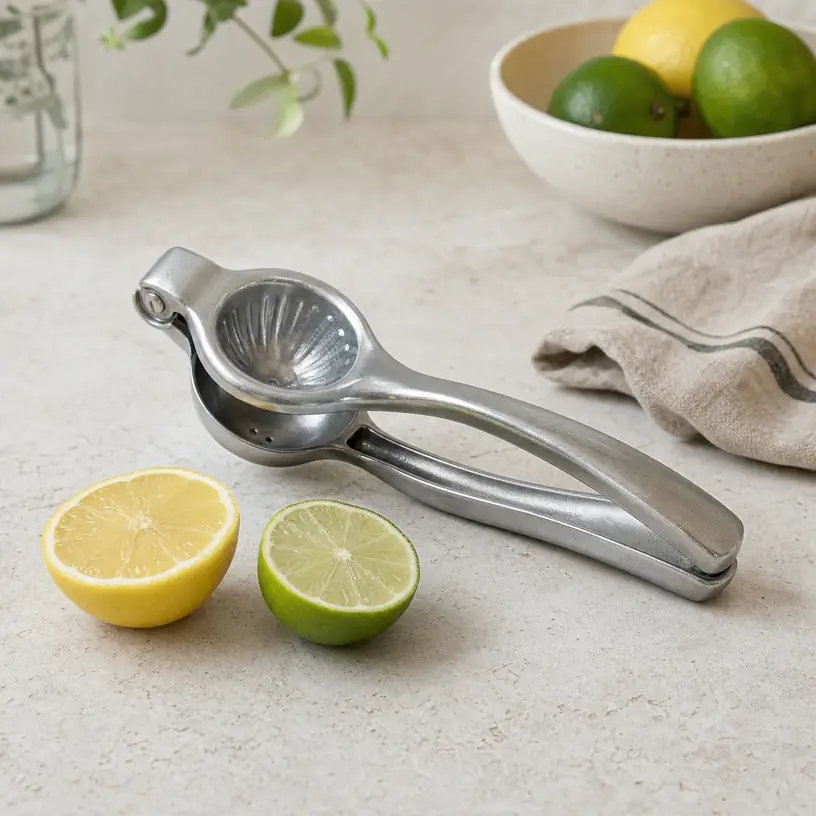
Illustrative image, not an official product photo.
Short answer
Choose a manual citrus juicer around two things: the fruit you squeeze and the amount of juice you make at one time. A compact hinged press can be convenient for a lemon or lime used while cooking. A bowl-and-reamer design gives you somewhere to collect juice and may be easier to use across several fruit sizes. A larger countertop lever press occupies more room but can make sense for repeated batches. Whichever form you prefer, check the usable fruit opening, handle leverage, drainage holes or strainer, stability, cleaning instructions, and storage footprint. The most elaborate option is not automatically the most useful; the right tool should be easy enough to rinse and put away that you reach for it on an ordinary weeknight.
Search reference
Manual citrus juicer options
Compare the press style, usable fruit size, juice collection, seed control, grip, and care guidance for the way you prepare lemons, limes, or oranges.
View matching optionsStart with one week of citrus use
A cocktail garnish, a spoonful of lemon juice for a dressing, and a pitcher of orange juice place very different demands on a juicer. Before looking at handle colors or countertop styling, notice what passes through your kitchen in a typical week. Count the limes squeezed over tacos, the lemons used in marinades, and any larger fruit prepared for drinks. Also note whether you normally need juice straight over a pan or collected in a measured container.
That small inventory points toward a format. A handheld press offers a direct path from fruit to bowl, but its cup must fit the cut fruit. A reamer requires a twisting motion and usually collects the liquid below. A tabletop press keeps the fruit and mechanism on the counter, which changes both storage needs and cleanup. None is universally superior; each moves the effort to a different part of the task.
If possible, measure the widest citrus you buy regularly instead of judging by labels such as “lemon” or “orange.” Produce varies, and a fruit half that sits above a small pressing cup may tilt or spill. Capacity matters more than an advertised fruit list.
Three common pressing styles
Hinged handheld presses
A hinged citrus squeezer places half a fruit between a perforated cup and a pressing surface. Closing the handles forces juice through the openings. This shape is compact and can be fast for finishing a recipe directly over a bowl, pan, or glass. It is worth checking the depth and width of the cup, because the useful capacity may be less obvious than the overall tool dimensions.
Handle length affects leverage as well as drawer fit. Longer handles can provide more mechanical advantage, but they need room to open and may feel awkward over a narrow glass. Look at the hinge area, the edges that meet your hand, and the orientation shown in the instructions. Some presses are loaded with the cut face in a direction that may not seem intuitive at first glance.
Reamers with collection bowls
A reamer uses a ridged cone to break the citrus pulp as the fruit is twisted. Simple handheld reamers release juice into a separate container, while bowl-style versions collect it underneath and may add a strainer or pour spout. This design can be useful when you want to see how much juice has accumulated before adding it to a recipe.
Compare the cone size with the fruit you use. A narrow cone may suit smaller citrus but feel inefficient with a broad orange half; a large cone can be awkward inside a small lime. Also inspect how the strainer, cone, and bowl separate. Removable parts may help with cleaning, but extra seams and tabs add places where pulp can collect.
Countertop lever presses
Countertop presses hold the fruit under a descending cone or cup while a long lever supplies force. They can suit a routine involving several fruit halves, provided there is a stable work surface and enough vertical clearance to raise the handle. They are more of a dedicated station than a drawer tool.
For this style, base dimensions deserve as much attention as height. Check where the juice container sits, whether your usual glass or measuring cup will fit, and how the machine is stabilized. A tall lever may also conflict with an upper cabinet. Review which food-contact pieces detach and how the maker says to clean them before assigning permanent counter space.
Who this is for
- Home cooks who frequently add fresh lemon or lime juice to sauces, marinades, dressings, and finished dishes.
- People who want a seed-control step between a citrus half and a drink or recipe.
- Households replacing a general-purpose hand squeeze with a more repeatable kitchen tool.
- Drink makers who prepare enough citrus to value a dedicated press but do not want an electric appliance.
- Cooks comparing a compact handheld squeezer with a collecting reamer or countertop lever press.
Who should skip it
- Skip a dedicated juicer if citrus appears only occasionally and a fork, spoon, or simple hand squeeze already meets your needs.
- A small hinged press is a poor match when most of your fruit is too broad to sit fully inside its cup.
- Avoid a heavy countertop model if it will be stored in a difficult cabinet and lifted out for only one lemon at a time.
- Choose an electric citrus juicer or another suitable appliance if repeated twisting or handle pressure does not fit your comfort or mobility needs.
- Do not assume a generic citrus tool is intended for unusually large fruit or non-citrus produce without checking its stated use.
What to verify before buying
- Usable opening: Compare the inside cup or cone dimensions, not just the total width of the juicer, with the citrus you normally buy.
- Batch size: Decide whether juice should flow directly into a recipe or collect in a bowl with enough capacity for several fruit halves.
- Seed and pulp control: Check the size and arrangement of drainage holes, the strainer design, and whether the level of pulp can be adjusted.
- Leverage and grip: Review handle length, opening span, edge shape, hinge movement, and any grip surface that contacts your hand.
- Counter stability: For reamers and lever presses, look at base width, feet, and the type of flat surface the instructions call for.
- Container clearance: Make sure the spout or outlet will align with the glasses, measuring cups, or bowls you expect to use.
- Cleaning steps: Confirm whether parts separate, whether narrow openings are accessible, and what the current hand-wash or dishwasher guidance says.
- Storage: Measure the closed handle length, bowl diameter, or full countertop height, including clearance needed to operate a lever.
- Current materials and contents: Verify food-contact material wording, included strainers or cups, and care notes on the retailer page rather than inferring them from images.
The small details that change daily use
Seed control is often a balance rather than an all-or-nothing feature. Small holes may catch more seeds but can slow the flow when pulp accumulates. Wider openings drain quickly yet may allow small seeds or more pulp through. If a very clear drink matters, you may still prefer to pour through a separate fine strainer. For cooking, a little pulp may be irrelevant, making faster drainage more valuable.
A pour spout helps only when it reaches beyond the rim cleanly. Look at the shape of the collecting bowl and imagine tipping it with wet hands. A broad rim can improve grip, while a marked container may help with recipes only if the markings use units you read and remain visible with the juice inside. Treat any stated measurement marks as a convenience to verify, not as a substitute for a kitchen measuring tool when accuracy matters.
Fruit preparation also affects the experience. Cutting across the middle usually exposes sections to the pressing surface, but the product instructions should guide loading and orientation. A very thick peel or an overfilled cup can make a hinged press harder to close. For a reamer, a stable bowl prevents the twisting motion from turning into a chase across the counter.
Cleaning should be part of the decision
Citrus pulp dries quickly in perforations, around reamer ridges, and beside hinges. A tool that looks efficient during pressing can become inconvenient if it needs a brush after every use. Examine product images for blind corners, narrow slots, overlapping metal, or nonremovable strainers. If the parts separate, consider whether they are intuitive to reassemble and small enough to get lost in a crowded drawer.
Rinsing promptly can keep pulp from drying, but always follow the current care directions. Dishwasher suitability should not be guessed from appearance, and even a listed dishwasher-safe component may have placement guidance. Hinges and joined handles may need more attention than a simple one-piece reamer. Let pieces dry before nesting them so trapped moisture and odors do not undermine the convenience you bought the tool for.
Citrus is also messy around the tool. A collecting bowl can contain splashes, while squeezing directly over cookware reduces extra dishes but may send juice sideways if the fruit shifts. Think about whether you would rather wash one more container or wipe the surrounding counter. Your answer can matter more than a marginal difference in theoretical juice extraction.
Comfort, leverage, and workspace
A manual juicer still requires hand or arm force. With a hinged press, the distance between open handles determines how far the hand must stretch before pressure begins. Handle length changes leverage, but a long, narrow edge can still feel uncomfortable. If dimensions are available, compare them with a utensil you already use comfortably.
Reamers trade squeezing for gripping and twisting. A larger bowl can give the supporting hand more area, while a nonslip base may help on an appropriate clean counter. Countertop lever presses shift more of the action to the arm and shoulder and need a base that stays put. No format removes effort completely, so match the movement to the person who will actually make the juice.
Workspace includes what sits above and beside the juicer. A lever needs an operating arc. A reamer needs elbow room. A handheld press needs space over the receiving vessel and a safe place to rest between fruit halves. Simulate the motion at the intended counter before committing to a larger design.
Limitations
- Fruit sizes vary, so a press labeled for a type of citrus may not fit every piece you bring home.
- Manual tools reduce some effort but still require squeezing, twisting, or lever movement.
- Built-in strainers may not remove every small seed or deliver pulp-free juice.
- A deeper cup or stronger-looking handle does not by itself confirm durability, capacity, or material quality.
- Countertop presses consume storage and operating space that may be hard to justify for occasional use.
- Juice can remain in the pulp or peel with any method; a manual juicer does not guarantee a particular yield.
Alternatives to compare
- Use a fork or spoon to loosen a lemon half when citrus is an occasional ingredient and perfect seed control is not essential.
- Pair a basic reamer with a separate fine-mesh strainer when you want flexible pulp control.
- Consider an electric citrus juicer for frequent, larger batches, while accounting for its cord, noise, parts, and storage.
- Keep a small hinged lime press near a drink station and a larger bowl reamer in the kitchen if one tool cannot sensibly cover both routines.
- Use bottled juice only where its flavor, ingredients, storage guidance, and recipe role meet your needs; it is not identical to freshly pressed citrus.
FAQ
Which manual juicer works well for both lemons and limes?
Look for a pressing cup or reamer cone that physically accommodates the range of fruit sizes you buy. A medium hinged press may handle many lemons and limes, while a bowl reamer can offer more flexibility when the sizes vary. Compare usable dimensions rather than relying only on the fruit names in a listing.
Do I put the cut side up or down in a citrus press?
Follow the orientation shown in the instructions for the specific press. Many hinged designs are intended to turn the peel as they close, so the loading direction may feel counterintuitive. Correct orientation helps juice pass through the intended openings instead of escaping around the sides.
Will a manual citrus juicer keep seeds out of the juice?
A perforated cup or strainer can catch many seeds, but the result depends on hole size, seed size, fruit placement, and pulp buildup. If seed-free juice is important, inspect the liquid and use a separate fine strainer when needed.
Is a metal citrus press better than a plastic one?
Material alone does not determine fit or usefulness. Compare the specific tool’s construction, hinge design, food-contact material wording, weight, grip, care guidance, and dimensions. A well-matched design that is easy to clean may serve your routine better than choosing by material category alone.
How do I keep pulp from drying in a manual juicer?
Empty the peel and rinse or clean the tool soon after use, following its care instructions. Pay attention to drainage holes, reamer ridges, strainers, and hinge gaps, then let all parts dry before storage.