Furniture Sliders for Moving Sofas, Beds, and Cabinets

Product links are for reference. Verify current details on the retailer page before buying.
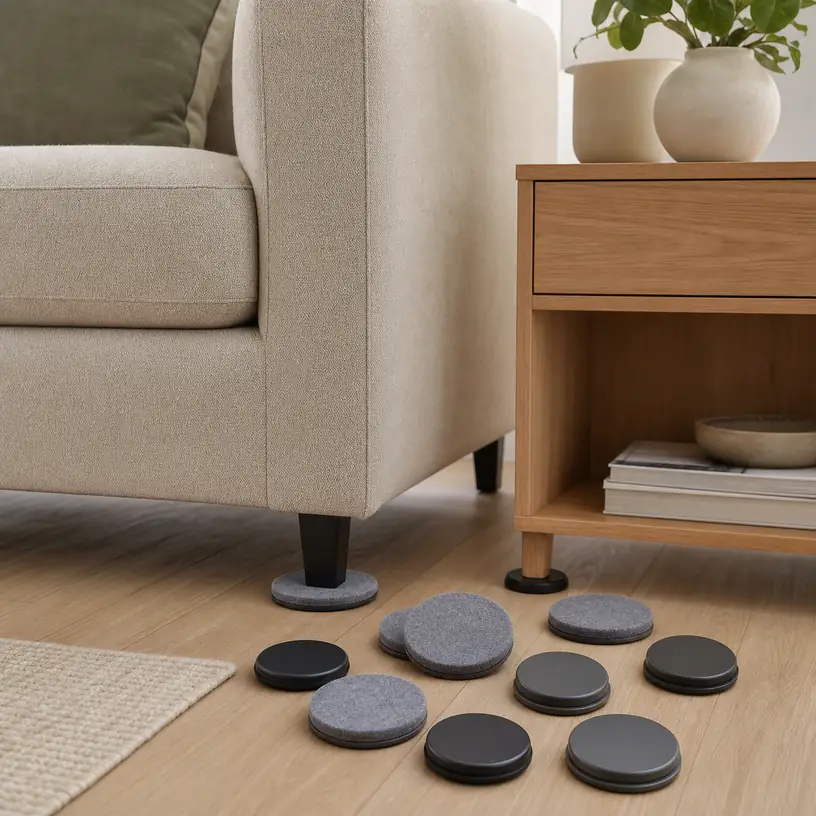
Illustrative image of generic furniture sliders beside a sofa and side table

Illustrative image, not an official product photo.

Short answer

Choose furniture sliders by starting with the route across the room. Smooth plastic glides are commonly intended to move furniture over carpet, while felt or fabric-backed glides are commonly offered for hard floors. The listing should explicitly match your floor, and the slider must sit securely under each contact point without exposing a hard edge. Shape and count matter too: a four-leg table is simple, but a sectional sofa, platform bed, or cabinet with a long base may need more support points and a different slider profile.

Furniture sliders are most useful for controlled, temporary repositioning on one level surface. They do not remove the need to empty unstable furniture, protect the route, use safe lifting methods, and get enough help for an awkward load.

Search reference

Furniture sliders for moving

Compare hard-floor and carpet versions, dimensions, stated load guidance, pad thickness, quantity, and any included lifter before planning a room rearrangement.

View matching options

The floor chooses the glide surface

A slider works by putting a low-friction interface between furniture and the floor, but the useful interface changes with the surface. On carpet, many moving sliders place a smooth, rigid face against the carpet so the furniture can travel without its feet catching in the pile. On hard flooring, options often use felt, fabric, or another soft contact layer intended to move across the surface without a bare plastic rim dragging along it.

Do not rely on color alone to identify the correct side or floor type. Product designs vary, and a reversible-looking disc may not actually be rated for both surfaces. Read the current use directions and check whether the seller distinguishes hardwood, laminate, vinyl, tile, low-pile carpet, or thicker carpet. A slider that works on a short office carpet may behave differently at the edge of a plush rug.

Transitions deserve their own plan. Door thresholds, rug edges, floor vents, grout lines, and changes from wood to carpet can stop or tip a slider. Measure the intended path before lifting anything. If the furniture needs to cross steps, a threshold it cannot clear, or a fragile surface, sliders may not be the right tool for the entire move.

Who this is for

  • Households rearranging a sofa, bed frame, dresser, table, bookcase, or storage cabinet within the same room.
  • Renters preparing to clean behind furniture or adjust a layout without repeatedly dragging bare feet across the floor.
  • DIY decorators who expect to test more than one room arrangement before settling on placement.
  • People moving several compatible furniture pieces who can reuse a multi-size set.
  • Buyers who already have a clear lifting and handling plan but want a smoother way to cover a short, level route.

Who should skip it

  • Skip sliders for stairs, steep ramps, uneven outdoor paths, or any route where the load could run away or tip.
  • Do not use a general household set as a substitute for moving equipment rated for an appliance, safe, piano, aquarium, or similarly specialized load.
  • Avoid sliding furniture with loose shelves, glass panels, top-heavy contents, unstable joints, or doors and drawers that have not been secured.
  • Choose professional movers or purpose-built handling equipment when the piece is too heavy or awkward for the people available to lift and guide it safely.
  • Do not assume a slider will protect a delicate or unfamiliar floor finish; check both the flooring care guidance and the slider instructions.

What to verify before buying

  • Floor compatibility: Confirm the exact floor surfaces named in the current directions, including any restrictions on finishes, textured tile, vinyl, or carpet pile.
  • Contact dimensions: Measure each leg, foot, caster, or base rail that will rest on a slider. The furniture should not perch on an unstable edge.
  • Furniture footprint: Count every point that bears weight. Include center supports under beds and hidden feet beneath long cabinets or sectionals.
  • Slider profile: Check height and edge shape, especially if the route passes under a low frame, through a doorway, or near a rug edge.
  • Stated load guidance: Review the maker’s current limit and whether it applies per slider or to the complete set. Do not infer capacity from disc diameter.
  • Set contents: Verify the number and sizes of sliders, plus whether a lever or lifter pictured in the listing is actually included.
  • Temporary or leave-in-place use: Some glides are for a single move; others are described for ongoing repositioning. Follow the stated use case rather than leaving temporary movers under furniture indefinitely.
  • Storage and replacement: Check whether the contact layer can be cleaned, whether replacement covers exist, and how the pieces should be stored between jobs.

Size the slider to what touches the floor

Furniture legs are not always as simple as they appear. A tapered wooden leg may end in a tiny metal glide. A sofa can have visible front feet plus recessed supports in the middle. Platform beds and cabinets may transfer weight through broad rails instead of four distinct corners. Turn on good lighting and inspect underneath before ordering.

Round discs suit many individual legs, while squares and rectangles can provide a more stable platform for wider feet. Larger is not automatically better. An oversized slider can collide with a nearby wall, overlap another support, or catch at a transition. A slider that is too small can shift off-center and allow the furniture foot or hard rim to contact the floor.

Mixed-size kits can make sense when one project includes dining chairs, a table, and a sofa. For a single large item, however, a uniform set sized to all support points may be more useful than an assortment with many pieces that do not fit. Count usable pieces, not just the total printed on the package.

Plan the move before lifting a corner

Empty removable contents and reduce the load where practical. Take out drawers only when the furniture instructions and construction make that appropriate, and secure doors, shelves, leaves, or moving parts. Photograph cable connections before disconnecting electronics, then keep cords outside the travel path.

Next, clear a route wider than the furniture. Remove small rugs, toys, power strips, plant stands, and anything that could catch a slider or distract a helper. Clean grit from hard floors and inspect the slider contact faces. A soft-looking pad with sand embedded in it can still mark a surface.

If a set includes a small furniture lever, check its directions and protective contact points. A lever can create clearance for a slider, but it also concentrates force at the fulcrum and furniture edge. It is not suitable for every frame or floor. Lift only as much as needed to place the glide, keep hands and feet away from pinch points, and never put any part of the body beneath unsupported furniture.

Once all support points are centered, move slowly and keep the load controlled. Stop if a slider twists, disappears under the frame, catches at a seam, or leaves residue. Reposition it rather than forcing the furniture forward. One person should be able to call an immediate stop while helpers maintain clear communication.

Carpet and hard-floor sets solve different problems

On carpet, check pile height and firmness. A rigid slider may travel readily across a tight, low-pile surface but sink or tilt on softer carpet. Deep impressions beneath long-standing furniture can also interrupt the path. The edge of a fitted carpet and the lip of an area rug are transition points, not just more carpet.

For hard floors, cleanliness and full coverage are critical. Inspect felt or fabric faces before every use, and verify that the furniture foot cannot punch through a worn center. Pay attention to seams and beveled plank edges, where a small disc might snag. If a flooring maker warns against sliding loads, follow that care guidance even when the slider is marketed for hard surfaces.

Combination kits are convenient when a move crosses more than one room, but switching floors may require switching slider types rather than dragging the same set from carpet onto wood. Build that change into the route and make it at a stable stopping point.

Limitations

  • Furniture sliders reduce friction; they do not make an unstable, overloaded, or poorly controlled item safe to move.
  • Results vary with weight distribution, floor finish, debris, carpet pile, furniture construction, and transitions along the route.
  • A pad can shift or wear through, exposing a harder edge to the floor.
  • Sliders do not handle stairs, loading vehicles, or transporting furniture between buildings.
  • A small lifter supplied with a set may not suit every furniture base and can damage weak trim or flooring if used incorrectly.
  • Keeping temporary sliders under a piece can affect stability or leave impressions, so confirm whether ongoing use is supported.

Alternatives to compare

  • A furniture dolly for a compatible item that needs to travel farther over a prepared, level route.
  • Moving blankets and stretch wrap to protect suitable furniture surfaces during handling; these do not replace proper load control.
  • Caster cups when the goal is to keep wheeled furniture stationary rather than make it glide.
  • Adjustable glides when leveling is the real problem.
  • Professional moving help for high-value, unusually heavy, fragile, or difficult-to-balance pieces.

FAQ

Do furniture sliders work on both carpet and hardwood?

Some sets include separate pieces for carpet and hard floors, while others are designed for only one surface. Do not assume one slider covers both. Check the current floor-compatibility directions and use the intended contact face.

How many furniture sliders do I need for a sofa or bed?

Count every load-bearing foot and center support beneath the actual item. Four sliders may not be enough for a sectional sofa, long cabinet, or platform bed, so inspect the underside instead of estimating from the visible corners.

Can furniture sliders stay under a sofa permanently?

Only if the maker describes that set for leave-in-place use and the furniture remains stable. Temporary moving sliders may compress, shift, or affect the furniture height, so remove them after positioning unless the directions say otherwise.

Should furniture be empty before using sliders?

Remove loose, fragile, and unnecessarily heavy contents where practical, and secure doors, shelves, and drawers. Reducing and stabilizing the load makes it easier to control, but follow the furniture’s own handling guidance for removable parts.

What should I do if a slider catches at a rug edge?

Stop instead of adding force. Stabilize the furniture, inspect the slider position and transition, and decide whether the rug should be removed or a different moving method is needed. Do not pull hard enough to tip the load or eject the slider.
Cat Litter Mats for Cleaner Floors Around the Litter Box

Product links are for reference. Verify current details on the retailer page before buying.

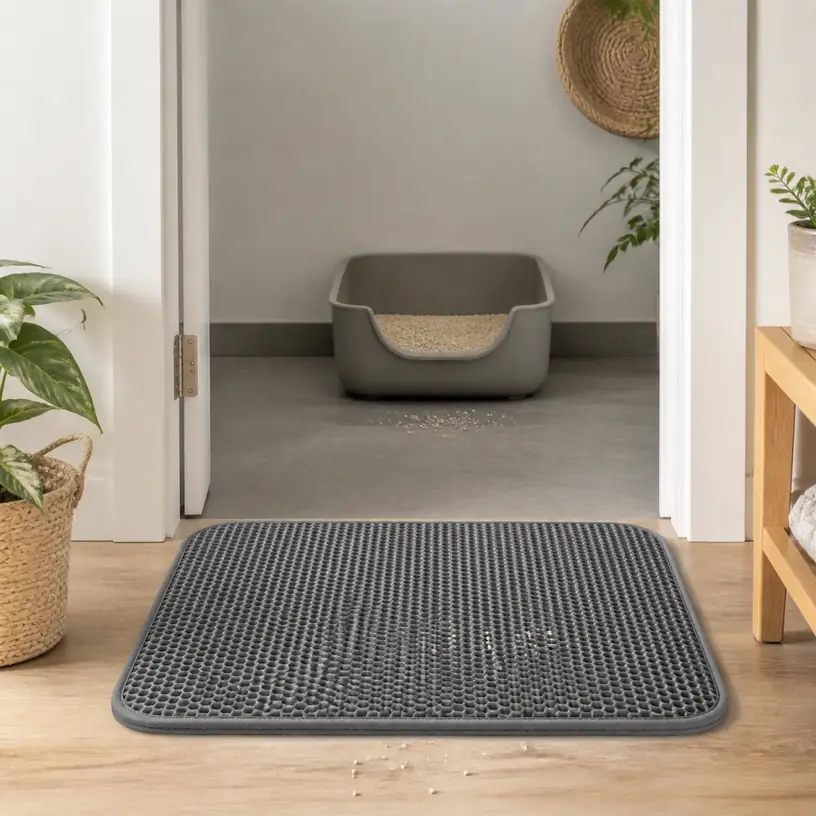
Illustrative image for a cat litter mat buying guide

Illustrative image, not an official product photo.

Short answer

A cat litter mat can reduce the loose granules that travel from the box to nearby floors, but it needs to cover the path your cat actually takes. Measure the open side of the box and the first few steps beyond it, then compare surface feel, hole or groove size, edge height, flexibility, and cleaning instructions. A generous single-layer mat may suit quick vacuuming, while a two-layer design can collect litter between layers for later emptying. Neither style replaces regular sweeping, and a mat that feels uncomfortable may simply be avoided.

Search reference

Cat litter mat options

Compare current sizes, surface patterns, single- and double-layer designs, edge profiles, and cleaning directions with your litter box layout in mind.

View matching options

Map the exit path before choosing a shape

Litter does not always scatter evenly around a box. Some cats step straight out, some turn along a wall, and others jump over the front edge. Observe the usual route and place most of the mat in that direction. A wide rectangle can work in an open laundry room, while a long runner-like shape may make better use of a narrow bathroom or hallway nook.

Box style changes the measurements. A front-entry covered box concentrates traffic at one opening. An open pan lets a cat exit from several sides, and a top-entry box may need landing space where the cat jumps down. Measure usable floor area as well as the box footprint, including nearby doors, cabinets, baseboards, and feeding stations. If the box sits inside furniture, check that the mat will not bunch at the enclosure opening.

Who this is for

  • Cat households finding litter granules beyond the immediate box area.
  • Renters who want a removable barrier between litter and hard flooring.
  • Owners of front-entry or top-entry boxes with a predictable exit route.
  • Multi-cat homes that have enough room for a larger landing surface.
  • People who want collected dry litter to be easier to vacuum or return to the box when appropriate.

Who should skip it

  • Skip a separate mat if the litter station already has an integrated tray that catches granules effectively.
  • Avoid highly textured options when a cat has shown reluctance to step on unfamiliar or rough surfaces.
  • Choose a washable floor protector designed for the situation if liquid spills are the primary concern rather than dry tracking.
  • Do not use a mat to compensate for a box entrance, litter depth, or placement that the cat finds difficult to navigate.

What to verify before buying

  • Measure the box opening and the distance covered by the cat’s first two or three steps.
  • Check whether listed dimensions refer to the overall mat or only its usable textured area.
  • Review the surface pattern and opening size in relation to the litter granule size you use.
  • Confirm whether the mat is single-layer, double-layer, or designed to fold open for emptying.
  • Read cleaning guidance for vacuuming, shaking, rinsing, or hand washing, including drying requirements.
  • Look at edge thickness and flexibility if the mat will sit near a door or where people walk.
  • Verify the backing guidance for your floor type and lift the mat regularly to clean underneath.

Surface texture matters to both litter and paws

Mesh, coils, ridges, dimples, and perforated top layers collect litter in different ways. A deeper pattern may catch more coarse granules, but fine litter can settle into corners that take longer to clean. Large holes can let compatible litter fall into a lower layer, while small openings may work differently with pellets or larger crystals. Product descriptions cannot guarantee performance with every litter type, so compare the stated pattern with what is already in the box.

Comfort matters just as much as capture. Cats must be willing to step onto the surface for it to intercept anything. A firm mat with pronounced texture might stay flat and collect granules well, yet a cautious cat may walk around it if another route is available. A softer mat may feel less intrusive but curl or shift depending on construction. Introduce a new mat without blocking access to the box, and watch whether normal box habits change.

Single-layer versus double-layer designs

Single-layer mats keep debris on or within one textured surface. They are straightforward to vacuum and may be easier to fit beneath a low box edge. Their usefulness depends on the grooves retaining litter until cleanup rather than releasing it when stepped on.

Double-layer mats generally use a perforated upper layer over a solid lower section. Litter passes through and collects inside, then the layers open or separate for emptying. This can hide granules between cleanups, but seams, pockets, and fold lines add places that may need attention. Check how the mat opens, whether the layers separate, and whether the opening is wide enough to empty without scattering the contents again.

Cleaning and floor placement

Choose a routine before choosing a material. If you clean the litter area with a cordless vacuum every day, a mat that stays flat under suction may be convenient. If you prefer to carry it outside and shake it, weight and flexibility matter. Rinsable designs need a suitable wash area and enough drying time before returning to the floor.

A mat is not a sealed floor pan unless its construction explicitly supports that use. Spills can travel through openings, around edges, or beneath curled corners. Lift the mat during routine cleaning, remove trapped litter, and let both the mat and floor dry fully. For delicate flooring, follow the floor manufacturer’s care guidance rather than assuming every backing material is suitable for long-term contact.

Limitations

  • No mat stops all tracking, especially when litter clings to fur or is kicked beyond the mat.
  • A cat can step around a mat that is too small, awkwardly placed, or unpleasant underfoot.
  • Deep textures and layered pockets may collect dust and require more detailed cleaning.
  • Flexible mats may arrive curled and can create an inconvenient raised edge until they lie flat.
  • Search listings change, so dimensions, materials, included pieces, and care directions need current verification.

Alternatives to compare

  • High-sided litter boxes when most debris is being kicked over the rim.
  • Top-entry boxes for cats that can comfortably use that entry style.
  • Larger litter-box enclosures with an internal walking path.
  • Washable utility mats when easy laundering matters more than trapping texture.
  • A nearby handheld vacuum or small broom for households that prefer frequent direct cleanup.

FAQ

How large should a cat litter mat be?

It should cover the route from the box opening through at least the cat’s first few steps. Measure that route rather than relying only on the width of the box, and leave clearance for doors and cabinets.

Do double-layer litter mats work with every type of litter?

Not necessarily. The top-layer hole size and the litter’s granule shape affect what passes through. Compare the current product details with clumping litter, pellets, crystals, or whichever type your cat already accepts.

Can a litter mat go under the entire box?

It can if the mat is large and stable enough, but confirm that the box will sit level and that the mat can still be removed for cleaning. Placing most of the mat outside the main exit may provide more useful walking distance.

How often should I clean under a litter mat?

Check underneath during regular litter-area cleaning and any time there is a spill. The appropriate frequency depends on tracking, dust, moisture, and floor type; do not leave hidden debris or dampness trapped beneath it.

What if my cat walks around the mat?

Make sure the mat does not block the box or create a high edge, then try repositioning it along the natural exit path. If avoidance continues, a flatter or less pronounced texture may be more acceptable.

Felt Furniture Pads for Chairs, Tables, and Quiet Floor Protection

Product links are for reference. Verify current details on the retailer page before buying.

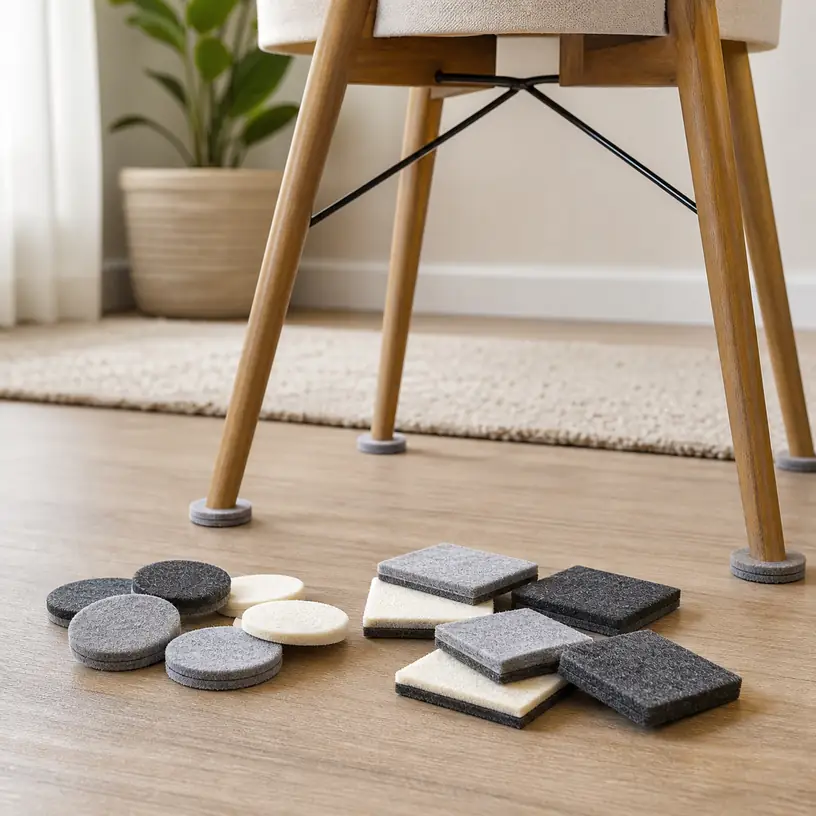
Illustrative image for a felt furniture pads buying guide

Illustrative image, not an official product photo.

Short answer

Felt furniture pads are small, inexpensive-looking items that can make a room feel easier to live in when chairs scrape, tables shift, or a sofa needs to move for cleaning. The main decision is not simply round versus square. Match the pad style to the furniture foot, the floor surface, how often the piece moves, and whether you want adhesive pads, nail-in glides, screw-in glides, or stretchy chair-leg covers with felt bottoms.

Search reference

Compare felt furniture pad options

Compare pad shapes, thickness, attachment style, stated floor compatibility, and package variety before choosing protectors for the furniture that moves most often.

View matching options

Start with the furniture that actually moves

Felt pads are most useful on furniture that slides repeatedly: dining chairs, counter stools, desk chairs without casters, small side tables, nightstands, and benches that get pulled in and out. A heavy bookcase that never moves may need leveling or stable contact more than a soft glide. A dining chair that moves dozens of times a week needs a pad that stays attached and does not catch grit.

Look at the foot shape before browsing. Some chair legs end in small round points, some are angled, some are square, and some have metal or plastic caps already installed. A flat adhesive pad can work well on a broad, clean, flat foot, but it may peel on a narrow angled leg. Stretch-on covers may fit certain round or square legs better, while nail-in or screw-in glides are more permanent and require a furniture foot that can safely accept them.

The floor matters too. Felt is usually chosen to reduce scraping and noise on hard surfaces, but the pad still needs regular checking. Dust, sand, pet hair, and tiny stones can get trapped in the felt and turn a protective pad into something that drags debris across the floor. In busy dining areas, the maintenance habit is almost as important as the pad itself.

Who this is for

  • Households with dining chairs, stools, benches, or small tables that scrape across hard floors.
  • Renters who want a non-permanent way to reduce chair noise and everyday scuffing.
  • Home offices where a small chair, printer stand, or side table needs to shift without harsh dragging sounds.
  • Families setting up a breakfast nook, apartment dining area, craft table, or homework table on a hard floor.
  • Anyone replacing old pads that have flattened, collected grit, or started sliding off furniture feet.

Who should skip it

  • Skip simple adhesive felt pads if the furniture foot is dirty, uneven, textured, very narrow, or angled in a way that gives the adhesive little contact area.
  • Use a proper furniture glide, caster cup, rug, or floor-specific protector if the item is extremely heavy or rarely moves.
  • Do not treat felt pads as a repair for loose chair joints, wobbly legs, sharp broken feet, or furniture that needs leveling.
  • Avoid nail-in or screw-in styles unless the furniture foot can accept hardware without splitting, cracking, or damaging a finish you care about.

What to verify before buying

  • Measure the contact area of the furniture foot, not just the visible leg width above it.
  • Check whether the pads are adhesive, nail-in, screw-in, slip-on, stretch-on, or mixed in a variety pack.
  • Compare round, square, strip, and sheet formats with the furniture shapes you need to cover.
  • Review stated floor compatibility and care notes for the current product page, especially for wood, laminate, tile, vinyl, and painted floors.
  • Confirm pad thickness if the furniture needs to remain level or if a chair must still tuck under a table or desk.
  • Check whether the package includes enough matching pieces for all legs, plus extras for replacement.
  • Look for guidance on cleaning the furniture foot before installation and replacing pads after wear.

Choosing an attachment style

Adhesive felt pads are the easiest starting point. They are useful for flat chair feet, table legs, decorative objects, and small furniture that does not put extreme sideways force on the pad. Installation is simple, but the surface needs to be clean and dry. If old adhesive, dust, wax, or floor-cleaner residue is left on the furniture foot, even a good pad may shift sooner than expected.

Nail-in and screw-in felt glides are better suited to furniture that moves often and has a foot designed to accept a small fastener. They can stay in place more securely than peel-and-stick pads, but they are not reversible in the same way. Before choosing them, check the furniture material, leg thickness, and whether installing hardware could split a small wooden foot or damage a piece you might later resell.

Slip-on or stretch-on chair-leg covers can be helpful when adhesive pads keep falling off narrow or angled legs. Many designs wrap around the leg and place felt on the bottom. The tradeoff is appearance and fit: a cover that is too loose can twist, while one that is too tight may be hard to install or may not sit flat.

Shape, thickness, and floor habits

Round pads are common for round chair feet, while square pads fit many straight table legs. Strips and sheets are useful when you want to cut a custom shape for an unusual foot, a cabinet, or a decorative object. Variety packs can be convenient for a whole room, but they can also leave you with many unused sizes. Count the pieces you actually need before assuming a large assortment solves the problem.

Thickness affects both cushioning and stability. A thicker pad can soften contact and help with small irregularities, but it also raises the furniture slightly. That may matter for a chair that must slide under an apron table, a cabinet door that sits close to the floor, or a table that already feels level. If only one leg gets a new thick pad while others remain thin, the furniture can rock.

The best pad will still need attention. Sweep or vacuum around chair legs, check pads for grit, and replace any piece that has compressed unevenly or shifted off-center. In dining rooms and kitchens, crumbs and sand can collect quickly. In entry-adjacent spaces, outdoor debris may make replacement more frequent.

Limitations

  • Felt pads reduce contact noise and everyday scraping, but they do not make furniture safe for every floor finish or every load.
  • Adhesive pads can loosen when the foot is dirty, uneven, damp, waxy, or under heavy sideways movement.
  • Felt can collect grit, so pads need periodic cleaning or replacement rather than being installed and forgotten.
  • Hardware-mounted glides can leave small holes or marks in furniture feet.
  • Floor finishes, cleaners, humidity, and furniture weight vary, so verify current product guidance before buying or installing.

Alternatives to compare

  • Rubber or silicone furniture cups when a heavy item should stay in place instead of sliding.
  • Clear chair-leg caps or sleeves when the leg shape makes flat adhesive pads unreliable.
  • Area rugs or dining mats when the whole chair zone needs cushioning and sound reduction.
  • Caster cups for furniture with wheels or small rolling bases.
  • Adjustable leveling glides when the main problem is wobble rather than scraping.

FAQ

Are adhesive felt pads enough for dining chairs?

They can be enough when the chair feet are flat, clean, and broad enough for the adhesive to hold. If chairs move constantly or the legs are narrow, angled, or textured, compare stretch-on covers or hardware-mounted felt glides.

How do I size felt pads for chair legs?

Measure the part of the leg that touches the floor and choose a pad that covers most of that contact area without hanging far over the edge. For unusual feet, cut-to-fit sheets or strips may be easier than a fixed round size.

Can felt furniture pads protect hardwood floors?

They can help reduce scraping on hard floors, but protection depends on correct sizing, clean installation, regular inspection, and the floor finish. Remove grit from the pads and verify the current product guidance for your floor type before using them.

Why do felt pads keep falling off?

Common reasons include dust, old adhesive residue, wax, moisture, narrow contact points, angled legs, or heavy sideways movement. Clean the furniture foot thoroughly and consider a different attachment style if peel-and-stick pads keep shifting.

How often should felt furniture pads be replaced?

Replace them when they flatten unevenly, collect grit that will not brush out, slide off-center, tear, or stop cushioning the furniture foot. High-use dining chairs may need more frequent checks than tables or decorative pieces.