Choosing a Kitchen Sink Drain Strainer That Is Easy to Empty
Product links are for reference. Verify current details on the retailer page before buying.
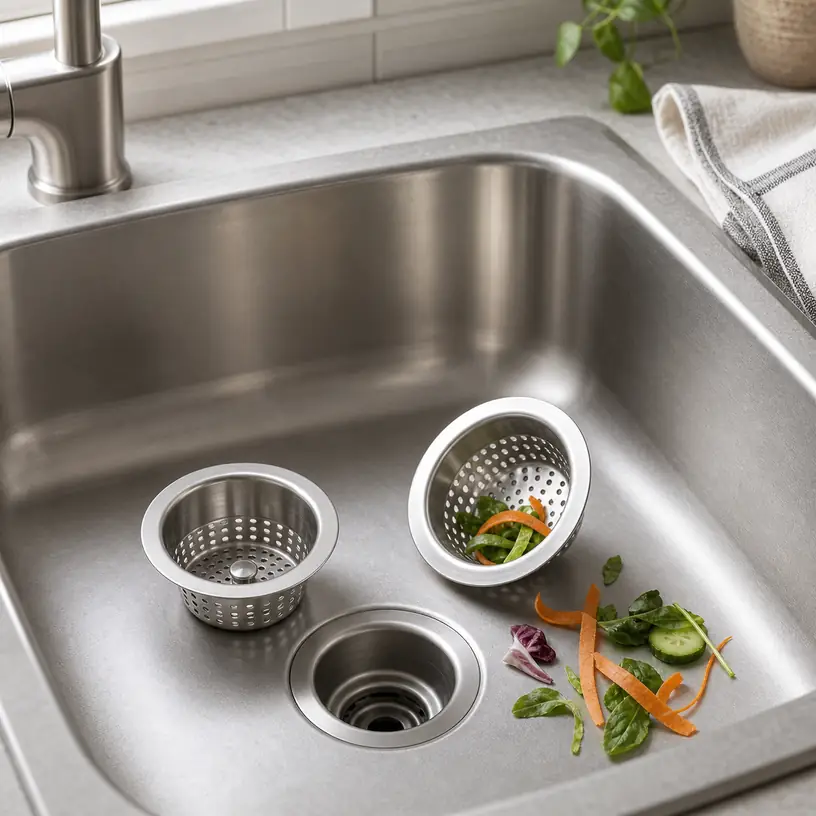
Illustrative image, not an official product photo.
Short answer
A kitchen sink drain strainer should catch ordinary food scraps without making the basin slow to drain or becoming unpleasant to empty. Fit comes first: identify the drain style, measure the opening and surrounding recess, and note whether you need a simple removable screen or a basket that also closes as a stopper. Then compare hole size, basket depth, rim profile, underside clearance, and how easily you can lift the strainer without touching collected debris. A highly polished finish matters less than a stable fit and an open shape that can be scrubbed from both sides.
Search reference
Compare kitchen sink drain strainers
Review removable screens and basket-style designs while checking exact dimensions, drain configuration, perforation pattern, lifting method, care guidance, and included pieces.
View matching optionsFirst decide what the strainer needs to do
The term “sink strainer” covers more than one product. A shallow perforated screen rests over or just inside a drain and catches scraps while water runs through. A deeper removable basket sits in an existing drain assembly. Some basket assemblies can also seal the drain when pushed, twisted, or positioned a certain way. Replacement parts may look interchangeable in a search grid even when their diameter, post, spring mechanism, or sealing surface differs.
If your sink already has a functional drain flange and you only want better debris capture, a drop-in screen may be the simplest option. If you are replacing a basket or stopper component, inspect the existing part before shopping. Photograph its top and underside, record its dimensions, and look for the way it engages with the drain. A basket that fits the opening but cannot sit at the intended height may drain poorly or fail to seal.
This guide focuses on removable household strainers rather than installing a complete drain body. Replacing plumbing hardware can involve seals and connections below the basin; that is a separate job from choosing a lift-out debris basket.
Who this is for
- Home cooks who want to keep vegetable trimmings, rice grains, and other ordinary scraps from entering the kitchen drain.
- Renters seeking a removable accessory that does not alter an existing sink assembly.
- Households replacing a lost, bent, corroded, or difficult-to-clean strainer basket.
- Shared kitchens where an easy-to-see and easy-to-empty catch basket can simplify the cleanup routine.
- Buyers comparing a basic always-open screen with a basket that can also retain water in the sink.
Who should skip it
- A sink with a garbage disposal may need a disposal-specific splash guard, stopper, or compatible strainer rather than a generic basket.
- A damaged, leaking, loose, or corroded drain flange calls for diagnosis or repair, not merely a new drop-in screen.
- Anyone expecting a strainer to prevent grease, fine sediment, or liquids from entering the drain needs a broader disposal routine.
- A bathroom drain, utility sink, or unusually shaped drain may require a product designed for that fixture.
What to verify before buying
- Drain opening and recess: Measure the usable diameter, depth, and the flat area where the rim will rest; do not choose from sink size alone.
- Strainer type: Confirm whether the listing describes a shallow screen, replacement basket, stopper basket, complete drain assembly, or a part intended for a disposal.
- Top and underside dimensions: Check rim diameter, basket diameter and depth, center post or stem details, and clearance beneath the basket.
- Water flow: Compare the number, size, and placement of holes with the kinds of scraps you want to catch and the flow your sink needs.
- Lift point: Look for a knob, loop, tab, or rim that can be grasped when the basket contains wet debris.
- Sealing function: If you want to fill the sink, verify how the stopper engages and whether compatibility depends on a particular drain assembly.
- Cleaning access: Favor smooth transitions and perforations that can be reached from both sides over hidden channels that trap residue.
- Package contents: Check whether the offer includes one basket, a multi-pack, a stopper, seals, or installation components rather than relying on the main image.
Measure the drain, not the old product name
Begin with the drain empty and clean. Measure across the inner opening at more than one point, then measure the ledge or recessed area that supports the strainer rim. For a deeper basket, note how far it can extend before contacting hardware below. A ruler can provide a rough check, but calipers are useful when a replacement depends on a close fit.
Measure the old basket too, if it seated correctly. Record its outer rim, body width, overall depth, and any underside post. Do not assume a nominal description represents every relevant dimension. Two listings can use similar wording while differing enough to wobble, sit too high, or fall too deeply into the drain.
A silicone or flexible rim can reduce rattling in some designs, while a rigid metal rim can be thinner and easier to wipe. Neither approach fixes a dimensional mismatch. Also check whether a raised rim will interfere with a flat-bottomed dish placed in the basin.
Balance debris capture with drainage
Very fine perforations can catch small particles, but they offer less open area and may need to be emptied sooner. Large holes keep water moving yet allow smaller scraps through. Think about the actual cleanup load: rinsing a few coffee cups produces a different mix of debris from washing a pot after preparing rice or chopped vegetables.
Basket depth changes both capacity and handling. A deep basket may hold more before water backs up, but collected scraps can compress against the holes and become harder to knock out. A shallow screen is easy to see and remove, though it may shift when hit by a strong stream of water. Shape matters as much as capacity: rounded corners and a gently tapered basket are generally easier to brush clean than a tight seam between a flat base and vertical wall.
Do not treat the strainer as a tiny waste bin. Scrape plates and cookware into the appropriate household waste or compost container first. The strainer is the last catch for remnants left during rinsing, and it works better when emptied before a dense mat forms.
Stopper baskets need a closer compatibility check
A dual-purpose basket can drain in one position and seal in another. That convenience depends on how the basket meets the drain assembly. Some use a center post, ball, pin, spring, twist action, or pressure fit. A listing that says “universal” should still be checked against measured dimensions and the current compatibility notes.
If retaining water is important, look beyond the visible basket. Review the sealing surface, operating method, replacement guidance, and whether a separate gasket is involved. A basket may catch scraps perfectly yet be unsuitable as a stopper. Conversely, a secure stopper may require an extra action each time you want the sink to drain freely.
For disposal-equipped sinks, verify the entire arrangement before placing a metal basket or loose component near the opening. Use only a format described as compatible with the disposal and sink setup, and follow the appliance maker’s current safety guidance.
Make emptying part of the decision
Imagine removing the basket when it is wet and full. A tall center knob can be easy to grasp but may collect residue around its attachment point or interfere with items in the basin. A wire loop folds down neatly, though its hinge can add another cleaning spot. Rim tabs avoid a central obstruction but may be difficult to grip if they sit flush.
The easiest basket to live with can be lifted, tapped out, rinsed, and returned without turning it inside out or picking debris from a narrow groove. Check whether perforations have accessible edges and whether separate trim or silicone pieces can be removed for washing. Follow the current care directions for the stated materials; appearance alone does not establish dishwasher suitability or corrosion resistance.
Empty the basket after food preparation and before debris dries in place. Wash both sides, clear each blocked hole, and clean the drain recess where the rim sits. If the basket becomes sharp, distorted, cracked, or impossible to clean, replace it rather than forcing it to fit.
Limitations
- A removable strainer reduces the amount of solid debris entering a drain but does not catch every fine particle.
- It does not make grease, cooking oil, paint, or other unsuitable liquids safe to pour into plumbing.
- Search results can mix simple screens, stopper baskets, complete drain assemblies, bathroom parts, and disposal accessories.
- A close visual resemblance does not confirm fit; small differences in diameter, depth, and underside hardware can matter.
- Fine holes may clog quickly during a heavy cleanup, while coarse holes may pass the smallest scraps.
- A new basket cannot repair a leaking flange, blocked pipe, damaged seal, or malfunctioning garbage disposal.
Alternatives to compare
- A flat mesh drain screen when the drain has little recess and only light debris needs catching.
- A deeper basket strainer for food-preparation sinks that receive a larger volume of scraps.
- A disposal-specific stopper or splash-guard accessory for a compatible garbage-disposal opening.
- A sink stopper without perforations when retaining water matters and debris capture is handled separately.
- A countertop scrap bowl or compost container to keep most preparation waste away from the sink entirely.
FAQ
How do I measure for a kitchen sink drain strainer?
Measure the inner drain opening, the recessed ledge or flat area supporting the rim, and any available depth below it. For a replacement basket, also measure the old rim, body, depth, and underside post or mechanism if the old part fit correctly.
Are kitchen sink drain strainers universal?
No. Many products cover common size ranges, but drain openings, recesses, basket depths, center posts, stopper mechanisms, and disposal configurations vary. Compare the listing’s exact dimensions and compatibility notes with your sink.
Is a mesh screen or perforated basket easier to clean?
A perforated basket with smooth, accessible holes is often quick to rinse, while fine mesh can catch smaller particles but may require more brushing. The better choice depends on the debris you usually encounter and how often you are willing to empty it.
Can I use a regular strainer with a garbage disposal?
Do not assume so. Disposal openings can require a specific stopper, splash guard, or strainer format. Confirm compatibility with the disposal and sink configuration and follow the appliance maker’s current instructions.
Why does water drain slowly through a new strainer?
The holes may offer too little open area for the water flow, the basket may be sitting too low, or debris may already be blocking the perforations. Remove and clean it, check its seating, and compare its dimensions and hole pattern with the drain.