Door Draft Stoppers for Apartments, Bedrooms, and Older Doors
Product links are for reference. Verify current details on the retailer page before buying.
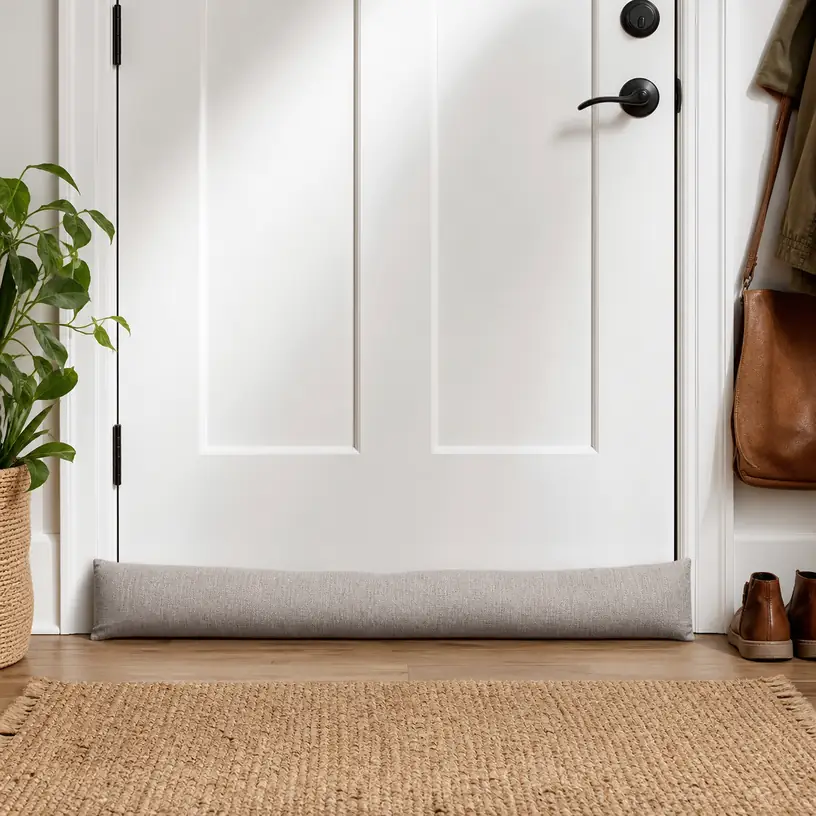
Illustrative image, not an official product photo.
Short answer
A door draft stopper is worth considering when a small gap under a door makes a room feel breezy, lets hallway noise through, or allows dust and light to slip in. The right choice depends less on appearance and more on the door gap, the way the door swings, the flooring it crosses, and whether you can attach something permanently. For renters, a removable fabric draft blocker may be the least risky starting point; for frequently used exterior doors, a better-fitted sweep or adhesive seal may be more stable if the current retailer details confirm it suits the door.
Search reference
Compare door draft stopper options
Use the search page to compare removable fabric blockers, under-door sleeves, adhesive seals, and sweep-style designs before matching one to your door gap and floor surface.
View matching optionsStart with the gap you can actually see
Before comparing materials or colors, close the door and look at the gap from both sides. A draft stopper that is too thin may look tidy but still leave air moving underneath. One that is too bulky can drag across the floor, catch on a rug, or keep the door from closing fully. Measure the visible space at several points because older doors and uneven thresholds are not always level from left to right.
The flooring matters as much as the door. A soft fabric tube may slide easily on hardwood but bunch up on thick carpet. A rigid sweep may work smoothly over a flat threshold but feel annoying where the floor rises near the latch side. If the door opens over a mat, rug, or uneven transition strip, include that clearance in your measurement rather than measuring the door alone.
What this product type is
Door draft stoppers are simple barriers placed at the bottom of a door to reduce unwanted air movement, light gaps, dust, and some everyday noise transfer. Common versions include loose weighted fabric tubes, double-sided sleeves that slide under the door, adhesive foam or silicone strips, and more hardware-like door sweeps.
They are not full insulation projects and they do not repair a warped door, loose threshold, or damaged frame. Think of them as small problem solvers for a specific gap. If the gap changes with the season or the door already rubs the floor, verify the attachment method and clearance guidance carefully before choosing a style.
Who this is for
- Renters who want a removable way to reduce a hallway draft without changing the door permanently.
- Homeowners checking small comfort fixes before taking on larger weatherproofing work.
- Bedroom, nursery, or home office setups where light leakage and minor hallway noise are distracting.
- Older homes or apartments where door bottoms are uneven but the door still opens and closes normally.
- Entryways where a seasonal blocker is useful during cold, windy, or dusty periods.
Who should skip it
- Skip a loose fabric stopper if the door is opened dozens of times a day and nobody will reposition it.
- Avoid adhesive styles if the surface is painted, delicate, damp, dusty, or not approved for adhesive use.
- Do not rely on a draft stopper to solve a damaged threshold, visible water intrusion, pest entry, or a door that no longer latches correctly.
- Choose a different fix if the door already scrapes the floor; extra material at the bottom may make the problem worse.
What to verify before buying
- Measure the door width and the under-door gap, then compare both with the current listing details.
- Check whether the stopper is meant for interior doors, exterior doors, sliding doors, or a specific threshold type.
- Confirm the attachment style: loose, slide-on, adhesive, screw-mounted, magnetic, or sweep-style.
- Look for floor compatibility notes, especially if the door crosses carpet, tile transitions, rugs, or uneven flooring.
- Verify cleaning instructions if the stopper will sit near shoes, pets, dust, or an entryway.
- For rentals, confirm whether the design can be removed without leaving marks or residue.
Main buying notes
A loose weighted draft stopper is the most forgiving option when you are unsure about fit. It can be placed only during cold months, moved between rooms, and removed for cleaning. The tradeoff is habit: someone has to place it back after the door opens. This style makes the most sense for bedrooms, home offices, guest rooms, or a front door that is not opened constantly.
A double-sided under-door sleeve can stay attached as the door moves, which is convenient for daily use. The fit is more important, though. The sleeve has to match the door thickness and should not rub heavily on the floor. If the product details mention trimming, door thickness, or maximum gap coverage, read those points before assuming it will fit an older door.
Adhesive seals and sweep-style products can look cleaner once installed, but they are less flexible. Adhesive may fail on dusty surfaces or remove paint when taken off. A screw-mounted sweep can be sturdier but is usually a more permanent choice. These designs are better when the door, threshold, and floor clearance are already understood.
Material choice is practical rather than decorative. Fabric covers can blend into a room and may be easier to store, but they can collect pet hair and floor dust. Silicone or foam strips may seal a narrow gap neatly, yet they can deform, drag, or peel if the fit is wrong. For an entry door, also think about wet shoes, grit, and whether the bottom edge will need frequent wiping.
Limitations
- Search results change, so dimensions, attachment methods, included pieces, and care instructions should be checked on the current retailer page.
- A draft stopper reduces small gaps; it does not replace door repair, threshold replacement, or full weatherstripping work.
- Loose fabric styles can move out of place when the door opens, pets push them, or people step near them.
- Adhesive and sweep-style designs may leave marks, fail to stick, or interfere with door movement if the surface and clearance are not suitable.
- Any floor-level item near an exterior door can collect moisture, dust, hair, or grit and should be cleaned periodically.
Alternatives to compare
- Adhesive weatherstripping around the door frame if air is leaking from the sides or top rather than the bottom.
- A replacement door sweep when an exterior door has an old or damaged bottom seal.
- A threshold adjustment or repair if the gap is large, uneven, or related to a worn entry threshold.
- Heavy curtains or room dividers when the main issue is comfort in a drafty room rather than the door gap itself.
- Rugs or entry mats for floor protection, noting that they do not seal the door bottom on their own.
FAQ
How do I measure for a door draft stopper?
Measure the full door width and the visible gap under the closed door. Check both ends of the door because older floors and thresholds may be uneven. If a rug or mat sits in the door swing, measure with that obstacle in place.
Is a fabric draft stopper better for renters?
Often, yes. A loose fabric draft stopper usually avoids adhesive or hardware, so it is easier to remove when moving out. Still, verify the size, weight, cover material, and cleaning instructions before buying.
Will a door draft stopper block noise?
It may reduce some sound passing through the bottom gap, especially light hallway noise, but it is not a soundproofing product. Door mass, frame gaps, wall construction, and flooring all affect how much noise remains.
Can I use one on an exterior door?
You can compare options for exterior doors, but check the current details for weather exposure, threshold fit, moisture handling, and door movement. A loose indoor-style fabric tube may not be suitable for wet entry areas.
What if my door already rubs the floor?
A draft stopper may make rubbing worse. Fixing the door clearance, hinge alignment, threshold, or floor transition may be more important than adding extra material at the bottom.