Foldable Laundry Drying Racks: Plan the Load Before You Unfold
Product links are for reference. Verify current details on the retailer page before buying.
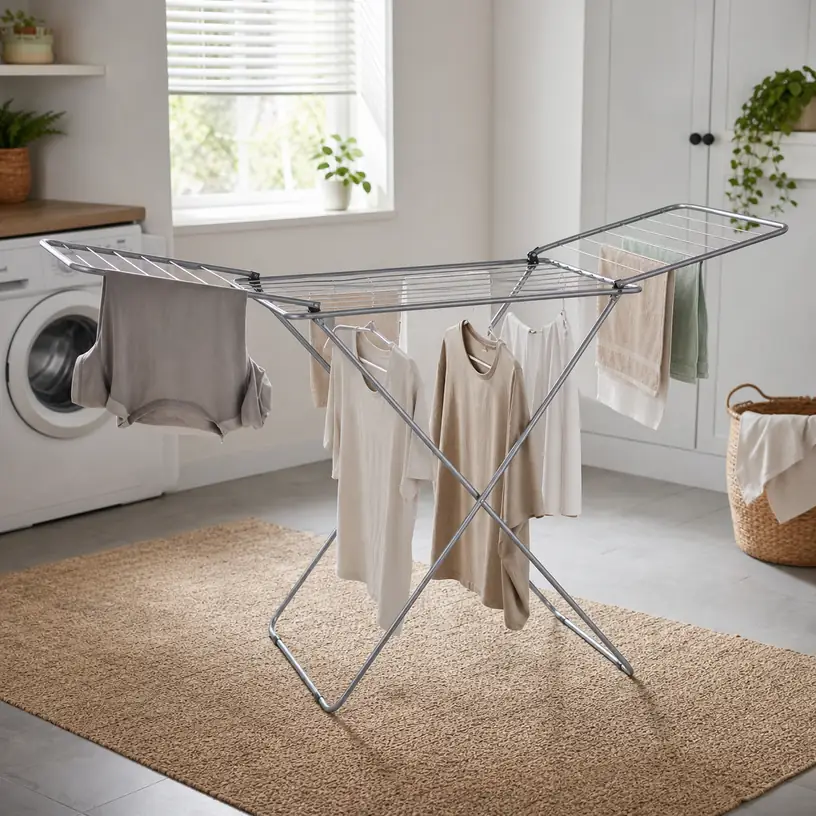
Illustrative image, not an official product photo.
Short answer
Choose a foldable drying rack around one realistic wash load and one specific place where it can remain fully open. Count the long garments, small items, and pieces that need to lie flat, then compare that mix with the rail spacing and layout rather than relying on a total drying-space claim alone. The right rack also leaves walking clearance, stands level under damp weight, folds without a complicated routine, and fits its intended storage gap after the laundry is put away.
Search reference
Foldable laundry drying rack options
Compare open dimensions, rail spacing, supported load guidance, flat-drying areas, foot design, and folded size against your usual laundry routine.
View matching optionsSketch the open rack on the floor
A folded product can look compact while opening into a wide structure with wings, side rails, or several tiers. Measure the floor area where wet laundry will actually sit, not just the closet where the rack will be stored. Painter’s tape or a few sheets of paper can mark the listed open length and width so you can check door swings, cabinet access, heating vents, and the route through the room.
Allow extra space beyond the frame. Sleeves and towels can extend past the outer rails, and a loaded wing may be less visible at hip height than the legs below it. In a shared hallway, bedroom, or bathroom, a narrow vertical layout may preserve more floor space, while a low winged rack can offer a better surface for sweaters. Neither shape is automatically more compact once garments are added.
Who this is for
- Apartment households that air-dry selected garments but cannot install a permanent clothesline.
- Laundry rooms where a rack can stand open for several hours without blocking appliances or storage.
- People who want a predictable place for delicates, knitwear, workout clothing, or items that should not go into a dryer.
- Buyers who need the rack to fold between wash days and fit beside a washer, under a bed, or in a utility closet.
- Homes that can provide ventilation and protect the floor beneath damp laundry.
Who should skip it
- A wall-mounted or ceiling-mounted airer may suit a very small room better when installation is allowed and properly planned.
- Skip a freestanding rack if every available location blocks an exit, walkway, heater, or frequently used door.
- A single compact rack may be frustrating for households expecting it to hold several large loads at once.
- Do not assume an indoor rack is suitable for balconies, wind, prolonged outdoor exposure, or uneven ground unless the current instructions say so.
- Choose another method if the intended garments require a care routine the rack cannot support, such as fully flat drying without sagging.
What to verify before buying
- Open dimensions: Check length, width, and height with wings, shelves, and extensions in their working positions.
- Folded dimensions: Include feet, hinges, clips, and locking parts that may protrude into a storage gap.
- Rail arrangement: Compare usable straight lengths, gaps between rails, tier spacing, and clearance for sleeves or trouser legs.
- Supported load: Confirm the current total and section-specific guidance, and distribute damp items as directed.
- Hinges and locks: Review how the rack reaches a stable open position and whether wings have defined working angles or supports.
- Feet and floor contact: Check the intended flooring, foot material, leveling guidance, and recommendations for moisture beneath the rack.
- Materials and care: Verify coating, corrosion-care instructions, cleaning method, and whether hardware or caps are replaceable.
- Indoor or outdoor use: Do not infer weather resistance from a product photo; read the current placement and storage instructions.
Rail layout matters more than a single capacity number
Drying-space measurements often add every rail together, but a total does not show how comfortably a real load fits. Closely spaced rails may work for socks and light tops yet cause bulky items to overlap. A tall center tier can accommodate shirts on hangers, while a low horizontal shelf can support knitwear that should dry flat. Make a rough garment list and assign each piece to a part of the rack before comparing models.
Look at the distance between tiers as well as the rail count. A lower item should not bunch on the floor or press against the clothing above it. If you plan to use hangers, confirm that the relevant bar is intended for them and that the hooks have enough clearance without concentrating too much weight in one area.
Small-item clips or mesh shelves can be useful, but they also add pieces to open, clean, and store. A simpler frame may be faster for a few shirts and towels. For mixed loads, a rack with genuinely different zones can reduce the need to drape one garment across several rails.
Stability changes as damp clothes are added
An empty display image says little about balance under an uneven load. Damp jeans, towels, or a sweater can be substantially heavier than dry lightweight clothing. Follow the stated load guidance and spread heavier pieces across the frame rather than placing everything on one raised wing. Alternate items from side to side when practical, and make sure every foot remains fully supported on a firm, level surface.
Open all supports as directed before loading the rack. A hinge that looks straight may still need a brace, latch, or wing support to reach its working position. Keep children and pets away from folding joints and hanging garments, and avoid moving a loaded rack unless the instructions explicitly describe how to do so. Lifting by a rail or wing can stress a joint not designed as a handle.
Water can drip from hand-washed items, so consider what is under the rack. Protect moisture-sensitive flooring in a way that does not create an unstable or slippery base. Wring or spin garments according to their care labels, provide ventilation, and do not crowd wet fabrics against a wall.
Folding should be a routine, not a puzzle
A rack is easier to live with when opening and closing follow an obvious sequence. Product diagrams can reveal whether several wings must be aligned before the legs fold, whether a latch holds the closed frame, and where hands should be placed away from pinch points. If the rack will be folded after every load, those details may matter more than an occasional extra rail.
Measure the complete folded package and its retrieval path. A rack that technically fits behind a door may prevent the door from opening fully; one stored beside an appliance may be difficult to pull out without scraping a wall. Consider its weight and whether there is a clearly intended carrying point. Before storage, let the frame dry and follow the care instructions for removing lint, detergent residue, or moisture around joints.
Limitations
- Published capacity may not reflect the size and spacing needs of your particular garments.
- Closely packed laundry generally dries less evenly than items with air moving between them.
- Wide wings increase hanging options but also increase the open footprint and the leverage placed on supports.
- Tall racks save floor area only when tiers provide enough vertical clearance for the intended clothes.
- Folding joints and removable accessories add potential pinch, loss, and wear points.
- Coated metal, plastic, wood, and fabric components have different cleaning, moisture, and storage requirements.
Alternatives to compare
- A wall-mounted retractable rack for a dedicated laundry area where secure installation is possible.
- An over-the-door airer for a few lightweight items when door clearance and weight guidance permit it.
- A flat mesh drying surface for sweaters and other garments that should be supported rather than hung.
- A tension or fixed clothesline for a suitable space, installed and loaded according to its instructions.
- A larger nonfolding rack when it can stay in one place and daily setup is the main inconvenience.
FAQ
How large should a drying rack be for one laundry load?
There is no universal load size. List the garments you normally air-dry, estimate which need long rails, hangers, clips, or flat support, and map them to the rack’s usable layout. Leave gaps for airflow instead of treating every inch of rail as continuously fillable.
Is a tiered rack better for a small apartment?
A tiered design can use less floor area, but only if its vertical gaps suit your clothing and the loaded rack still fits safely in the room. Long garments may overlap lower tiers, while a winged rack may work better for towels or flat-drying needs.
Can I put a foldable drying rack on a balcony?
Only when the product’s current instructions allow the setting. Wind, rain, sunlight, uneven surfaces, and the risk of items falling can change both stability and material wear. An indoor-only rack should not be assumed to be weather resistant.
How can I keep a drying rack stable?
Place it fully open on a firm, level surface, engage every support or lock as directed, stay within the stated load guidance, and distribute damp garments across the structure. Do not use a wing, tier, or accessory outside its intended position.
What should I measure for folded storage?
Measure folded height, width, and thickness, including feet and latches, plus the path used to put the rack away. Check that nearby doors and appliances still open and that you can retrieve the rack using its intended carrying point.