Cat Litter Mats for Cleaner Floors Around the Litter Box
Product links are for reference. Verify current details on the retailer page before buying.
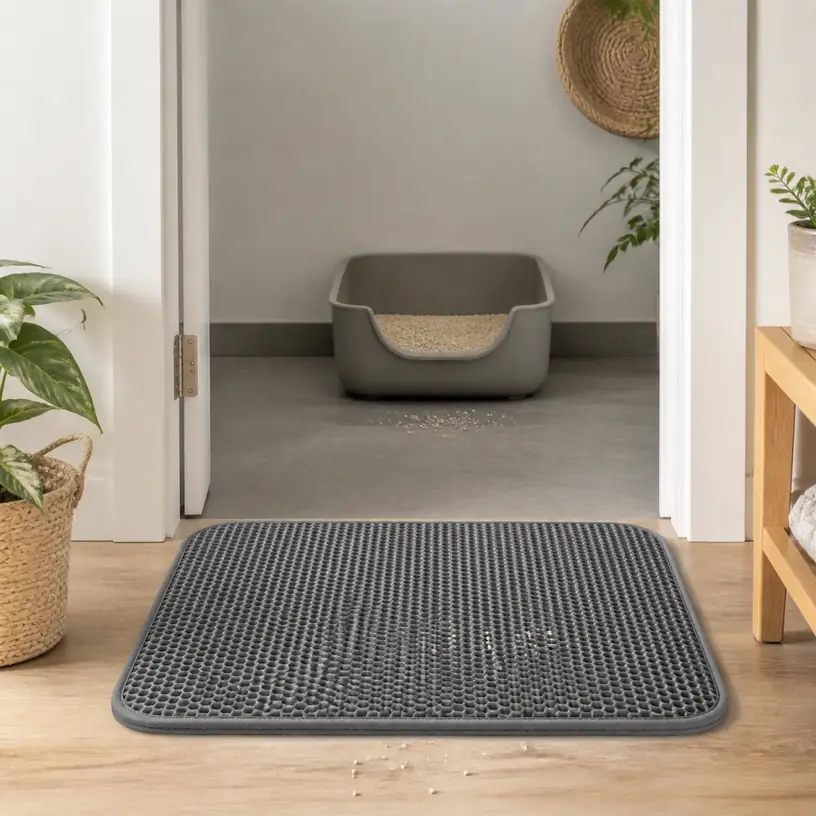
Illustrative image, not an official product photo.
Short answer
A cat litter mat can reduce the loose granules that travel from the box to nearby floors, but it needs to cover the path your cat actually takes. Measure the open side of the box and the first few steps beyond it, then compare surface feel, hole or groove size, edge height, flexibility, and cleaning instructions. A generous single-layer mat may suit quick vacuuming, while a two-layer design can collect litter between layers for later emptying. Neither style replaces regular sweeping, and a mat that feels uncomfortable may simply be avoided.
Search reference
Cat litter mat options
Compare current sizes, surface patterns, single- and double-layer designs, edge profiles, and cleaning directions with your litter box layout in mind.
View matching optionsMap the exit path before choosing a shape
Litter does not always scatter evenly around a box. Some cats step straight out, some turn along a wall, and others jump over the front edge. Observe the usual route and place most of the mat in that direction. A wide rectangle can work in an open laundry room, while a long runner-like shape may make better use of a narrow bathroom or hallway nook.
Box style changes the measurements. A front-entry covered box concentrates traffic at one opening. An open pan lets a cat exit from several sides, and a top-entry box may need landing space where the cat jumps down. Measure usable floor area as well as the box footprint, including nearby doors, cabinets, baseboards, and feeding stations. If the box sits inside furniture, check that the mat will not bunch at the enclosure opening.
Who this is for
- Cat households finding litter granules beyond the immediate box area.
- Renters who want a removable barrier between litter and hard flooring.
- Owners of front-entry or top-entry boxes with a predictable exit route.
- Multi-cat homes that have enough room for a larger landing surface.
- People who want collected dry litter to be easier to vacuum or return to the box when appropriate.
Who should skip it
- Skip a separate mat if the litter station already has an integrated tray that catches granules effectively.
- Avoid highly textured options when a cat has shown reluctance to step on unfamiliar or rough surfaces.
- Choose a washable floor protector designed for the situation if liquid spills are the primary concern rather than dry tracking.
- Do not use a mat to compensate for a box entrance, litter depth, or placement that the cat finds difficult to navigate.
What to verify before buying
- Measure the box opening and the distance covered by the cat’s first two or three steps.
- Check whether listed dimensions refer to the overall mat or only its usable textured area.
- Review the surface pattern and opening size in relation to the litter granule size you use.
- Confirm whether the mat is single-layer, double-layer, or designed to fold open for emptying.
- Read cleaning guidance for vacuuming, shaking, rinsing, or hand washing, including drying requirements.
- Look at edge thickness and flexibility if the mat will sit near a door or where people walk.
- Verify the backing guidance for your floor type and lift the mat regularly to clean underneath.
Surface texture matters to both litter and paws
Mesh, coils, ridges, dimples, and perforated top layers collect litter in different ways. A deeper pattern may catch more coarse granules, but fine litter can settle into corners that take longer to clean. Large holes can let compatible litter fall into a lower layer, while small openings may work differently with pellets or larger crystals. Product descriptions cannot guarantee performance with every litter type, so compare the stated pattern with what is already in the box.
Comfort matters just as much as capture. Cats must be willing to step onto the surface for it to intercept anything. A firm mat with pronounced texture might stay flat and collect granules well, yet a cautious cat may walk around it if another route is available. A softer mat may feel less intrusive but curl or shift depending on construction. Introduce a new mat without blocking access to the box, and watch whether normal box habits change.
Single-layer versus double-layer designs
Single-layer mats keep debris on or within one textured surface. They are straightforward to vacuum and may be easier to fit beneath a low box edge. Their usefulness depends on the grooves retaining litter until cleanup rather than releasing it when stepped on.
Double-layer mats generally use a perforated upper layer over a solid lower section. Litter passes through and collects inside, then the layers open or separate for emptying. This can hide granules between cleanups, but seams, pockets, and fold lines add places that may need attention. Check how the mat opens, whether the layers separate, and whether the opening is wide enough to empty without scattering the contents again.
Cleaning and floor placement
Choose a routine before choosing a material. If you clean the litter area with a cordless vacuum every day, a mat that stays flat under suction may be convenient. If you prefer to carry it outside and shake it, weight and flexibility matter. Rinsable designs need a suitable wash area and enough drying time before returning to the floor.
A mat is not a sealed floor pan unless its construction explicitly supports that use. Spills can travel through openings, around edges, or beneath curled corners. Lift the mat during routine cleaning, remove trapped litter, and let both the mat and floor dry fully. For delicate flooring, follow the floor manufacturer’s care guidance rather than assuming every backing material is suitable for long-term contact.
Limitations
- No mat stops all tracking, especially when litter clings to fur or is kicked beyond the mat.
- A cat can step around a mat that is too small, awkwardly placed, or unpleasant underfoot.
- Deep textures and layered pockets may collect dust and require more detailed cleaning.
- Flexible mats may arrive curled and can create an inconvenient raised edge until they lie flat.
- Search listings change, so dimensions, materials, included pieces, and care directions need current verification.
Alternatives to compare
- High-sided litter boxes when most debris is being kicked over the rim.
- Top-entry boxes for cats that can comfortably use that entry style.
- Larger litter-box enclosures with an internal walking path.
- Washable utility mats when easy laundering matters more than trapping texture.
- A nearby handheld vacuum or small broom for households that prefer frequent direct cleanup.
FAQ
How large should a cat litter mat be?
It should cover the route from the box opening through at least the cat’s first few steps. Measure that route rather than relying only on the width of the box, and leave clearance for doors and cabinets.
Do double-layer litter mats work with every type of litter?
Not necessarily. The top-layer hole size and the litter’s granule shape affect what passes through. Compare the current product details with clumping litter, pellets, crystals, or whichever type your cat already accepts.
Can a litter mat go under the entire box?
It can if the mat is large and stable enough, but confirm that the box will sit level and that the mat can still be removed for cleaning. Placing most of the mat outside the main exit may provide more useful walking distance.
How often should I clean under a litter mat?
Check underneath during regular litter-area cleaning and any time there is a spill. The appropriate frequency depends on tracking, dust, moisture, and floor type; do not leave hidden debris or dampness trapped beneath it.
What if my cat walks around the mat?
Make sure the mat does not block the box or create a high edge, then try repositioning it along the natural exit path. If avoidance continues, a flatter or less pronounced texture may be more acceptable.