Rotating Pantry Turntables for Spices, Condiments, and Deep Shelves

Product links are for reference. Verify current details on the retailer page before buying.
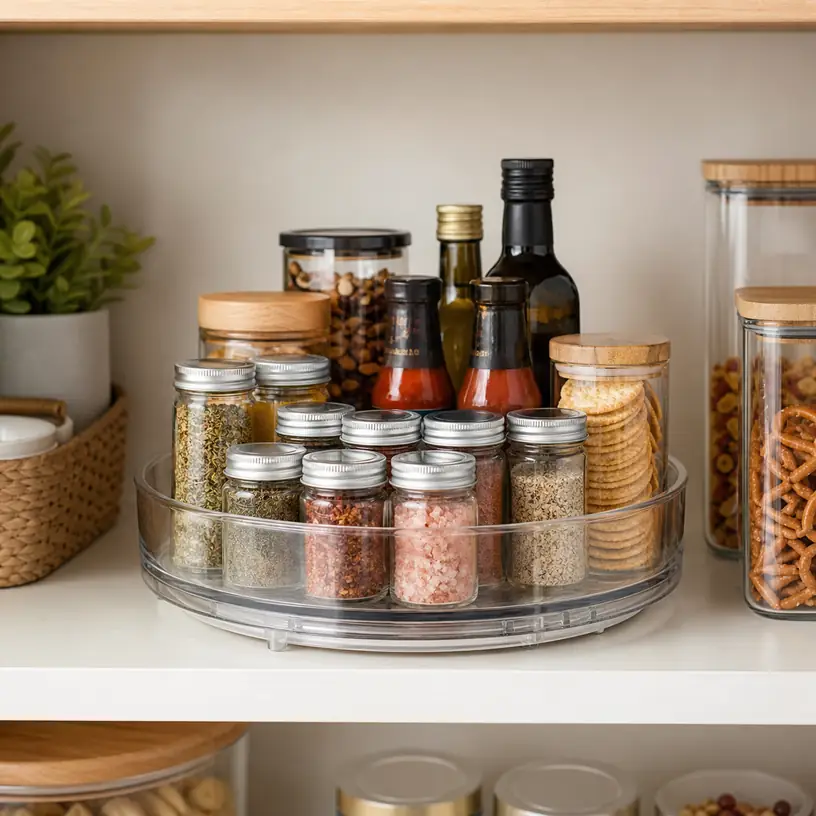
Illustrative image for a rotating pantry turntable buying guide

Illustrative image, not an official product photo.

Short answer

A rotating pantry turntable is most useful when small jars, oils, sauces, snacks, or cleaning bottles disappear at the back of a shelf. The right one is less about buying the biggest circle and more about matching diameter, rim height, surface grip, clearance, and load expectations to the exact cabinet or pantry zone. Measure the shelf depth and opening first, then decide whether a single-tier turntable, divided tray, high-rim spinner, or tiered rotating organizer fits the way you actually reach for items.

Search reference

Rotating pantry turntable options

Compare diameter, rim height, tier layout, base stability, cleaning guidance, and whether the organizer clears cabinet doors, hinges, and shelf edges.

View matching options

Why a turntable solves a different storage problem

Bins and rectangular trays are good when you want to pull a whole category forward. A turntable solves a different problem: it lets you bring the back row to the front without removing everything around it. That matters in upper cabinets, narrow pantry shelves, corner spaces, under-sink areas, craft cabinets, and refrigerator-adjacent condiment shelves where items are easy to lose behind taller bottles.

The tradeoff is shape. A round organizer leaves unused corners on a rectangular shelf, so it works best when access matters more than maximum square-inch storage. If a cabinet is already tight, a turntable can either make the space feel easier or waste useful room. The decision should start with the shelf, not with the product photo.

Who this is for

  • Home cooks who keep spices, oils, vinegars, extracts, or seasoning jars in a deep cabinet.
  • Pantry shelves where small jars, snack containers, vitamins, drink mixes, or condiments get hidden behind larger items.
  • Renters who want a non-permanent organizer for upper cabinets, bathroom storage, craft supplies, or under-sink bottles.
  • Households setting up a first apartment, shared kitchen, or guest kitchen where categories need to stay visible.
  • Anyone who prefers rotating access over pulling out a full bin or rearranging a shelf every time.

Who should skip it

  • Skip a round turntable if the shelf is very shallow, blocked by a center stile, or too narrow for the diameter you need.
  • Use rectangular bins if you want to maximize every corner of a pantry shelf or store many square packages together.
  • Avoid tiered rotating designs when cabinet clearance is low or tall bottles need to stand upright.
  • Do not rely on a lightweight spinner for heavy glass bottles, oversized jars, tools, or anything that could tip when rotated quickly.

What to verify before buying

  • Measure shelf depth, shelf width, door opening, hinge position, and the height available above the items you plan to store.
  • Check the listed diameter and remember that a circular organizer may need extra room to turn without rubbing the cabinet side.
  • Compare rim height: a low rim is easier for short jars, while a higher rim may help keep bottles from sliding during rotation.
  • Review whether the base has non-slip feet, a smooth bearing, a divided layout, handles, or removable sections.
  • Verify material wording, cleaning instructions, and whether the organizer is intended for pantry, refrigerator, bathroom, or under-sink use.
  • Confirm the number of pieces included if photos show multiple turntables, tiers, or staged accessories.
  • Check whether the listing mentions load guidance, especially if you plan to store oils, sauces, glass jars, or cleaning products.

Diameter, rim, and shelf clearance

Diameter is the first number to check, but it is not the only one. A turntable that technically fits inside a cabinet can still be frustrating if it hits the door frame, rubs against a side wall, or blocks nearby items. Leave enough clearance for your hand to rotate the tray and for taller items to move past the shelf edge.

Rim height changes how the organizer behaves. A low rim keeps labels easy to see and makes it simpler to lift out short spice jars. A high rim can feel more secure for bottles, packets, and small snack containers, but it may hide labels or make short items harder to grab. Divided turntables add separation, though fixed dividers can limit how larger bottles fit.

Tiered rotating organizers are tempting because they improve visibility, but they need careful height planning. Measure the tallest item on each tier and the cabinet opening, not just the open shelf interior. If a tiered unit only works when bottles are perfectly arranged, it may become annoying in a busy kitchen.

Where it works best around the home

In a spice cabinet, a turntable can keep frequently used seasonings from migrating behind rarely used jars. For cooking oils and sauces, a wider tray with a stable rim may make more sense than a small spice spinner. In a pantry, rotating organizers work well for small categories such as extracts, tea tins, drink drops, sprinkles, nut butters, or single-serve snacks.

Outside the kitchen, the same idea can help with bathroom bottles, craft paints, laundry additives, pet-care supplies, or small cleaning items. Under a sink, pay close attention to plumbing, door hinges, and bottle height. A turntable can make round bottles easier to reach, but it is not a substitute for leak-safe storage or child-safety planning.

Cleaning and everyday use

A turntable only stays useful if it is easy to reset. Smooth surfaces wipe faster than textured bottoms, while clear plastic can make small spills easier to notice. Open rims are simple, but sticky bottles and spice dust can collect around the edge. If the organizer has a bearing or rotating base, check whether the listing gives any cleaning restrictions before rinsing or soaking it.

Think about label visibility, too. If you store identical spice jars, a turntable may work better when labels face outward or when the jars are grouped by cooking routine. For mixed pantry items, keep the category small. A spinner filled with unrelated bottles, packets, and jars can become just as messy as the shelf it replaced.

Limitations

  • A round organizer improves access but may waste corner space on rectangular shelves.
  • Large bottles can tip or crowd the rim if the tray is too small or rotated too quickly.
  • Tiered designs can reduce vertical clearance and may not fit tall items inside closed cabinets.
  • Very light turntables may shift if the base lacks grip or if the shelf surface is slick.
  • Materials, cleaning instructions, load guidance, and included pieces vary by listing, so verify current details before buying.

Alternatives to compare

  • Pull-out cabinet bins when you want to remove a full category and see everything at once.
  • Stackable pantry bins for boxed snacks, packets, and rectangular packages.
  • Spice drawer inserts if you have a wide drawer and prefer labels facing up.
  • Door-mounted racks when cabinet shelves are full but the door has safe clearance.
  • Two-tier under-sink organizers for taller bottles that need vertical separation rather than rotation.

FAQ

What size rotating turntable should I choose for a pantry shelf?

Measure the usable shelf depth and width, then choose a diameter that leaves room for the tray to spin and for your hand to reach inside. Do not use the outside cabinet measurement alone, because door frames, hinges, and shelf lips can reduce the space.

Is a Lazy Susan turntable better than a rectangular bin?

A turntable is better when you want to rotate small items into view without pulling out a whole container. A rectangular bin is usually better when you need to use shelf corners efficiently or store boxed and square packages together.

Do high-rim turntables work for spice jars?

They can, but a very high rim may hide short labels or make small jars harder to lift out. For spice storage, compare jar height, label position, rim height, and whether the tray has dividers that match your jar sizes.

Can I use a rotating organizer under the sink?

Yes, if it fits around plumbing and leaves enough door clearance. Check bottle height, base stability, and cleaning guidance, and avoid storing anything that should be kept out of reach or protected from leaks without additional safety planning.

Are clear plastic turntables easier to maintain?

Clear plastic can make spills, crumbs, and misplaced items easier to see, but maintenance depends on the exact material and construction. Verify cleaning instructions and avoid assuming that every organizer can be soaked, dishwashed, or used in damp areas.
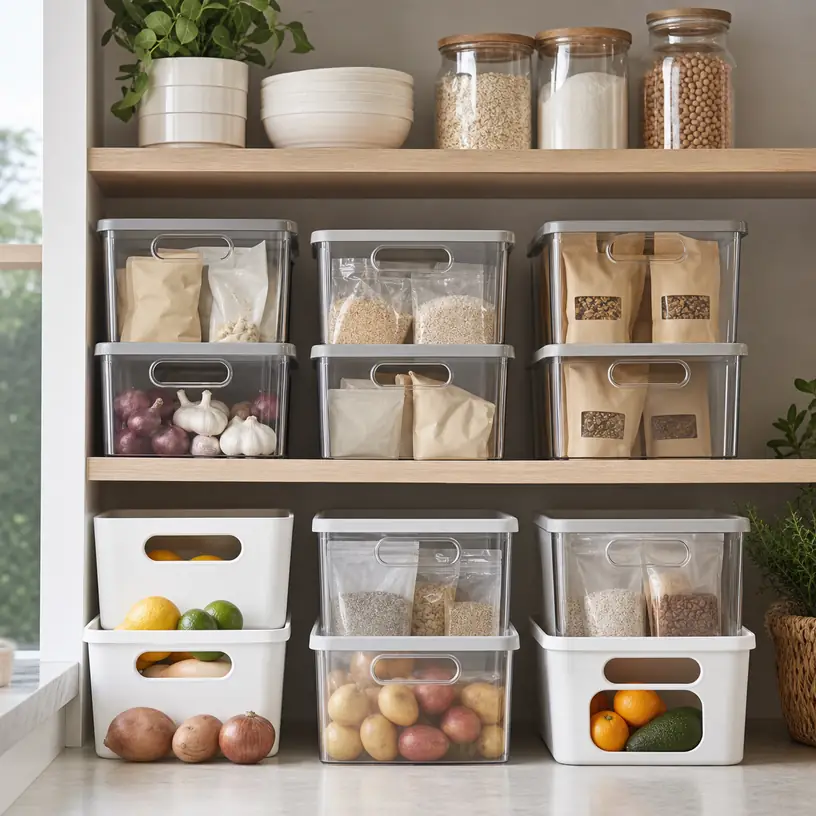
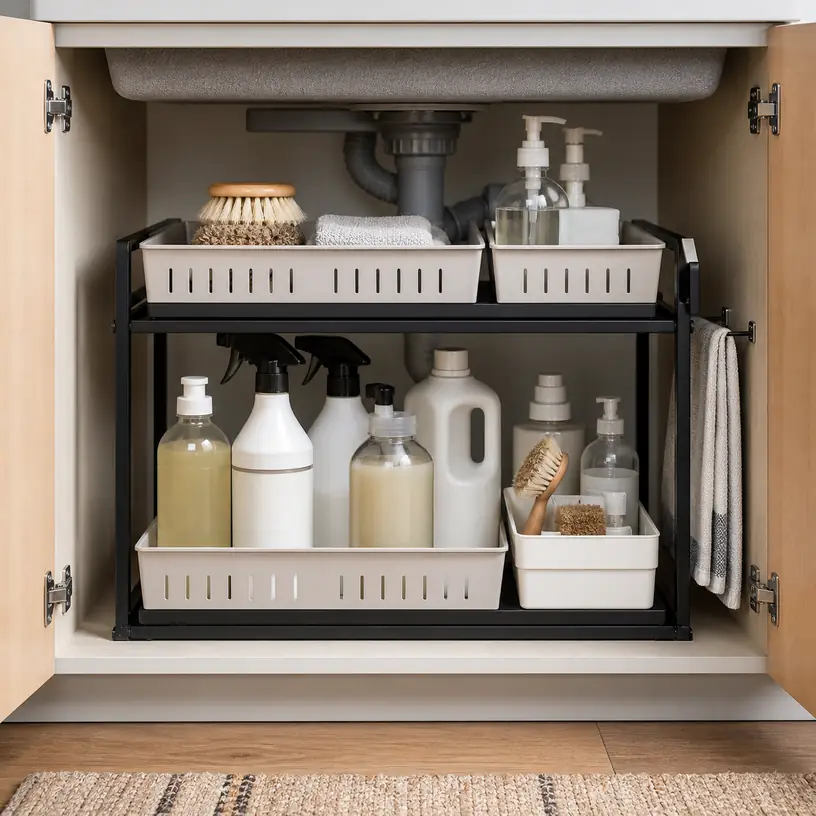
Stackable Pantry Bins for Cabinets, Shelves, and Small Kitchen Stockups

Product links are for reference. Verify current details on the retailer page before buying.

Illustrative image for a stackable pantry bins buying guide

Illustrative image, not an official product photo.

Short answer

Stackable pantry bins are most useful when shelves are deep, snacks slide around, or small packets disappear behind cans and jars. Choose them by the shelf you are trying to fix, not by how neat a product photo looks. The right set should fit the cabinet depth, stay stable when lightly stacked, let you see what is inside, and be easy to pull out without dumping the contents across the pantry.

Search reference

Compare stackable pantry bin options

Use the search page to compare current bin sizes, set counts, handle shapes, clear or opaque materials, and stacking details before matching a set to your shelves.

View matching options

Start with the shelf problem you actually have

A pantry bin is not automatically helpful just because it creates a category. It helps when it solves a specific daily annoyance: granola bars falling over, sauce packets spreading across a shelf, kids’ snacks being hard to reach, or backup cans hiding behind the first row. If the bin adds another layer to move before you can cook dinner, it may make the shelf look organized while slowing you down.

Before comparing sets, empty one shelf and group the items that cause the most clutter. Packets and pouches usually need a different shape than cans. Baking supplies may need taller sidewalls. Breakfast bars may work better in a shallow open bin that can be pulled forward quickly. The goal is to create zones that match how the household restocks and cooks, not to force every item into identical containers.

Stacking deserves extra attention. Some bins are designed to nest when empty, stack when filled, or accept a lid-like top edge. Others only appear stackable because the sides are straight. Look closely at whether stacked bins leave enough front access, whether handles remain usable, and whether the bottom bin can support the kind of weight you plan to store.

Who this is for

  • Kitchens with deep pantry shelves where smaller items get lost behind jars, boxes, or cans.
  • Families that keep grab-and-go snacks, packets, tea bags, drink mixes, or lunchbox items in repeated categories.
  • Renters who want a removable organization system without installing pull-out shelves or hardware.
  • Shared households where clear zones make it easier for everyone to put groceries back in the same place.
  • Small kitchens that need vertical shelf use but cannot add permanent cabinet organizers.

Who should skip it

  • Pantries that already work well with original boxes, shelf risers, or simple rows of cans.
  • Anyone storing heavy bulk goods without confirming the current bin size, material, and stacking guidance.
  • Very shallow cabinets where handles or front lips would waste more space than they save.
  • Households that prefer fully sealed food containers for freshness, pests, or spill protection.

What to verify before buying

  • Measure shelf width, depth, and height, then compare those numbers with the outside dimensions of each bin.
  • Check whether the bins are truly designed to stack when filled, and whether stacking requires lids or raised rims.
  • Confirm the set count and size mix; some sets include identical bins, while others combine narrow, wide, shallow, and tall pieces.
  • Look at handle placement, front cutouts, and sidewall height so the bin can be pulled out without trapping nearby items.
  • Review material wording, cleaning instructions, and any temperature or dishwasher guidance on the current listing.
  • Decide whether clear bins, tinted bins, labels, or open fronts will make the contents easier to manage in your pantry.
  • Check whether the shape fits your intended items, such as cans, spice packets, snack bars, tea boxes, produce, or baking add-ins.

Fit, visibility, and everyday reach

The most important measurement is often depth. A deep bin can turn a shelf into a drawer-like zone, but it can also become heavy and awkward if it holds too many cans or jars. A shorter bin may be easier for children or guests to use, while a longer one may work for backup snacks that are not opened every day. If the pantry has fixed shelves, remember that stacking two bins can reduce the usable height between shelves.

Visibility changes how often the system gets used. Clear bins make it easier to spot the last oatmeal packet or an opened bag of chips, but they also show clutter. Opaque or frosted bins can create a calmer shelf, though they may need labels if several bins look alike. Open fronts can help with quick access, while straight-sided bins may be better for items that need to stay contained.

Handles should match the shelf height. A front cutout is helpful when a bin sits at eye level or below. Side handles may be useful on open shelves but less helpful inside a narrow cabinet. If the bin will sit above shoulder height, avoid layouts that require lifting a loaded bin down at an awkward angle.

Stacking and weight tradeoffs

Stackable pantry bins are tempting because they promise more vertical storage without installation. That only works when the stacked items are light enough and the shelf remains easy to use. Snack pouches, tea bags, napkins, lightweight packets, and small boxed goods are better candidates than dense cans, glass jars, or large bottles.

If the bins rely on lids or raised edges to stack, confirm what is included in the current option. A lid may create a flatter top, but it can also add a step every time someone needs a snack. Open stacking can be faster, but the upper bin may block access to the lower one. In many pantries, using one stackable set for lightweight overflow and a separate shelf riser for cans is more practical than forcing every item into bins.

Cleaning matters too. Pantry bins collect crumbs, seasoning dust, and sticky residue from opened packages. Smooth corners are easier to wipe than decorative ridges or narrow seams. If dishwasher-safe cleaning is important, check the current care instructions rather than assuming all plastic storage bins can handle heat.

Limitations

  • Search results can change, so dimensions, set counts, and stacking claims should be checked on the current retailer page.
  • Bins organize loose items, but they do not seal food the way lidded food storage containers do.
  • Stacked bins can become inconvenient if the lower bin is used more often than the upper one.
  • Clear bins show contents quickly, but they can also make mixed packaging look visually busy.
  • Heavy cans, jars, bottles, or bulk bags may exceed what a lightweight pantry bin can handle comfortably.

Alternatives to compare

  • Shelf risers for cans, jars, and spices that need a stepped view instead of a pull-out bin.
  • Airtight food storage containers for flour, cereal, rice, or dry goods that need sealed storage.
  • Lazy Susan turntables for condiments, oils, or small jars in corner cabinets.
  • Drawer dividers or snack organizers if the clutter problem is inside a drawer rather than on a shelf.
  • Installed pull-out baskets when a deep pantry needs hardware-based access instead of removable bins.

FAQ

Are stackable pantry bins worth it for a small kitchen?

They can be, especially when one shelf needs clearer zones for snacks, packets, or lightweight backup items. In a very small kitchen, measure carefully so the bins add usable access rather than taking up shelf height you cannot spare.

What should I put in stackable pantry bins?

They work best for lightweight, frequently used categories such as snack bars, tea bags, seasoning packets, drink mixes, pouches, small baking add-ins, and lunchbox items. Heavy cans and glass jars may be better on a shelf riser or a sturdier pull-out system.

Do pantry bins need lids?

Not always. Open bins are faster for daily snacks and packets, while lids can help with stacking or dust control. If you need freshness or pest protection, compare sealed food storage containers instead of relying on open pantry bins.

How do I choose the right pantry bin size?

Measure the shelf first, then subtract room for your hand to pull the bin forward. Also check the tallest item you plan to store and whether two stacked bins would still leave enough clearance under the shelf above.

Are clear or opaque pantry bins better?

Clear bins make it easier to see when a category is running low. Opaque bins can look calmer on open shelves but may need labels. The better choice depends on whether fast visibility or a cleaner visual appearance matters more in your kitchen.

Choosing an Under-Sink Organizer for Awkward Cabinet Storage

Product links are for reference. Verify current details on the retailer page before buying.

Illustrative image for an under-sink organizer buying guide

Illustrative image, not an official product photo.

Short answer

An under-sink organizer is worth comparing when the cabinet has become a dark pile of cleaners, spare sponges, hair tools, trash bags, or bathroom supplies. The right choice depends less on how tidy it looks in a photo and more on whether it clears the drain pipe, garbage disposal, water lines, cabinet lip, and door hinges while still leaving space to reach shutoff valves and wipe up leaks.

Search reference

Compare under-sink organizer options

Use the search page to compare current shelf layouts, pull-out designs, height clearances, and mounting details before choosing one for your cabinet.

View matching options

Start with the cabinet, not the organizer

Under-sink storage is awkward because the most valuable space is interrupted by plumbing. A rectangular shelf may be perfect for a pantry cabinet but frustrating under a sink if the top tier collides with the drain trap or the sliding basket cannot pass the cabinet face frame.

Before shopping, empty the cabinet and note the usable footprint on each side of the plumbing. Check the width between the side wall and the pipe, the depth from the cabinet front to the back wall, and the height below the drain. Also look at the door opening, because some organizers fit inside the cabinet but cannot slide in through the front.

Kitchen sinks, bathroom vanities, laundry sinks, and utility cabinets can all need different layouts. A kitchen cabinet may need room for a disposal unit and cleaning bottles. A bathroom vanity may need smaller bins for toiletries, hair tools, and backup supplies. Treat the product photo as a layout idea, then match the actual dimensions to your cabinet.

Who this is for

  • Renters and homeowners trying to make daily cleaning supplies easier to reach.
  • Small bathrooms where the vanity cabinet needs to hold toiletries, paper goods, and extra grooming items.
  • Kitchens where bottles, dishwasher pods, trash bags, and scrub tools keep falling into one pile.
  • Shared households that need a clear place for frequently used supplies without remodeling the cabinet.
  • Buyers who want a removable storage upgrade rather than a built-in pull-out system.

Who should skip it

  • Anyone who cannot confirm the cabinet measurements or plumbing clearance before ordering.
  • Cabinets with active leaks, water damage, loose pipes, or electrical work that should be addressed first.
  • Households that need a custom built-in drawer system, child-safety locking plan, or exact match to existing cabinetry.
  • Very shallow vanities where a small open bin may work better than a sliding frame.

What to verify before buying

  • Measure usable width, depth, and height inside the cabinet, including the door opening.
  • Check the location of the drain trap, water lines, disposal unit, shutoff valves, and any filter hardware.
  • Confirm whether the organizer is freestanding, adhesive mounted, screw mounted, or designed to hook over a door.
  • Look at drawer travel and handle placement so the basket can open without hitting hinges or cabinet trim.
  • Review the material wording and care instructions, especially if damp bottles or cleaning sprays will sit on it.
  • Check whether baskets, dividers, hooks, liners, or assembly tools are included in the current option.
  • Make sure the layout still lets you inspect the cabinet floor and reach valves quickly.

Buying notes that matter under a sink

Two broad layouts show up often: open shelves that create vertical levels, and pull-out organizers that bring stored items toward the front. Open shelves can be simple and flexible, but items at the back may still be hard to reach. Pull-out baskets are easier to access, but they need enough clearance to move smoothly.

A narrow organizer can be useful beside a pipe, while a wider frame may work only when the plumbing is centered high enough or shifted to one side. If the product has adjustable shelves, verify the adjustment range rather than assuming it will clear every drain setup.

Material choice is also practical. Plastic baskets can be easy to wipe and may be less likely to scratch bottles. Metal frames can feel sturdy but may need protective coatings and good drying habits in damp cabinets. Wood-look or decorative pieces can be attractive in open vanity spaces, but hidden sink cabinets usually reward easy cleaning over appearance.

Think about what will live in the organizer. Tall spray bottles need vertical room. Shorter baskets work better for sponges, dishwasher tabs, grooming items, and spare soap. If children or pets are in the home, storage location and cabinet safety matter more than squeezing in the maximum number of items.

Limitations

  • Search results may include different cabinet sizes, mounting styles, and bundled accessories over time.
  • A product photo cannot confirm whether the organizer clears your exact drain, disposal, or valve placement.
  • Sliding baskets may feel less useful if the cabinet has a raised front lip or narrow door opening.
  • Adhesive or screw-mounted parts may not be suitable for every rental, cabinet finish, or damp surface.
  • Even a good organizer does not fix leaks, poor ventilation, or unsafe storage of household chemicals.

Alternatives to compare

  • Stackable open bins for shallow vanities or cabinets with low plumbing.
  • Lazy Susan turntables for round bottles in wider cabinets.
  • Door-mounted caddies when the cabinet floor must stay open for pipes or a trash bin.
  • Tension rods for hanging spray bottles if the drain layout leaves enough room.
  • Custom pull-out cabinet hardware when a built-in solution is worth the installation effort.

FAQ

How do I measure for an under-sink organizer?

Empty the cabinet, then measure the usable width, depth, and height around the plumbing rather than the full cabinet box. Include the door opening, front lip, hinges, and any hardware that could block a sliding basket.

Are sliding drawers always better under a sink?

Not always. Sliding drawers make items easier to reach, but they need clearance to open and can be blocked by pipes, trim, or a raised cabinet face. A simple open shelf or bin may work better in tight vanities.

What should I store on the lower level?

Put heavier or leak-prone items lower when the layout allows it, and keep frequently used bottles near the front. Avoid burying shutoff valves or anything you would need to reach quickly during a leak.

Can one organizer work for both kitchen and bathroom cabinets?

Sometimes, but the best layout may differ. Kitchens often need room for taller cleaning bottles and disposal hardware, while bathroom vanities may need smaller compartments for toiletries and grooming supplies.

Is adhesive mounting a good idea in a sink cabinet?

It can be convenient, but check the surface, moisture level, weight expectations, and removal concerns before relying on it. Freestanding organizers are easier to move, while screw-mounted systems may feel more secure when installation is appropriate.