Choosing a Garment Bag for Travel Without Overpacking
Product links are for reference. Verify current details on the retailer page before buying.
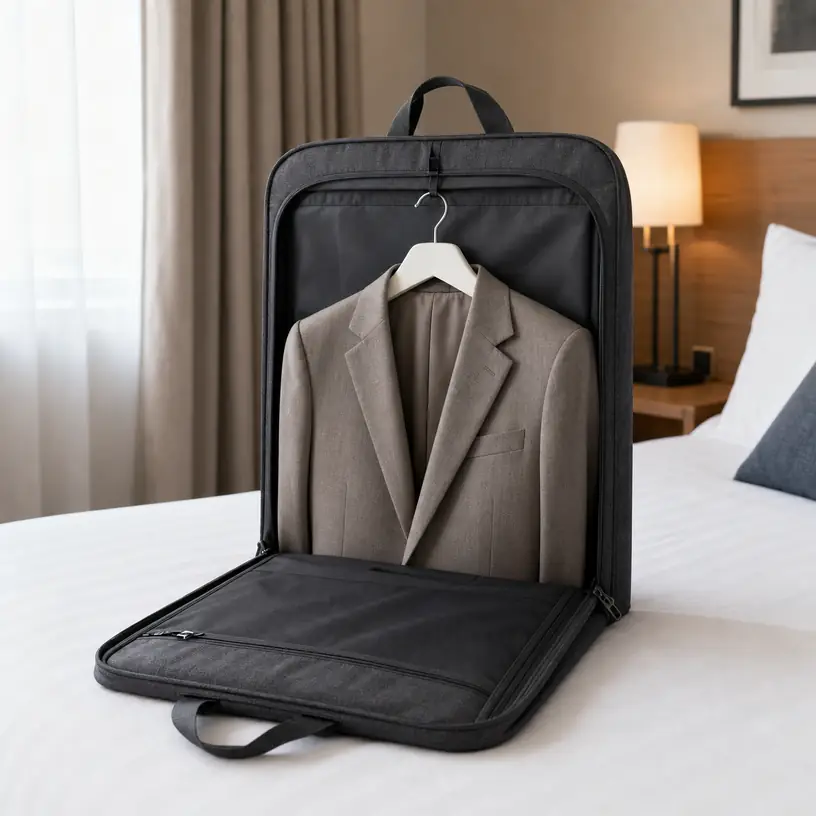
Illustrative image, not an official product photo.
Short answer
A useful travel garment bag should protect the clothes you actually plan to hang without becoming an awkward second suitcase. Begin with the longest jacket, dress, or outfit you expect to carry. Then compare the bag’s open length, folded dimensions, hanger opening, closure, handles or shoulder strap, and whether its extra pockets help your packing plan or merely add bulk. A simple hanging sleeve can suit a car trip, while a foldable carrier with secure handles may be easier to manage through stations and airports.
Search reference
Garment bags designed for travel
Compare open and folded dimensions, hanger retention, carrying options, pocket placement, and closure details for the kinds of outfits and trips you take.
View matching optionsStart with the journey, not the pocket count
Garment bags solve several different packing problems under one product name. A lightweight cover keeps hanging clothes together in a car. A structured fold-over carrier is intended to move like a separate piece of luggage. Some designs combine a garment compartment with shoe pockets or duffel-style storage. Those formats are not interchangeable, even if their listings use similar travel language.
Map the trip before comparing features. Will the bag go from closet to car to hotel room, or will you carry it through an airport along with a rolling case? Does it need to hold one jacket and shirt, a long dress, or several complete outfits? Will you be able to hang it on arrival? These questions narrow the field faster than choosing by appearance.
The longest garment is the key measurement. An open bag that is too short can force fabric into a tight fold at the bottom. A longer carrier may reduce that problem, but it also creates a larger folded package. Check both measurements because the useful hanging length and the size you carry are separate concerns.
Who this is for
- Travelers carrying suits, jackets, dresses, uniforms, or coordinated outfits they prefer to keep on hangers.
- Wedding guests, interview candidates, conference attendees, performers, and business travelers who want a separate clothing compartment.
- Drivers who can hang or lay a garment bag across the back seat rather than compressing formalwear into a suitcase.
- People who unpack promptly and want clothes to move directly from the carrier to a hotel closet.
- Travelers willing to manage an additional bag when their primary luggage lacks a suitable garment section.
Who should skip it
- Skip a separate carrier if all of your clothing rolls or folds comfortably into one small suitcase.
- A basic hanging cover may be inconvenient for long walks or public transit if it has weak handles or no secure folded closure.
- Do not assume a garment bag eliminates wrinkles; fabric, packing density, trip duration, and handling still matter.
- Travelers trying to keep their luggage count low may prefer a suitcase with a fold-out garment panel or a compact packing folder.
- If the trip includes rain or outdoor transfers, avoid treating ordinary fabric as weatherproof unless the current listing explicitly supports that use.
What to verify before buying
- Measure the longest garment and compare it with the usable interior length, not only the bag’s exterior dimensions.
- Check the folded size and current carrier rules if you intend to bring the bag onto a flight; product labels do not guarantee acceptance.
- Confirm how hangers enter and stay in place, including the width of the top opening and any retaining strap or hook.
- Review the main closure, fold points, buckles, handles, shoulder strap attachment, and luggage-handle pass-through if listed.
- Look at pocket locations while imagining the bag folded; bulky shoes or toiletries can press into the clothing compartment.
- Verify care instructions, material wording, lining details, and any claims about water resistance on the retailer page.
Match the format to the trip
A hanging sleeve for short transfers
The simplest design resembles a zippered clothing cover with a hanger opening at the top. It can be enough for a drive to an event, seasonal closet storage, or a short move between buildings. Its main advantages are low bulk and an easy transition to a closet. The tradeoff is that it may not fold into a tidy, balanced package for sustained carrying.
Inspect the bottom and sides rather than focusing only on the front zipper. If the carrier will be laid flat in a vehicle, a fully enclosed bottom helps keep clothing contained. Handles positioned for folding can make the sleeve easier to lift, but their placement should not pull the garment into a hard crease.
A fold-over carrier for active travel
A purpose-built foldable garment carrier generally secures into a shorter shape and provides handles, straps, or both. This format can be easier to carry alongside a suitcase. The design still needs to balance correctly when loaded. A long shoulder strap sounds convenient, but attachment points and folded weight determine whether the bag hangs comfortably or tips forward.
Look for product photos or diagrams that show the bag both open and closed. Confirm which way the clothes fold, where the hanger heads sit, and whether zippers or buckles prevent the package from opening unexpectedly. If a pass-through sleeve matters, verify its placement against the handle width of your own rolling luggage.
A hybrid garment-and-duffel design
Hybrid bags promise one place for hanging clothes, shoes, and folded items. They may be useful for a short event trip, but the packing sequence is important: contents placed in the center can shape the garment compartment around them. Overfilling the duffel area may work against the reason for choosing a garment bag in the first place.
Treat published capacity as only one clue. Sketch a realistic packing list and decide where every bulky item would go. Shoes may fit better in a separate pouch, while toiletries should be isolated from clothing in case of a leak. A hybrid is most convincing when its layout replaces another bag rather than simply adding more compartments to carry.
Small design details that affect arrival-day clothing
Hanger management deserves attention. A narrow top slot may work with slim wire hangers but not broad wooden or padded ones. A wide opening is flexible, yet it can also leave more space around the hook. Some bags use an internal bar, loop, or clamp instead. Check what is included and whether you must supply a particular hanger style.
Interior tie-down straps can stop clothing from sliding as the bag changes orientation. Their position matters: a strap across a jacket body may behave differently from one near the hangers. Likewise, a smooth lining can reduce snagging, but no lining can compensate for packing too many garments into a shallow compartment.
External identification windows and quick-access pockets are useful only when they remain accessible in the folded configuration. Put travel documents and small essentials in a bag you can supervise closely; an exterior pocket is not automatically secure. Avoid loading one side heavily, since uneven weight can twist soft handles and make the carrier tiring to manage.
Before the first important trip, do a home packing trial. Load the intended outfit, close the bag, carry it around for several minutes, and then leave it packed for roughly the same duration as the journey. Unpack and inspect the fold locations. This rehearsal reveals whether the bag is too short, too full, or uncomfortable before event-day timing becomes a factor.
Limitations
- A garment bag can organize hanging clothes but cannot promise wrinkle-free arrival.
- Long garments may still need a soft fold, especially in compact travel formats.
- Added pockets, structure, and hardware increase weight before anything is packed.
- A carry handle, shoulder strap, or pass-through does not guarantee comfortable handling with every load.
- Airline size and luggage policies can change and should be checked directly for each itinerary.
- Water-resistant wording, where present, should not be read as full waterproof protection without explicit current specifications.
Alternatives to compare
- A packing folder inside a suitcase for shirts, trousers, and other clothes that tolerate careful folding.
- A suitcase with an integrated garment panel when you want one primary piece of luggage.
- A basic breathable clothing cover for closet storage and short car transfers.
- Packing cubes for casual clothing that does not need to remain on hangers.
- Shipping or local formalwear rental for specialized outfits when carrying them through a complex itinerary is impractical.
FAQ
How long should a travel garment bag be?
Measure the longest item you plan to hang from the hanger shoulder to the hem, then compare that number with the bag’s stated usable interior length. Also check how and where the carrier folds. A long open measurement can still place a fold across the garment during transport.
Does a garment bag count as a carry-on?
That depends on the carrier, the bag’s packed dimensions, and the applicable rules for your itinerary. A listing that describes a bag as suitable for travel does not guarantee that it will be accepted as a carry-on. Check current policies directly before departure.
Should shoes go inside the garment bag?
Only if the design provides a suitable compartment and the added bulk does not press hard against hanging clothes. Keep soles and possible moisture isolated. For a formal outfit, a separate shoe pouch in another bag may preserve more space around the garment.
Can I use regular hangers in a travel garment bag?
Often, but hanger openings, internal bars, and retaining systems vary. Broad wooden, padded, or unusually shaped hangers may not fit a design made around slimmer hangers. Verify the holder style and opening dimensions where available.
Is a hybrid garment duffel better for a weekend trip?
It can be if the layout genuinely holds your complete packing list without overstuffing the garment section. It is less appealing when shoes and folded clothing create a bulky center that presses into formalwear. A trial pack is the best way to judge the format for your routine.