Choosing a Bread Box That Works on a Crowded Kitchen Counter
Product links are for reference. Verify current details on the retailer page before buying.
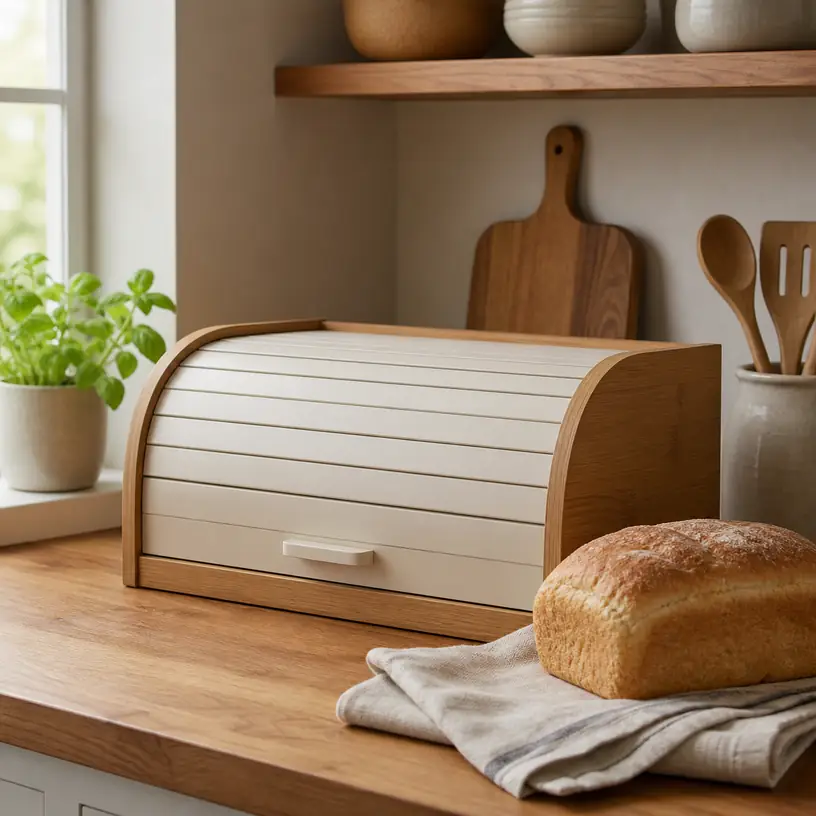
Illustrative image, not an official product photo.
Short answer
A useful bread box is not simply the biggest container that fits under a cabinet. It should hold the loaves, rolls, or pastries your household typically has at the same time, open fully in its intended location, and leave enough counter space for daily food preparation. Compare usable interior dimensions rather than exterior width alone. Then look at ventilation, closure design, cleaning access, food-contact guidance, and whether crumbs can be removed without turning the whole box upside down. A bread box can make the counter tidier and shield bread from light and incidental contact, but it does not give every type of bread the same storage life.
Search reference
Bread boxes for kitchen counters
Compare interior capacity, door clearance, ventilation, surface care, crumb cleanup, and the counter area each design occupies while open.
View matching optionsStart with the bread, then measure the counter
Bread boxes are often photographed with one neatly centered loaf, while real kitchens may need to store a sandwich loaf, a bag of rolls, and half a bakery boule at once. Make a short inventory before comparing containers. Note the tallest and widest bread you buy regularly, whether it stays in a bag, and how many packages usually overlap between shopping trips. A slim box can be perfectly adequate for one household and become a frustrating stack of crushed bags in another.
Measure the proposed location in three dimensions. Width is only the beginning: wall cabinets limit height, a backsplash can interfere with a rear hinge, and an appliance cord may reduce usable depth. Leave practical room around the box instead of planning a millimeter-perfect fit. If it will sit beside a toaster or coffee maker, account for the space needed to use and clean those appliances and follow their placement instructions.
The door changes the working footprint. A front-hinged panel needs clear counter area in front and may become a temporary surface that collects crumbs or clutter. A roll-top or sliding door avoids that forward swing but can take up interior room. A top-hinged lid needs overhead clearance and may be awkward under a low cabinet. Sketch the door in its open position before deciding that the exterior dimensions fit.
Who this is for
- Households that keep bread on the counter and want packages gathered in one defined place.
- Small kitchens where a measured container can replace a loose pile without consuming the main preparation area.
- Home bakers who need room for one or two familiar loaf shapes after the bread has cooled completely.
- Shared kitchens where a visible, consistent storage location helps keep counters orderly.
- Buyers willing to clean crumbs regularly and adjust storage habits for different bread types and room conditions.
Who should skip it
- Skip a counter bread box if you rarely keep bread at home or already use freezer storage successfully.
- A decorative box is a poor trade if it occupies the only safe, usable preparation space in a very small kitchen.
- Do not use a bread box as a substitute for refrigeration when a specific product label or recipe requires refrigerated storage.
- Anyone expecting a sealed container to make all bread last indefinitely should choose a storage method based on the particular bread instead.
- A household that buys unusually long baguettes or several bulky loaves may find a pantry shelf, drawer, or dedicated cabinet more practical.
What to verify before buying
- Usable interior dimensions: Compare the space inside with bread in its normal bag or wrap; exterior measurements do not reveal wall thickness, hinges, or door tracks.
- Open-door clearance: Check forward, upward, or rear clearance in the exact counter location, including cabinet handles and backsplash edges.
- Ventilation: Look for clearly described vents or adjustable airflow and consider how the design suits the bread and climate in your home.
- Closure behavior: Confirm that the door moves smoothly, remains where intended, and does not require holding the box with a second hand.
- Cleaning access: Check whether corners, tracks, seams, and ventilation holes can be reached and whether any crumb tray is actually removable.
- Material and care: Review current cleaning instructions, food-contact wording, finish care, and restrictions involving water, detergents, or heat.
- Base and feet: Make sure the box sits steadily and will not scratch or trap moisture against the counter surface.
- Assembly details: For flat-packed designs, verify included hardware, tool requirements, panel alignment, and finished dimensions.
- Placement guidance: Follow the maker’s directions about heat, moisture, sunlight, walls, and nearby appliances.
Door style matters in a working kitchen
A roll-top door is appealing when the counter in front of the box must remain available. The slatted panel usually travels along a curved track, so examine how much interior height and depth that mechanism consumes. Tracks also create places for crumbs to collect. A smooth path and accessible cleaning areas matter more over time than the visual novelty of the door.
Front-hinged doors provide a broad opening and make the back of the box easier to reach. Some are designed to rest horizontally, but that does not automatically make them a cutting board or load-bearing shelf. Use the panel only as described in the current instructions. Check where its handle lands and whether opening it blocks a drawer or pushes into the area where someone is preparing food.
A top lid can be mechanically simple and easy to wipe, yet low wall cabinets may prevent it from opening far enough. Lift-off lids require somewhere clean to set the lid down. Side-opening doors are less common but may suit a narrow counter if the adjacent area remains clear. There is no universally superior style; the best mechanism is the one that can be opened, loaded, and cleaned without rearranging the kitchen each time.
Airflow is not the same as a perfect storage environment
Bread storage involves competing changes. Too much exposure can contribute to drying, while trapped moisture can create an undesirable damp environment. Bread boxes approach that balance in different ways through small holes, seams, adjustable vents, or doors that are not airtight. Product descriptions do not always explain airflow precisely, so avoid treating words such as “fresh” or “ventilated” as a measurable guarantee.
The bread itself matters. A packaged sandwich loaf, a crusty bakery loaf, homemade enriched bread, and pastries with perishable fillings do not have identical storage needs. Keep and follow the product label, bakery guidance, or recipe instructions. Let home-baked bread cool fully before enclosing it; visible condensation or a damp interior is a reason to reassess the storage setup and clean the box.
Room conditions change the result as well. Heat, humidity, direct sun, steam from cooking, and proximity to a dishwasher or sink can affect the environment around the box. Choose a dry location away from obvious heat and splashes. Inspect stored food regularly and discard it when its condition is questionable rather than assuming the container has preserved it.
Materials change care more than appearance
Metal boxes can offer thin walls and a wipeable interior, though painted or coated finishes may have specific restrictions. Look for protected edges, stable hinges, and care instructions that address scratches, rust, and prolonged moisture. A metal shell may also show fingerprints or dents, which is mainly a household preference rather than a storage performance measure.
Wood and bamboo can add a warm counter appearance and may use thicker panels. Their care often differs from a washable plastic bin: soaking, harsh cleaners, or a dishwasher may be inappropriate. Check how joints, grooves, and unfinished surfaces should be cleaned and dried. Marketing names alone do not establish the exact material, coating, or food-contact suitability.
Plastic or mixed-material designs can be light and easy to move. Verify temperature limits, approved cleaning methods, latch construction, and whether removable components can be washed separately. A transparent window helps show what is inside without opening the box, but seals and window edges add more seams to inspect. Regardless of material, smooth reachable interior surfaces make routine crumb removal easier.
Capacity without counter takeover
Single-level boxes keep everything visible but can become wide. Two-level designs use vertical space and may separate loaves from rolls, yet they need sufficient clearance beneath wall cabinets and can hide items at the back. Check whether the shelves are fixed, adjustable, or removable, and whether the stated dimensions include handles and feet.
Avoid treating the top as bonus storage unless the manufacturer describes an appropriate load and use. Even a flat top can become cluttered with fruit, mail, or appliances that must be moved every time the lid opens. Storing heat-producing appliances on or against a bread box can also conflict with appliance clearance instructions. Plan the top as empty space unless both products’ directions support the arrangement.
If capacity needs fluctuate, a slightly larger interior may be useful, but oversized storage can encourage forgotten packages. An easy visual check is valuable: place older bread toward the front, avoid crushing soft items under heavy loaves, and clear empty bags promptly. Organization habits often make more difference than one extra tier.
Cleaning should be a weekly-sized task, not a project
Crumbs accumulate even when bread remains wrapped. Removable trays and wide openings can simplify cleanup, but only if they come out without disassembling hinges or spilling into tracks. Look closely at interior corners and door mechanisms. Decorative perforations and deep seams may be attractive in photos while adding work in actual use.
Follow the supplied care instructions rather than assuming every bread box can be rinsed in a sink. Unplug and move nearby appliances before cleaning the counter area when appropriate. Dry the box completely before putting food back inside, and investigate persistent moisture, odors, stains, or visible growth rather than covering them with another bag of bread.
A liner may seem like an easy solution, but it can block intentional vents or hold crumbs and moisture against a surface. Use one only if compatible with the design and clean it frequently. Strong fragrances can also transfer to food or linger in enclosed spaces, so use cleaning products approved for the material and rinse or wipe as directed.
Limitations
- A bread box cannot guarantee a fixed storage life because bread formulation, packaging, room conditions, and handling differ.
- Exterior size may overstate practical capacity once door mechanisms, shelves, hinges, and thick panels are considered.
- Ventilation descriptions are not always quantified, and a design suited to one household or climate may not suit another.
- Crumbs can collect in tracks, seams, vents, and corners even when most bread remains packaged.
- Large boxes can reduce preparation space, interfere with appliances, or fail to open fully beneath wall cabinets.
- Decorative tops and drop-down doors should not be treated as cutting boards, shelves, or appliance platforms unless specifically designed for that use.
- Bread with perishable ingredients or storage instructions may require a different method regardless of the container.
Alternatives to compare
- Freezer storage with portions wrapped and labeled for households that use bread slowly.
- A dedicated pantry shelf or deep drawer when counter space is more valuable than at-a-glance access.
- A clean bread bag or appropriate wrap inside a cabinet for one loaf at a time.
- A tall pantry bin for packaged rolls and flatbreads, provided airflow and food-storage guidance remain suitable.
- A smaller pastry container used only when its closure, capacity, and care fit the specific baked goods.
FAQ
Should a bread box be airtight?
Not necessarily. Many bread boxes use limited ventilation rather than an airtight seal, but the appropriate storage method depends on the kind of bread, its packaging, and the conditions in your kitchen. Follow label, bakery, or recipe guidance instead of relying on the closure alone.
Can I put warm homemade bread directly into a bread box?
Let it cool fully first. Warm bread can release moisture inside an enclosed space, changing both its texture and the condition of the box. Use the recipe’s storage guidance once cooling is complete.
How large should a bread box be for one loaf?
Measure the loaf in the bag or wrap you normally use and compare it with the listed interior dimensions. Leave enough room to insert and remove it without crushing the bread; do not rely only on the product’s exterior width.
Can the top of a bread box hold a toaster?
Only if the bread-box maker and toaster maker both support that placement, including weight, heat, and ventilation clearances. A flat lid is not automatically an appliance shelf, and the toaster may also prevent the box from opening.
How often should I clean a bread box?
Remove crumbs regularly and clean spills promptly, using the product’s care instructions. The practical interval depends on how often it is used, but do not wait when you notice moisture, odors, residue, or questionable food condition.