Bed Sheet Straps for a Neater Fitted-Sheet Setup
Product links are for reference. Verify current details on the retailer page before buying.
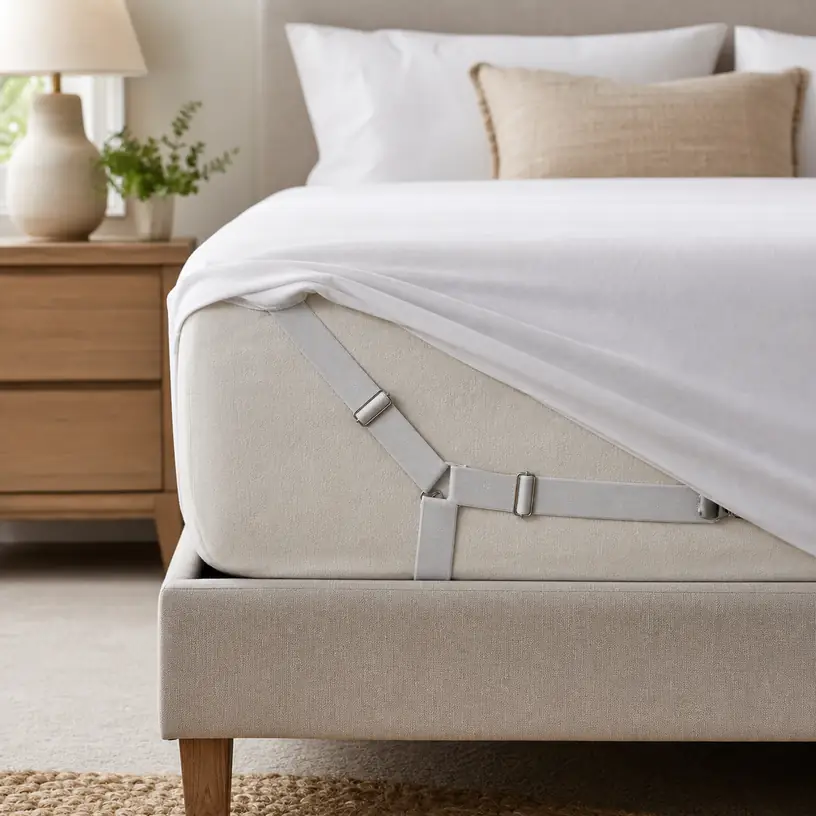
Illustrative image, not an official product photo.
Short answer
Bed sheet straps can help when a fitted sheet repeatedly slips off a mattress corner or gathers across the sleeping surface. The useful choice depends on how much access you have beneath the mattress: corner straps need less routing, crisscross systems can distribute tension more broadly, and longer suspenders may require lifting or reaching under much of the bed. Before choosing, compare the strap layout, adjustment range, clip design, mattress setup, and whether the sheet fabric can tolerate concentrated tension.
Search reference
Bed sheet strap options
Compare corner, triangle, and cross-mattress layouts along with adjustment range, clip style, installation access, and current package contents.
View matching optionsStart with why the sheet comes loose
A fastener can manage movement, but it cannot correct every bedding mismatch. If a fitted sheet is too shallow for a tall mattress, topper, or pad, pulling it tighter may place more stress on the elastic hem and fabric. If the pocket is much deeper than the mattress, extra material can still wrinkle even when the corners remain attached. Measure the full mattress depth with every layer in place, then compare that measurement with the sheet’s stated pocket range.
Also check the bed itself. A lightweight mattress may shift on the foundation, an adjustable base changes shape during use, and a smooth mattress protector can let fabric migrate more easily. Identifying the source of movement helps determine whether straps are a sensible fix or whether a better-fitting sheet, grippy mattress pad, or different protector would solve the problem more directly.
Who this is for
- Sleepers whose fitted sheets fit reasonably well but work loose at one or more corners overnight.
- Guest-room or sofa-bed setups where bedding needs a little extra hold during occasional use.
- Beds with a mattress topper that changes the effective depth and makes the existing sheet less secure.
- Households comparing a removable solution before replacing otherwise usable sheets.
- People who can safely lift a mattress corner or reach the attachment points without overstraining.
Who should skip it
- Skip straps if the sheet cannot cover the mattress corners without being stretched close to its limit.
- Choose another approach if lifting or reaching under the mattress is unsafe or impractical.
- Avoid clips on delicate, loosely woven, or damaged fabric unless the manufacturer specifically indicates compatibility.
- Do not route long straps where they can interfere with adjustable-bed hardware, power cables, hinges, or moving components.
- Replace worn bedding when failing elastic, tears, or severely distorted pockets are the main problem.
What to verify before buying
- Determine whether the design uses individual corner straps, three-point corner triangles, side-to-side bands, or a full crisscross layout.
- Check the listed adjustment range against the distance the straps must span on your mattress and sheet.
- Review how the clips open, close, and grip; confirm whether any protective inserts or fabric-contact surfaces are described.
- Verify the number of straps, clips, or sets included rather than relying on staged listing images.
- Consider mattress weight and bed-frame access, especially with platform beds, wall-side corners, bunk beds, and heavy toppers.
- Confirm laundering instructions and whether straps should be removed before the sheet goes into the washer or dryer.
- For an adjustable base, review both the bed guidance and the fastener routing before attaching anything underneath.
Match the fastener layout to the bed
Short corner straps usually connect two edges around one mattress corner. They can be easier to install because only a small section of the mattress needs to be lifted, and they let you address the corner that causes trouble. Their reach is limited, however, and clip placement can become awkward if the sheet hem is thick or hidden beneath a protector.
Three-point or triangle-style fasteners add another attachment point around each corner. That layout may spread the pull across more of the sheet edge, but it also adds clips and setup steps. Check product diagrams carefully because similar-looking sets can differ in how far the elastic extends and where the center connection sits.
Cross-mattress suspenders span a larger distance beneath the bed. They may distribute tension beyond individual corners, yet installation can be inconvenient on a heavy mattress or a platform frame with little hand clearance. A full-length strap should never be guessed into place around mechanical parts. Plan the route before clipping it to the sheet.
Clips, tension, and sheet fabric
A secure clip is only useful if it holds without damaging the material. Metal and plastic clip designs vary, as do their teeth, locking mechanisms, and protective surfaces. Product photos can suggest how a clip works, but current instructions and compatibility wording are more reliable than appearance alone.
Use the least tension that keeps the sheet settled. Overtightening can pull the corners into an unnatural shape, concentrate force near the clip, or make the sheet difficult to remove. After installation, smooth the sleeping surface and check that the fitted-sheet seam still sits near the mattress corner rather than being dragged far underneath.
Fabric condition deserves attention. A sturdy sheet in good condition may handle removable fasteners differently from a thin, aged, or loosely woven one. If you see stretching, small holes, pulled threads, or clip marks after initial use, stop and reassess the placement or the entire solution.
Setup and everyday care
Installing straps is easier before the bed is fully dressed. Fit the sheet first, attach one area at a time, and avoid kneeling or reaching under an unsupported mattress. If the mattress is heavy, ask for help rather than trying to hold it up with one hand while operating a clip with the other.
Recheck the straps after the first few nights. Elastic can settle, clips can shift, and bedding layers may move differently once the bed has been used. Make modest adjustments instead of immediately pulling every strap tighter.
For laundry day, follow the product instructions. Removable hardware can catch other textiles or strike the washer or dryer if left attached. Keeping a small pouch near the linen closet gives loose straps and clips a predictable storage place between changes.
Limitations
- Straps do not turn an incorrectly sized fitted sheet into a properly fitted one.
- Clips may leave impressions or damage some fabrics, particularly when placed under excessive tension.
- Installation can be difficult on heavy mattresses, low-clearance frames, wall-side beds, and top bunks.
- Long under-mattress straps may be unsuitable around adjustable-base mechanisms or other moving hardware.
- Elastic, clip construction, adjustment range, and package quantity vary across current listings and need individual verification.
Alternatives to compare
- A fitted sheet with a pocket depth that more closely matches the mattress and topper.
- Sheets with reinforced corner elastic or built-in corner bands.
- A different mattress protector if a slick surface is contributing to movement.
- Sheet grippers designed for individual corners rather than a full under-bed system.
- Flat-sheet folding methods when the bed setup makes fitted sheets or under-mattress clips impractical.
FAQ
Do bed sheet straps work with a mattress topper?
They can when the fitted sheet already covers the combined mattress and topper without excessive stretching. Measure the total depth first and make sure the chosen strap layout can be installed without shifting or compressing the topper awkwardly.
Are corner straps easier to install than crisscross straps?
Usually, because corner straps require access to a smaller area beneath the mattress. Crisscross designs span farther and may take more lifting, routing, and adjustment, particularly on a platform bed.
Can sheet fastener clips damage fabric?
They can if the clip design is unsuitable, the fabric is delicate or worn, or the straps are overtightened. Inspect the contact points after initial use and stop if you notice holes, pulled threads, or distortion.
Should bed sheet straps stay attached during washing?
Follow the current care instructions for the fasteners and bedding. Removable clips and elastic hardware are often safer to take off so they do not catch other laundry or knock against the washer or dryer.
Can I use bed sheet straps on an adjustable bed?
Only if the routing is compatible with the base and does not cross hinges, motors, cables, or moving sections. Check the adjustable-bed guidance and the fastener instructions; when compatibility is unclear, use another sheet-holding approach.