Choosing a Picnic Blanket for Parks, Beaches, and Day Trips
Product links are for reference. Verify current details on the retailer page before buying.
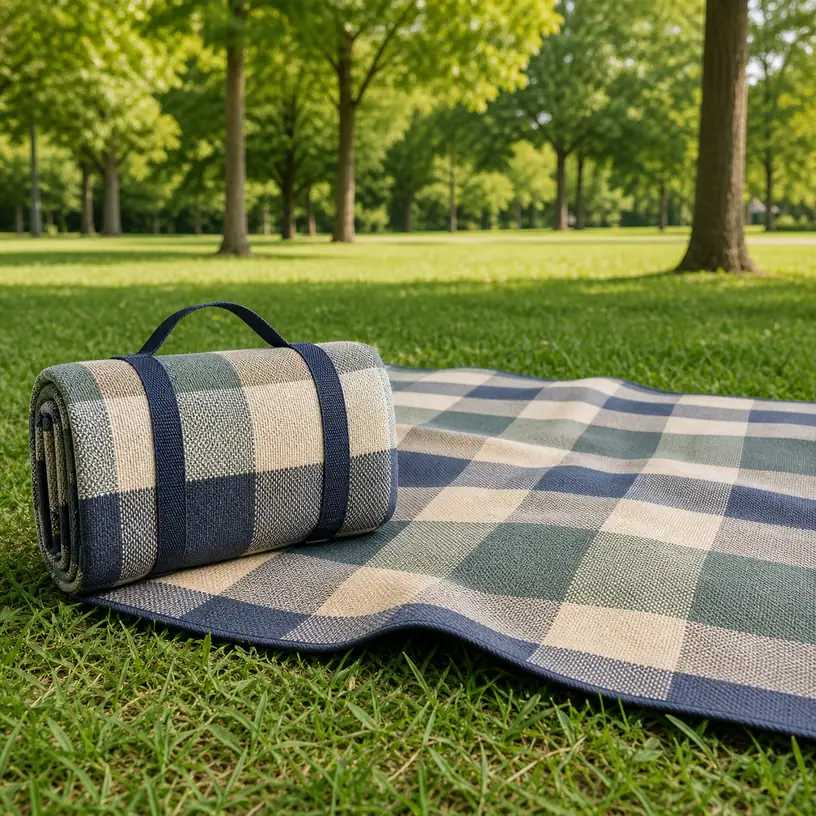
Illustrative image, not an official product photo.
Short answer
A useful picnic blanket is large enough for the people and bags joining the outing, yet compact enough that someone will actually carry it from the parking lot or transit stop. Compare the open dimensions with a floor outline at home, then check packed dimensions, weight, surface texture, ground-facing layer, folding method, and cleaning instructions. For damp grass, the backing and edge construction deserve more attention than a broad “outdoor” label; for beaches, shake-off cleaning and wind control may matter more than padding.
Search reference
Picnic blanket options
Compare open and packed measurements, listed weight, layer construction, care instructions, carry straps, and any corner loops for the places you visit most often.
View matching optionsPlan around one real outing
Picture the blanket after lunch, not just when it is neatly folded for a listing photo. It may need to hold two seated adults, a child moving between spots, a cooler that should stay level, and shoes kept off the eating area. At the end of the day it may be covered with crumbs, dry grass, or sand and need to fit beside everything else in the trunk.
That sequence reveals the most useful buying criteria. A neighborhood park blanket can prioritize a comfortable top and quick folding. A beach blanket benefits from low bulk, simple shake-off cleaning, and a practical way to keep the corners down. A blanket carried on a train needs a dependable handle and dimensions that work with the rest of the load. Start with the repeated trip rather than buying the largest option by default.
Who this is for
- Households that want a defined sitting and serving area for park lunches, outdoor concerts, or backyard breaks.
- Couples or small groups looking for a blanket that can share trunk space with a cooler, folding chairs, and games.
- Beach visitors who want a portable surface and are prepared to compare sand cleanup and anchoring details.
- Parents who need room for snacks, toys, and changing seating positions without putting every item directly on the ground.
- Day-trippers who value an integrated handle, shoulder strap, or compact bundle for the walk from transit or parking.
Who should skip it
- Choose individual sit pads when each person carries their own gear and a large shared surface would be unnecessary.
- Consider a tarp beneath a separate washable blanket when the ground is consistently rough, muddy, or very damp.
- Use a purpose-built sleeping pad for overnight insulation; a casual picnic blanket is not a substitute for camping sleep equipment.
- Bring folding chairs if getting down to ground level or standing back up is uncomfortable.
- Skip padded designs if the blanket must pack into a small daypack and softness is less important than low bulk.
What to verify before buying
- Compare open length and width, not only capacity phrases such as “family size,” which are not standardized.
- Check packed length, thickness, listed weight, handle placement, and whether a shoulder strap is included or removable.
- Review the stated materials for the sitting surface, inner padding, ground-facing layer, binding, and closures.
- Read moisture-resistance wording carefully and determine whether it refers to the backing, the entire blanket, or only light contact with damp ground.
- Confirm the cleaning method. Spot-clean-only, machine-washable, and wipe-clean designs create different routines after spills or muddy use.
- Look at the folding sequence and closure type; a generous blanket can become frustrating if it must be aligned precisely before the flap reaches its fastener.
- For exposed lawns or beaches, check for corner loops, pockets, stakes, or another stated stability feature, and confirm what accessories are included.
- Verify current care guidance, seller details, return policy, and any warnings before ordering.
Size the surface, then the bundle
Open dimensions are more useful than person counts
Capacity labels assume a seating arrangement that may not match yours. Four adults sitting cross-legged need a different layout than two adults reclining beside a cooler. Use painter’s tape, a sheet, or measured string to mark the advertised dimensions on the floor. Place a few representative bags or cushions inside the outline. This quick test shows whether the usable area leaves enough elbow room and whether food containers would sit safely away from the edge.
The shape matters too. A long rectangle can suit two people reclining side by side, while a more square layout may work better when several people face a shared center. Check whether the listed measurement includes fringe, handles, or narrow edge sections that do not provide the same sitting area as the main panel.
Packed size affects whether the blanket comes along
Large blankets often fold into a tote-like bundle, roll into a cylinder, or close around themselves with a flap. None of these is universally better. A flat bundle can stack against the side of a trunk, while a roll may attach more easily to other gear. Measure the shelf, basket, car compartment, or bag where it will be stored between outings.
Weight becomes noticeable when the route includes a long walk. Padding, thick fabric, and multi-layer construction can improve comfort but also increase the carrying load and drying time. Include the cooler and other gear in that decision rather than evaluating the blanket alone.
Match construction to the ground
A picnic blanket may combine a soft top, a thin padded middle, and a coated or synthetic backing. Other models use a single lightweight layer. The layered version may feel more forgiving over short grass, but it usually packs larger. A thin beach-oriented sheet can be easier to shake and carry but does little to soften roots, gravel, or uneven soil.
Ground-facing material is especially relevant on grass that remains damp after irrigation or morning dew. Look for specific current wording about the backing and seams. A moisture-resistant bottom can reduce transfer from below, but it does not guarantee that liquid cannot enter through edges, stitching, top fabric, or prolonged contact. Avoid treating “water-resistant” and “waterproof” as interchangeable promises.
Dark backings may show less soil, while light sitting surfaces can make crumbs and insects easier to notice. Printed tops can hide small marks but may complicate spot cleaning if the care instructions restrict detergents or brushing. These are practical tradeoffs rather than quality rankings.
Think through cleanup before the first spill
Outdoor meals produce a mix of dry debris and stains. Grass and sand are often easiest to shake or brush away before the blanket enters the car. Sticky drinks and oily foods require the listed cleaning method. If machine washing matters, verify both the washing and drying instructions and make sure the folded blanket fits the capacity limits of the appliance you intend to use.
A wipe-clean backing does not necessarily mean the top is equally easy to clean. Likewise, a soft woven surface may hold dry grass or sand more readily than a smooth one. For frequent family lunches, straightforward care can be more valuable than decorative fringe or extra cushioning.
Let the blanket dry fully before closing it into a tight bundle. Pay attention to folded seams and padded areas that may retain moisture. Follow the maker’s guidance rather than leaving a damp blanket sealed in a vehicle or storage bin.
Folding, carrying, and staying put
An integrated carrying flap is convenient only when it is intuitive to use. Product photos sometimes show the finished package without making the folding sequence clear. Look for diagrams, fastening details, and packed measurements. Hook-and-loop closures tolerate some variation in the bundle, whereas zippers and fixed buckles may demand more accurate folding. Loose straps can be versatile but may dangle or collect dirt during use.
Wind changes the beach and open-lawn experience. A large lightweight sheet can lift while people are arranging it. Some designs provide corner pockets that can be filled with sand, loops intended for suitable anchors, or included stakes. Confirm the actual feature and included parts instead of assuming every beach-labeled blanket has them. Stakes also require appropriate ground and careful placement so they do not become a trip hazard.
If the blanket has no anchoring feature, bags or coolers may help hold occupied corners during calm use, but do not place unstable or spill-prone items where movement could tip them. In stronger wind, packing the blanket away may be the safer choice.
Limitations
- A padded picnic blanket can soften a maintained lawn but will not level roots, rocks, holes, or rough ground.
- Moisture protection varies by layer, seam, edge, duration, and amount of contact; category labels alone do not establish performance.
- Large open dimensions usually mean more weight, a bulkier package, or a thinner construction.
- Sand-resistant language can describe different materials and does not mean every grain will release instantly.
- Light-colored and textured tops may require more cleanup after food spills, wet soil, or grass stains.
- Anchor loops and stakes are useful only when they suit the ground and are installed according to current instructions.
- Search results and specifications can change, so measurements, included accessories, and care directions need to be checked on the current listing.
Alternatives to compare
- A lightweight camping tarp under a washable household blanket when ground separation and top-layer laundering are separate priorities.
- Individual foam sit pads for short breaks, solo outings, and minimal carrying loads.
- A beach mat with fillable corner pockets when wind and loose sand dominate the use case.
- Folding outdoor chairs for back support and easier entry and exit.
- A tablecloth with clips for picnic tables when sitting on the ground is not part of the plan.
- A camping sleeping pad for overnight use, where insulation and sleep support matter more than shared picnic space.
FAQ
What size picnic blanket works for four people?
There is no reliable universal four-person size because seating style, body position, food, and bags change the required area. Mark the listed length and width on the floor, then place four seated positions and representative gear within it. Choose a larger surface if people will recline or meals will occupy the center.
Does a waterproof backing keep the top dry?
Not necessarily. Backing language usually describes the ground-facing layer, while moisture may still reach the top through edges, stitching, spills, or prolonged exposure. Check exactly which layer the current claim covers and avoid placing the blanket over pooled water.
Is a padded picnic blanket worth the extra bulk?
It can be for frequent use on maintained grass where a little cushioning improves comfort. A thin blanket is usually easier to carry, shake out, and pack for beaches or day trips. Compare the listed packed dimensions and weight with the route you actually take.
How do you keep a picnic blanket from blowing away?
Look for stated corner loops, compatible stakes, or fillable pockets and follow the supplied instructions. On suitable calm days, occupied corners and securely placed gear can add stability. Pack the blanket away when wind makes setup difficult or creates a hazard.
Can a picnic blanket go in a washing machine?
Only if the current care label permits it and the blanket fits the appliance without overloading it. Layered backings, padding, hardware, and coatings may require spot cleaning or another method. Follow both washing and drying directions, and let every layer dry before storage.