Reusable Produce Bags for Grocery Runs and Kitchen Storage
Product links are for reference. Verify current details on the retailer page before buying.
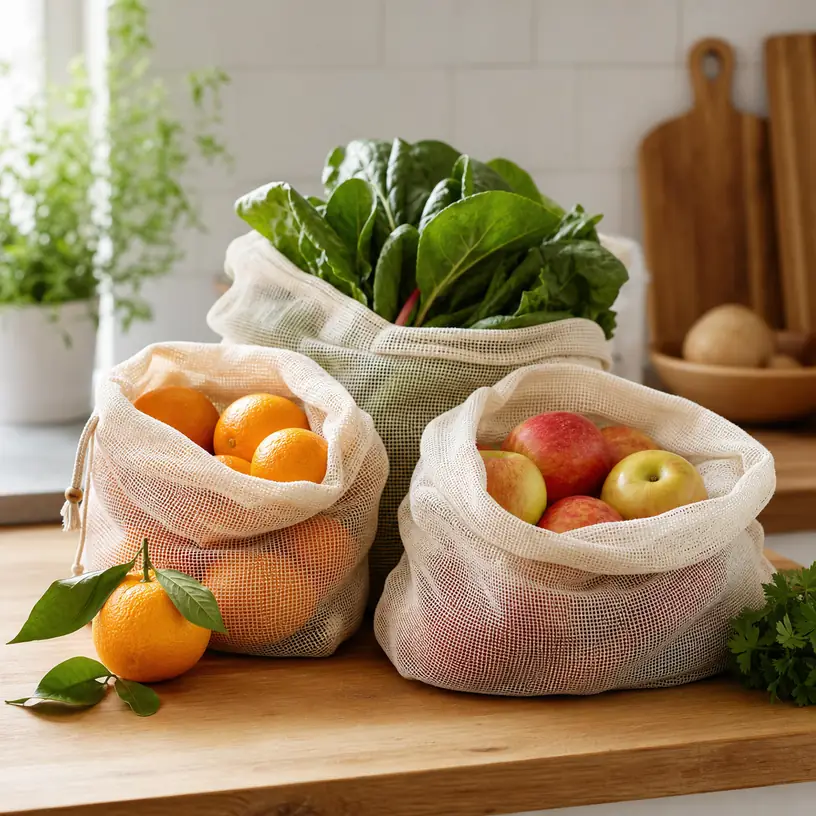
Illustrative image, not an official product photo.
Short answer
Reusable produce bags are useful when grocery trips leave you with a drawer full of thin plastic bags or when loose apples, onions, herbs, and greens need a tidier way to move from cart to fridge. The most practical set is not simply the one with the most bags. Look at bag sizes, tare weight visibility, fabric style, closure design, wash instructions, and whether the bags will actually fit the way you shop.
Search reference
Compare reusable produce bag options
Use the search page to compare current mesh, cotton, and mixed-size sets, then confirm bag counts, dimensions, closure details, and care instructions before choosing a set.
View matching optionsThink about your grocery routine first
Produce bags work best when they match a repeated habit. A weekly shopper who buys leafy greens, citrus, potatoes, and bulk onions may need several larger bags and a few small ones. Someone who mostly buys bananas and a head of lettuce may only need a compact set that stays in a tote or car console.
Before comparing sets, picture the parts of the shopping trip where the bag will matter. Will cashiers need to see the contents quickly? Do you buy items by weight? Will damp herbs or washed greens go straight into the fridge? Do you want the bags to double as pantry organization for onions, garlic, or snacks? Those answers shape the fabric and closure choice more than a product photo does.
Who this is for
- Shoppers who want a reusable option for loose fruits and vegetables.
- Households that already use grocery totes but still rely on disposable produce bags inside the store.
- People organizing fridge drawers, pantry shelves, farmers market purchases, or bulk-bin items.
- Buyers who prefer a washable, packable set that can live with other shopping bags.
- Shared households that need different sizes for quick weekday trips and larger restock runs.
Who should skip it
- Anyone who rarely buys loose produce or usually buys pre-packed items.
- Shoppers who cannot use reusable bags at a particular store, market, or local checkout system.
- Buyers who need sealed, leakproof food containers rather than breathable bags.
- Households that will not wash and dry the bags when they become damp or dirty.
What to verify before buying
- Confirm the number of bags, each listed size, and whether the set includes small, medium, and large options.
- Check the fabric description, such as mesh, cotton, polyester, or a blended set, and match it to visibility and storage needs.
- Look for tare weight information if the bags will be used for items sold by weight.
- Review the closure style, including drawstrings, toggles, color tabs, or zipper-like openings.
- Read the care instructions so you know whether the bags can be machine washed and how they should be dried.
- Check whether the current option is meant for produce only or also for bulk dry goods, pantry items, or travel organization.
- Make sure the bags fold small enough to keep with your main grocery tote.
Fabric, visibility, and weighing details
Mesh bags are popular because they let cashiers and household members see what is inside. They also tend to feel light and packable. The tradeoff is that very fine items, small grains, or powdery bulk goods may need a tighter weave or a different container.
Cotton and muslin-style bags can feel more substantial and may be useful for pantry organization, but they can hide the contents and may weigh more at checkout. If your store weighs produce in the bag, the tare weight matters. Some reusable bags display it on a tag or label, while others require you to remember or write it down. Verify the current listing rather than assuming every set handles tare weight the same way.
Closures also deserve attention. A simple drawstring is easy to use, but loose cords can tangle in a drawer or washing machine. Toggles may keep heavier produce from spilling out, while color-coded tabs can help separate bag sizes. None of these details is universal, so compare the current set configuration carefully.
Cleaning and storage habits
Reusable bags only stay practical if they are easy to reset after shopping. If you put damp greens, soil-dusted potatoes, or farmers market produce inside them, plan for washing and full drying before the next trip. A bag that remains damp in a tote can develop odors or mildew, regardless of how convenient it seemed at checkout.
For fridge use, breathable mesh may help you see contents quickly, but it is not the same as a sealed storage container. Delicate herbs, cut produce, berries, or washed greens may need a different storage method depending on how quickly you plan to use them. Treat reusable produce bags as a transport and organization tool, not a universal freshness solution.
Limitations
- Store policies, checkout equipment, and local rules can affect whether reusable produce bags are convenient to use.
- Bags are not leakproof and should not replace sealed containers for wet, cut, or spill-prone food.
- Dark or opaque fabric can make it harder for cashiers to identify produce quickly.
- Heavier fabric may affect weighed purchases if tare weight is not handled correctly.
- Drawstrings, toggles, and seams can wear over time, especially with heavy produce or rough washing.
Alternatives to compare
- Standard reusable grocery totes for boxed, canned, and packaged items.
- Collapsible crates or market baskets for farmers market trips and heavier produce.
- Glass or plastic food containers for cut fruit, washed greens, and leftovers.
- Silicone storage bags for sealed snacks or damp items that should not sit in mesh.
- Open fridge bins when the main goal is drawer organization rather than shopping.
FAQ
How many reusable produce bags do I need?
For occasional grocery trips, a small mixed-size set may be enough. Larger households or weekly shoppers may want several medium and large bags so onions, apples, citrus, greens, and potatoes do not all share one overfilled bag.
Are mesh or cotton produce bags better?
Mesh is usually easier for visibility and quick checkout, while cotton or muslin-style bags can feel sturdier and may work well for pantry storage. The better choice depends on whether you value see-through convenience, fabric feel, or storage appearance.
What does tare weight mean for produce bags?
Tare weight is the weight of the empty bag. If produce is sold by weight, the bag weight may need to be accounted for at checkout. Check whether the current bag set lists tare weights and whether your store can use them.
Can reusable produce bags go in the refrigerator?
Many people use them in fridge drawers, but they are not sealed containers. For damp greens, cut produce, berries, or foods that need moisture control, compare the bag instructions with a dedicated food storage option.
How should I clean reusable produce bags?
Follow the care instructions for the specific fabric and closure hardware. In general, bags that touch damp or dirty produce should be washed when needed and dried fully before being stored in a tote or drawer.