Drawer Organizer Trays for Kitchens, Desks, and Everyday Small Items
Product links are for reference. Verify current details on the retailer page before buying.
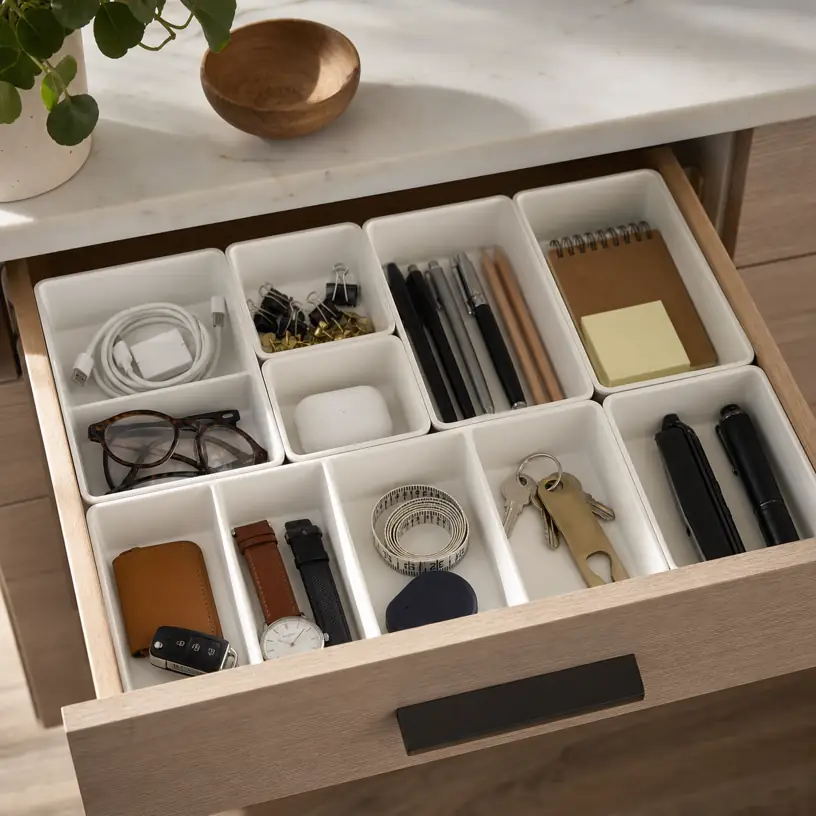
Illustrative image, not an official product photo.
Short answer
Drawer organizer trays work best when a drawer already has a clear job: cutlery beside the sink, pens near a work surface, hair ties in a vanity drawer, or small tools in an entryway console. Start by emptying the drawer and grouping the items you actually keep there. Then compare tray dimensions, compartment shapes, material, cleanability, and whether the layout leaves enough open space for the few oversized items that never fit a perfect grid.
Search reference
Drawer organizer tray options
Compare compartment layouts, outside dimensions, material, drawer depth, and cleaning instructions before choosing trays for a specific drawer.
View matching optionsOrganize the drawer before choosing the organizer
A tray can make a drawer easier to use, but it cannot decide what belongs in that drawer. The most useful first step is to sort the contents into groups: everyday utensils, backup utensils, office supplies, cosmetics, batteries, keys, craft tools, or small hardware. If the drawer is holding several unrelated categories, a single molded tray may create more frustration than order.
Measure the drawer after removing bulky items and loose packaging. Note the inside width, depth, and height, then subtract a little room so the tray can slide in without scraping. For kitchen drawers, also check whether handles, serving spoons, peelers, or chopsticks are longer than standard compartments. For desk and vanity drawers, short compartments can be helpful for clips and bands, while longer channels are better for markers, brushes, and cords.
Think about maintenance. A kitchen tray may collect crumbs, spice dust, or utensil marks. A bathroom tray may need to handle damp items. A desk tray may only need a quick dusting. Material choice matters less as a status feature and more as a cleaning and fit decision.
Who this is for
- Households trying to make a kitchen utensil drawer easier to scan during cooking.
- Home office users who want pens, sticky notes, clips, chargers, and small tools separated.
- Renters or first-apartment shoppers who need flexible organization without built-in cabinetry changes.
- Parents setting up a craft, homework, or lunch-packing drawer with repeatable places for small items.
- Anyone turning a catch-all drawer into a focused storage spot instead of a daily search zone.
Who should skip it
- Skip fixed trays if the drawer contents change weekly or include many oddly shaped items.
- Use a deeper bin or caddy if items need to be carried from room to room instead of stored in one drawer.
- Avoid tall trays in shallow drawers; even a good layout is annoying if the drawer rubs or jams.
- Do not rely on a tray alone for sharp tools, medications, batteries, or child-safety concerns that need more deliberate storage.
What to verify before buying
- Measure the inside drawer width, depth, and usable height, not just the cabinet face.
- Compare compartment length with your longest utensil, brush, marker, tool, or charger cable.
- Check whether the tray is one fixed piece, a set of separate bins, expandable, or made with movable dividers.
- Review material wording, edge shape, non-slip features, and whether the bottom may slide on smooth drawer liners.
- Verify cleaning instructions, especially for kitchen, bathroom, craft, or makeup storage.
- Check listing photos carefully to see whether accessories shown inside the trays are included or only display props.
- Confirm the quantity and outside dimensions of every tray in the set before assuming it fills a drawer.
Choosing a layout that will stay useful
Fixed utensil trays are simple when the drawer has one predictable purpose. They are usually easiest for forks, spoons, knives, and a few cooking tools, but they can waste space if the drawer holds a mixed group. Separate modular trays give more freedom because you can leave open pockets for bulky items or rearrange the drawer after a few weeks of use.
Expandable trays can be helpful in wider kitchen drawers, but the expanded side sections are not always the same size as the main compartments. Before choosing one, decide what will live in the extra width. A side channel can work for tongs, straws, food clips, or measuring spoons, but it may not suit wide spatulas or stacked gadgets.
Clear trays make it easy to see crumbs and small items, which can be good or bad depending on the drawer. Bamboo or wood-look trays can feel warmer in a kitchen or desk, but buyers should still verify care instructions and actual material wording. Plastic trays can be light and easy to wipe, yet very thin walls may flex when a drawer is packed tightly. Metal mesh can work for office supplies, though small pieces may catch in openings.
If you are organizing a catch-all drawer, consider using several smaller trays rather than one large insert. The goal is not to fill every inch. A little empty space helps when a new tape roll, charger, notepad, or measuring spoon temporarily joins the drawer.
Limitations
- A tray cannot fix a drawer that is storing too many unrelated categories.
- Very specific compartment shapes may become inconvenient when your tools or utensils change.
- Separate bins can shift unless the drawer liner, tray bottom, or layout keeps them stable.
- Shallow trays may not contain tall items when the drawer opens quickly.
- Materials and cleaning guidance vary, so verify the current retailer details before using trays in damp or messy areas.
Alternatives to compare
- Adjustable drawer dividers for large open drawers or changing storage needs.
- Small open bins for bathroom, craft, or utility drawers with mixed item sizes.
- A countertop caddy when items need to move between rooms or work areas.
- Drawer liners for reducing sliding when you already like the existing layout.
- Wall hooks, rails, or countertop crocks for long utensils that do not fit comfortably in a drawer.
FAQ
How do I measure a drawer for organizer trays?
Measure the inside width from side to side, the inside depth from front to back, and the usable height below any drawer frame or countertop lip. Leave a little clearance so the tray can be placed and removed without scraping.
Are separate trays better than one large insert?
Separate trays are better when the drawer holds mixed items or may change over time. One large insert is simpler when the drawer has a stable purpose, such as everyday flatware or a focused desk-supply drawer.
What material works best for kitchen drawer organizers?
There is no single best material for every kitchen. Compare cleanability, moisture guidance, wall thickness, edge finish, and whether the tray fits your utensils without forcing long tools into short compartments.
Can drawer organizer trays help with junk drawers?
They can help if you first narrow the drawer to a few useful categories, such as batteries, tape, pens, and keys. If everything stays in the drawer, trays may only create smaller piles instead of a more usable system.
Should organizer trays fill the whole drawer?
Not always. Leaving some open space can make room for oversized tools, temporary items, or a future category. A drawer that is completely packed with compartments can be harder to adapt.